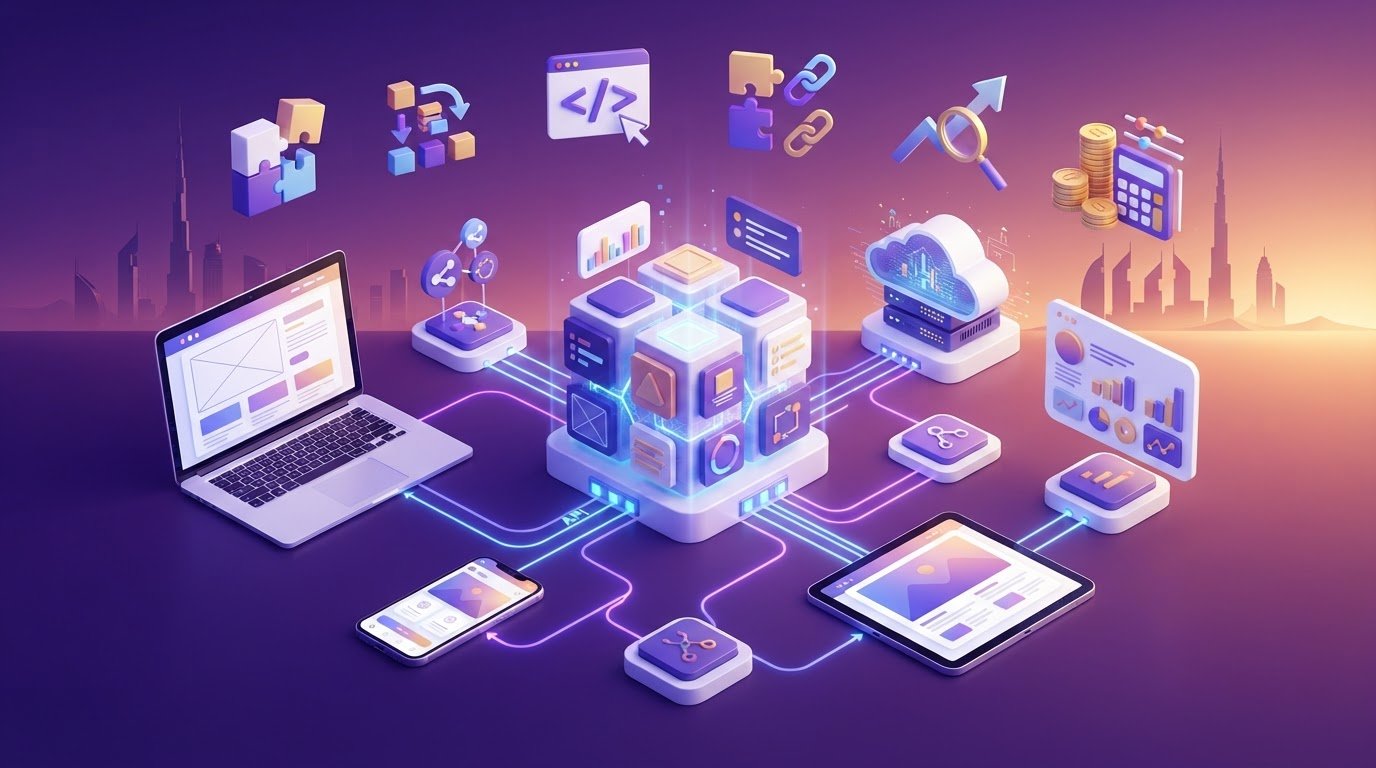
The biggest driver of a headless CMS project’s cost isn’t the platform name; it’s the work needed to shape content, build frontends, connect systems and migrate existing material. A headless CMS development company scopes these factors around your requirements, and the price depends on the project and is provided after a quote request. The approach separates content management from the frontend, delivering content through APIs to different platforms.
If your team needs to publish across a website and mobile app, a headless CMS can offer valuable flexibility. But it also requires the frontend to be planned and built separately, so it is not automatically the simpler or lower-cost option for every project.
This guide explains what affects project costs in the UAE, how a headless CMS compares with a traditional CMS, and which development services can support your team. It also covers platform selection, content migration, integrations and implementation scope to help you choose an approach that fits your needs.
Key Takeaways
- Map where content needs to appear, then assess whether API-based delivery across those channels suits your architecture.
- List the business tools and systems a CMS must connect to, since integration scope shapes implementation work.
- Compare headless and traditional setups by considering how your marketing team publishes and how developers build and maintain frontends.
- Define the project scope around content modelling, migration, integrations and frontend development before requesting a cost estimate.
- Consider web design, development, SEO and mobile app needs together when planning how your content experience will reach users.
What are the advantages of headless Content Management Systems?
Headless architecture separates content management from presentation, allowing teams to publish across websites, apps and other connected platforms. UAE businesses should assess hosting and data residency in light of their sector, data types and applicable obligations. For Arabic audiences, right-to-left support is also an important design requirement.
API-Based Content Delivery
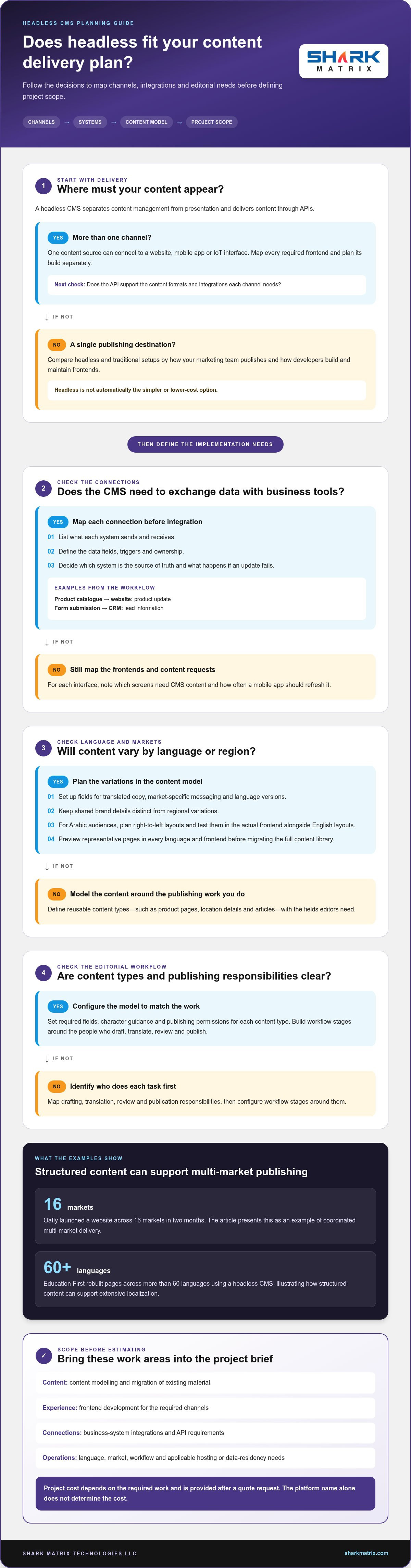
A headless CMS stores content separately from the frontend and delivers it through APIs. Developers can connect one content source to a website, mobile app or IoT interface without rebuilding the editorial layer for each channel. When comparing options, map each required frontend and business system, then check whether the API supports the content formats and integrations you need.
This architecture can support multi-market publishing from shared content structures. For example, Oatly launched a website across 16 markets in two months, showing how coordinated delivery can support a multi-market rollout. The practical advantage depends on planning market-specific pages, translation needs and approval steps before content reaches each frontend.
For UAE audiences, define language and direction requirements early. Arabic pages need right-to-left layouts, while English pages typically use left-to-right layouts; test both in the actual frontend. Set up fields for translated copy, market-specific calls to action and language versions, then preview each combination before publication. A content API can deliver the appropriate version to each channel.
Content Modeling and Editorial Workflows
Content modelling defines reusable types such as product pages, location details and articles. Editors can assemble pages from approved fields instead of formatting each one from scratch. Set required fields, character guidance and publishing permissions for each type. For example, a UAE location page might share contact and opening-information fields while allowing market-specific descriptions.
Reusable components help keep content consistent across channels, but the model should match real editorial work. Identify who drafts, translates, reviews and publishes each item, then configure workflow stages around those responsibilities. Education First rebuilt pages across more than 60 languages using a headless CMS, illustrating how structured content can support extensive localization. If approved content also feeds an AI chatbot, define which fields are suitable for reuse.
For a multi-market setup, separate shared elements from local variations before migration. Keep global brand details in common fields, and let regional editors manage local messaging and translations. This makes updates easier to coordinate while preserving relevant market differences. Test a representative page in every language and frontend before applying the model to the full content library.
How does a headless CMS work?
A headless CMS makes managed content available through APIs, allowing separate interfaces to request and display it. For UAE teams, map each business tool, frontend and access requirement before integration begins.
CMS API Integration with Business Tools
Define the data fields, triggers and ownership for each connection. Decide which system is the source of truth for product descriptions and what happens if an update fails. This interface map helps prevent duplicate records and mismatched content. For a mobile app, specify which screens need CMS content and how often they should refresh.
API Capabilities and Integrations
Review how the CMS API retrieves, filters and updates content. A listing page may need category filters, while an article view needs a title, body, image reference and publication status. Match API capabilities to those requirements before selecting an integration approach. This keeps frontend development aligned with the content and user journeys the business needs.
Plan how systems will handle changes, too. If a field name changes, dependent website and app interfaces may need updating. Document the API contract, test sample responses and establish versioning practices before launch. For content distributed across several channels, check that each frontend can request the correct language, market and publication state from the same structured source.
Security and Scalability
Separating the backend from the frontend can reduce exposure by limiting the risk of system attacks, but it does not remove the need for careful access controls. Assign permissions by role, protect credentials and limit each integration to the data it needs. For example, an editorial account can manage drafts without changing API settings.
Plan capacity around actual usage patterns, such as a campaign launch or busy product release. Test how the interface behaves when several frontends request content at once. Separate delivery and editing permissions, and monitor failed requests to identify integration issues. These steps make growth easier to manage without assuming every channel has identical traffic.
Plugins and Integrations
Plugins can add features, while API integrations connect the CMS to external tools. Assess each plugin against a specific need, such as search, analytics or media handling. Check its data access, maintenance requirements and compatibility with the chosen frontend. A brief inventory helps distinguish essential capabilities from optional additions.
For each connection, document its purpose, the data exchanged and the fallback process. A search integration, for instance, needs to index published pages and remove outdated results. Test this flow with draft, published and withdrawn content. Where relevant, include Arabic and English examples for UAE audiences, so search and display work across both language experiences.
Benefits for marketing and development teams
For marketing teams, structured content can make campaign updates easier to coordinate. A UAE retailer, for example, could prepare product copy, campaign messages and calls to action as separate content elements. Editors can then use them on a landing page and in a mobile app. This helps teams adapt a campaign without rewriting every asset for each channel. Clear ownership of each field also makes review responsibilities easier to assign.
Reusable content gives marketers room to build new experiences from approved material. A campaign team might combine an existing product description, customer guidance and promotional copy on a seasonal page. The same structure can support a different page layout without changing the original content. Before launch, map which elements can be reused and which need market-specific wording. This avoids treating every campaign page as a separate content project.
Development teams can choose a frontend framework to suit each experience. For example, a company could build its main website and mobile app with different interfaces while drawing on the same content source. Developers can update app navigation without asking editors to recreate product information. This separation also lets teams plan frontend changes independently from editorial updates, provided they document how each interface expects content to be structured.
For commerce, a headless setup can connect product storytelling with the shopping journey. A product page might combine editorial details, usage guidance and related content with catalogue information from another system. Teams should define which system owns each field, especially where descriptions meet transactional data. This structure can support dynamic page layouts while keeping the responsibilities of content editors and commerce systems clear.
Marketing and development teams can coordinate launches around a shared content plan. For a new service rollout, marketers can prepare copy and supporting pages while developers build the required frontend components. Agree on content requirements, review stages and launch dependencies before work begins. A release checklist can show whether copy, design, integration testing and publishing are ready together, rather than leaving a team to discover gaps late.
These benefits depend on a genuine need for channel flexibility and ongoing frontend work. An organization publishing a few stable pages may prefer a simpler setup its team can manage easily. Before choosing, compare the number of experiences you need, how often they change and who will maintain them. If developers cannot support separate frontends, the added flexibility may create operational work instead of reducing it.
Headless CMS development services
A headless CMS project involves more than connecting a content platform to a website. A practical scope can include platform assessment, content architecture, migration, frontend development, integrations and launch support. For a UAE retailer, the work might cover an English and Arabic storefront, product content and a mobile app. Define the channels and editorial needs first, then match each project activity to them.
Platform assessment compares CMS capabilities with your publishing and technical requirements. Document who will manage content, what types they publish and which systems must receive it. For example, a publisher may need article scheduling and translation workflows, while an online retailer may prioritize product information and catalogue connections. This requirements map helps prevent choosing a platform for features the team will not use.
Content architecture and migration prepare existing material for structured publishing. Start by auditing current pages, files and duplicated fields. Then define reusable content types, such as articles, location pages or product descriptions. A migration plan maps each old field to its new structure and identifies material that needs review. Testing sample pages in the new CMS helps reveal missing information before migration expands.
Integration work connects the CMS with tools such as search, analytics, ecommerce systems or a CRM. Start with a data-flow diagram that names the sending system, receiving system and content involved. For a product page, catalogue data might provide product details while the CMS supplies editorial copy. Agree on field ownership and test updates, errors and removed content before launch.
Quality assurance checks the complete publishing journey, not just whether pages load. Test a draft, approval, publication and correction in each relevant language and frontend. Verify links, images, metadata and API responses with representative content. For ecommerce, also test how product details appear after catalogue changes. Record defects, assign owners and retest fixes before deployment.
After launch, teams may need technical maintenance, editor guidance and planned improvements. Document how to add a page, correct a translation and report a broken integration. Review publishing feedback and support requests to prioritize changes. A clear handover helps editors manage content confidently and gives developers a practical record of architecture decisions and integration behaviour.
What does a headless CMS development company do?
A headless CMS development company plans and builds the systems that connect content management with digital experiences. Its work can span discovery, platform configuration, content architecture, frontend development, integrations and testing. For a UAE business, the scope might include an Arabic and English website, a mobile app, or both. The team turns those needs into a technical plan, then delivers and tests each part.
Discovery turns business goals into a defined project scope. The team maps audiences, publishing tasks, channels and existing systems. For example, a retailer may need product stories managed separately from inventory data. The project team documents which system owns each field, who updates it and where it appears. This sets practical boundaries before development begins.
Next, developers configure the CMS and create a content model. They define types such as articles, product pages and location pages, then set fields and editorial permissions. For an Arabic service page, the model can account for translated text and right-to-left presentation. Editors can review representative content before the team applies the structure to the wider library.
Frontend work builds the website or app that presents CMS content. A team may create page templates, navigation and reusable interface elements for each channel. It also connects business systems through APIs, such as a search service or ecommerce catalogue. A clear integration map identifies the data exchanged and how teams handle errors or changes.
Testing checks technical behaviour and everyday publishing tasks. The team can test a draft moving through review and publication, then verify its display on desktop and mobile screens. For bilingual projects, check Arabic and English layouts separately. Integration tests should also confirm that updated catalogue details or removed pages appear correctly across connected experiences.
Launch work includes deployment planning, editor guidance and handover documentation. Editors need clear steps for creating, reviewing and updating content. Developers need records of the content model, API behaviour and frontend decisions. For example, a handover guide can show how to create a location page and what happens when its translation changes.
Shark Matrix Technologies LLC: Search Engine Optimization (SEO)
Shark Matrix Technologies LLC helps UAE businesses strengthen the search visibility of a headless CMS website through Search Engine Optimization (SEO). This can be valuable when a new frontend launches, pages move during migration, or Arabic and English content need clear search targeting.
SEO planning can align page structure, metadata and internal navigation with the content model. For example, a business can organize service and location pages so visitors and search engines understand their purpose. Reviewing both language versions also helps keep page titles and content relevant to each audience. Search performance depends on the site, its content and its market.
Contact Shark Matrix Technologies LLC to discuss SEO for your headless CMS website.
Make Your Next Digital Move With a Clear Goal
Before choosing a headless CMS development company, decide what your digital experience needs to do next. You might need to help customers find key pages, make a new website easier to use, or attract a more relevant audience. A clear priority helps shape decisions about design, content and promotion, rather than adding technology without a defined purpose.
Once your CMS and frontend plans are set, consider how people will discover and navigate the finished experience. Shark Matrix Technologies LLC offers Web Design and Development, Search Engine Optimization (SEO), and Pay Per Click (PPC) Management to support those goals. The right next step may be refining your website, strengthening organic visibility or planning paid campaigns around your audience.
Choose one priority to move forward, then align your website and marketing plans around it. Contact Shark Matrix Technologies LLC to discuss the next step for your digital presence. A thoughtful plan can turn your CMS decision into a more useful experience for customers.
Frequently Asked Questions
How much does a headless CMS project cost?
There is no single project cost because scope varies with the frontend, integrations and migration work. A site using an existing content model has different requirements from a multi-channel rebuild with new workflows. For a useful estimate, define the platforms, content types, required connections, languages and migration volume. Also separate initial implementation from ongoing hosting, maintenance and content operations in the project plan.
What are the benefits of a headless CMS for marketing and development teams?
Marketing teams can organize content into reusable pieces, while developers build frontend experiences around separate technical needs. For example, a campaign team can update a promotion without asking developers to change unrelated page components. Before adopting this approach, agree on who owns content fields, approvals and release decisions. The benefits are strongest when both teams have clear processes and can support their responsibilities.
Why “Headless CMS” Is Becoming So Popular?
Interest is growing because businesses want content to serve more than one digital experience. A company may publish core information to a website, app and other connected interfaces, while its teams update content centrally. This can suit organizations planning new channels or redesigns. It also introduces more frontend decisions, so popularity alone is not a reason to migrate a stable site.
How do I choose a headless CMS development agency in the UAE?
Choose an agency by matching its proposed scope to your publishing and technical needs. A headless CMS development company should explain how it will handle content architecture, frontend delivery, integrations, testing and handover. Ask for a clear project plan identifying dependencies and responsibilities. For UAE audiences, include Arabic and right-to-left requirements in the design and testing scope if your site will serve Arabic readers.
What headless CMS platforms do development companies work with?
Platform choices vary by project, but CMS technologies in the documented technical stack include Drupal, WordPress, Magento and Shopify. Their suitability depends on content structure, API needs, editorial workflows and connected systems. Start by listing what your team needs to publish and where it must appear. Then compare platform capabilities against those requirements, rather than choosing solely because a platform is familiar.
How much does headless CMS development cost in the UAE?
In the UAE, plan the budget around the defined project scope and express the estimate in AED. Cost drivers include frontend complexity, content migration, integrations, language requirements and testing. Request an itemized estimate that separates implementation from recurring platform or infrastructure expenses. This makes it easier to compare project options and decide which features belong in the initial release.
How long does a headless CMS implementation take?
Implementation timing depends on the work involved, not a universal schedule. A project with an approved content model and a single frontend has fewer dependencies than a migration involving several systems and languages. Build the schedule around discovery, architecture, development, migration, testing and launch. Delays in content approval, integration access or translation can affect later tasks, so assign owners before development starts.
What services should a headless CMS development company provide?
A project scope commonly covers requirements discovery, CMS configuration, content modelling, frontend development, migration, integrations, quality assurance and launch handover. For example, a retailer may need product data mapped from its catalogue and editorial pages migrated into reusable templates. Include editor guidance and technical documentation in the handover plan. These deliverables help teams operate the new setup after deployment and manage future changes.
 OpenAI
 Codex
 Vertex AI
 Cloud Vision
 OpenCV
 TensorFlow
 IBM Watson
 Cloud Natural Language
 Cognitive Services
 Bot Framework
 Mistral
 LLama
 Gemini
 Anthropic
 N8N