

What if your next guest discovers your property through search, finds the information they need, and books directly instead of stopping at a booking platform? That’s the opportunity behind seo for hospitality industry uae: connecting search visibility with clear, useful information that helps guests take the next step. Online travel agencies (OTAs) can broaden discovery, but hospitality businesses also benefit from a strong presence of their own.
It can be hard to know where to focus. Technical health, useful content, business profiles, and guest reviews all play a role, but their priority depends on your services and how guests book. A rise in visibility is only useful if you can also see whether it brings relevant visits, enquiries, or bookings.
This practical guide explains how SEO supports each stage of the guest journey, from early research to booking consideration. You’ll learn how to prioritise improvements for your hospitality business and booking model, build trust through relevant content and reputation, and measure organic contribution without expecting guaranteed rankings or bookings. The aim is a clear, connected approach to turning search discovery into direct booking opportunities.
Key Takeaways
- SEO for hospitality industry uae works best when it connects guest search intent with clear, useful information at each stage of decision-making.
- Prioritise search phrases and content around the services and experiences your hospitality business actually offers.
- Use your website to support direct discovery and build guest trust, while recognising that SEO can complement rather than replace OTAs.
- Measure progress in stages, from search visibility and website engagement to enquiries and confirmed bookings.
- Coordinate strategy, content, technical SEO, and measurement around your business goals for a more focused programme.
What Does UAE Hospitality SEO Actually Do?
Hospitality SEO helps potential guests discover relevant businesses through unpaid search results, then gives them a useful website experience once they arrive. It connects what people search for with clear pages, practical information, and next steps that fit the business. The scope of the hospitality industry includes accommodation, food, attractions, and travel experiences, so a hotel’s search strategy won’t automatically suit a restaurant or tour operator.
Guests may research in English or Arabic, begin with broad inspiration searches, or look for a particular service or experience. SEO can help a business appear for relevant searches, answer questions during comparison, and make it easier to enquire or book. Search visibility supports discovery and decision-making, but doesn’t guarantee enquiries, reservations, or revenue.
Which hospitality businesses can benefit from SEO?
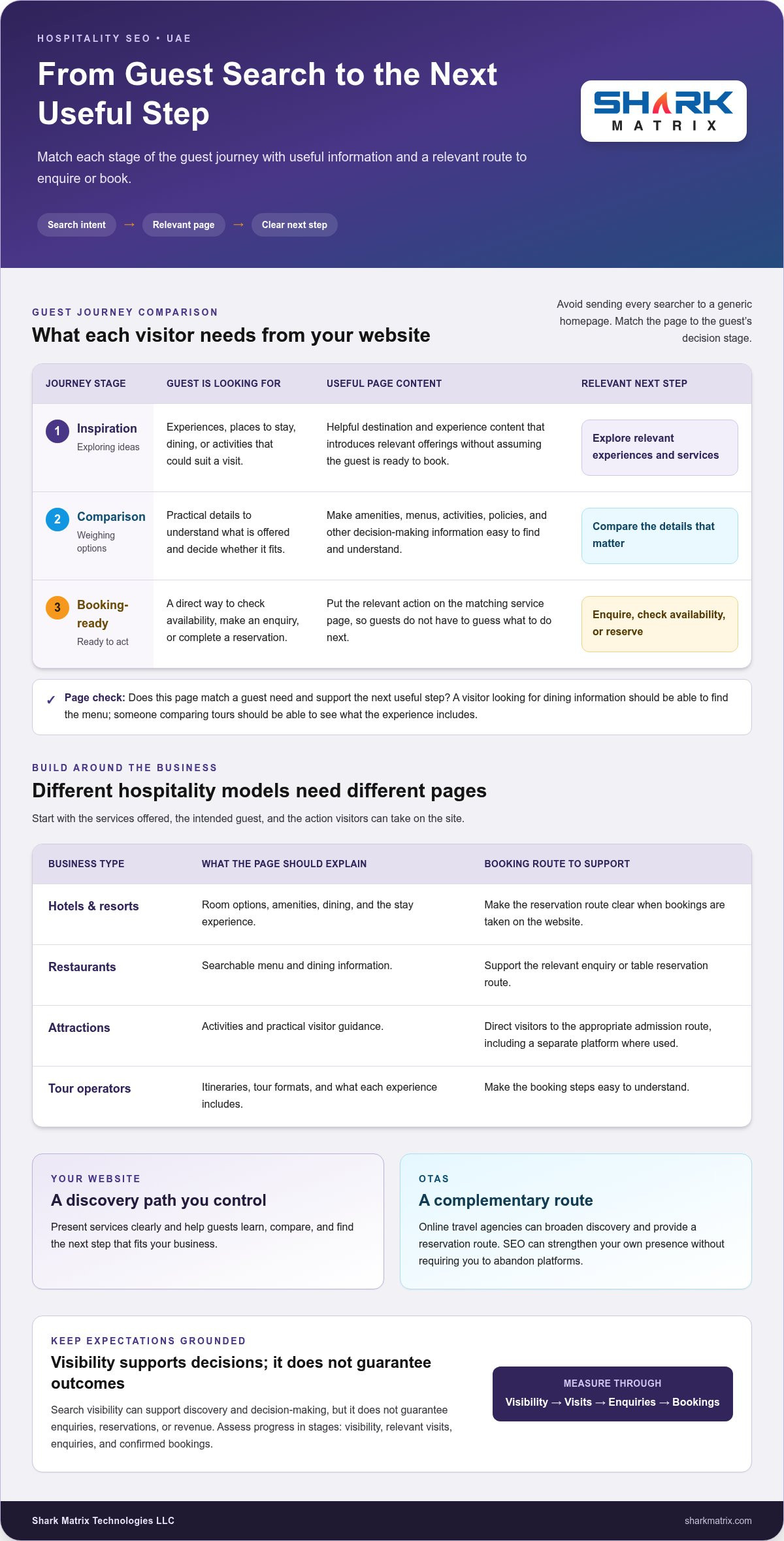
Hotels and resorts need pages that explain room options, amenities, dining, and the stay experience. A restaurant may need searchable menu and dining information, while an attraction can focus on activities and visitor guidance. Tour operators can clarify itineraries, tour formats, and booking steps. Each page should answer a real visitor question rather than repeat broad promotional claims.
Start with the business model and booking route. A hotel taking reservations on its website has different conversion needs from a restaurant where guests enquire or reserve a table, or an attraction selling admission through a separate platform. Plan seo for hospitality industry uae around the services offered, the intended guest, and the action visitors can take on the site.
Where does SEO fit in the guest journey?
Search intent changes as a guest moves from imagining a trip to choosing an experience. Matching pages to these stages helps avoid sending every visitor to a generic homepage:
- Inspiration: Someone planning a visit may search for experiences, places to stay, dining, or activities. Helpful destination and experience content can introduce relevant offerings without assuming the guest is ready to book.
- Comparison: Visitors weigh practical details. Make amenities, menus, activities, policies, and other decision-making information easy to find and understand.
- Booking-ready: A guest who has chosen what they want needs a direct route to check availability, make an enquiry, or complete a reservation. Make the relevant action prominent on the matching service page.
Organic search and booking platforms can work alongside each other. OTAs may provide a discovery and reservation route, while a business website gives the business more control over how its services are presented and what information guests see before acting. SEO doesn’t require abandoning platforms. It strengthens the business’s own discovery path and gives guests another way to learn, compare, and book.
Use a practical test for each important page: does it match a guest need and support the next useful step? A visitor looking for dining information shouldn’t have to search a hotel’s site for its menu, and someone comparing tours shouldn’t have to guess what an experience includes. Aligning search intent, page content, and booking route makes SEO more useful for any hospitality business model.
How UAE Hospitality Businesses Build Search Visibility That Matches Guest Intent
Start with the words potential guests use, not a list of industry keywords. A hotel team might hear questions about family rooms, dining, or accessible facilities. Restaurant visitors may want to view a menu or understand the dining experience, while tour customers may need details about routes, inclusions, and formats. These conversations reveal what people need to know before choosing.
Next, identify the intent behind each search. Someone looking for ideas needs helpful inspiration; someone comparing options needs specific details; someone ready to act needs a clear reservation or enquiry route. This intent-led approach keeps seo for hospitality industry uae tied to real guest needs rather than keyword volume alone. For broader foundations, see this 2026 UAE SEO guide.
How should hospitality teams map keywords to pages?
Give each important page a distinct purpose. Accommodation pages can answer questions about rooms and amenities; dining pages can present menus and service details; experience pages can explain activities and tour options. Practical information pages can cover visitor questions such as opening hours, facilities, or policies when they are relevant.
Separate informational content from pages that support enquiries or reservations. An article answering a planning question shouldn’t compete with a booking page targeting the same query. Before creating a new page, check whether an existing one already answers that guest question. Improve it if the intent is the same; create another only when it serves a meaningfully different need.
How do business profiles and multilingual content support discovery?
Keep each business profile accurate and consistent with the relevant property or hospitality business. Check that its name, contact details, hours, categories, and website destination match the information on the site. A restaurant, hotel, attraction, or tour operator should direct searchers to the most relevant page, not a generic destination that makes them hunt for essential details.
Choose languages according to the guests you want to reach. If Arabic and English content both serve your audience, plan each version around how people naturally describe services and experiences in that language. Avoid translating phrases word for word and assuming the result matches search behaviour. Make each page fluent, keep business details accurate, and ensure the next step is clear.
Useful content beats repeated phrases. Write menu descriptions that explain what guests can expect, amenity details that answer practical questions, and service pages that clarify what an experience includes. Avoid stuffing the same keyword into every heading or creating near-identical pages with only a phrase changed. A focused content plan also makes it easier to keep details accurate as services, menus, and visitor information change.
These fundamentals turn search research into a page plan that reflects the business model and audience. Shark Matrix provides SEO, content marketing, and professional Arabic digital marketing to help hospitality businesses align search priorities with guest needs. Explore Shark Matrix’s SEO services.
Can Hospitality SEO Generate Direct Bookings Without Depending on OTAs?
Yes, organic search can help guests discover a hospitality business’s own website and find a direct route to enquire or reserve. But SEO can’t guarantee bookings, and it doesn’t mean every business should abandon OTAs. Platforms can introduce properties to people who might not otherwise find them; a well-optimised website gives guests another path and lets the business present its offering in greater depth.
Think of SEO as one part of the booking mix. A search visit is not the same as a completed reservation. Guests may compare options, return later through another channel, or decide based on availability, pricing, reputation, and how easy the booking process feels. For seo for hospitality industry uae, track these steps separately to understand where organic discovery contributes and where the path to booking needs attention.
What can organic search do that an OTA listing cannot?
A business website can explain its wider experience, services, and brand story without relying only on a platform listing’s space and format. Helpful articles or service pages can answer questions earlier in trip planning, before someone is ready to reserve. OTAs still have a role in discovery and comparison. A balanced channel mix lets the website and platform listings complement each other rather than treating one as a replacement for the other.
Use a simple measurement framework to distinguish what happens after a guest searches:
- Organic visits: A person arrives on the website from an unpaid search result. This measures discovery, not booking intent by itself.
- Platform referrals: A visitor moves from the website to an OTA or another booking platform. The reservation may then be completed outside the site.
- Enquiries: A visitor submits a form, calls, or takes another tracked step to ask about a stay, meal, or experience. This is a meaningful action, but not a confirmed sale.
- Completed bookings: A reservation is recorded as confirmed through the direct booking route. Compare this outcome with the source data available for other channels.
What needs to happen after a guest reaches the website?
Make the next step obvious on mobile. Guests should be able to find relevant accommodation, dining, or experience details without digging through unrelated pages. Keep reservation or enquiry actions visible, label them plainly, and make sure each action fits the page. A visitor reading about a tour should reach the appropriate tour enquiry or reservation path, not a general contact page with no clear direction.
Then test the booking journey. Check whether important details remain clear as a guest moves from the service page into the booking engine, and whether the process works smoothly on a phone. Confusing steps, missing information, or a mismatch between the page and booking options can interrupt a decision. Address these as website and booking-flow improvements, not search-ranking fixes.
SEO can bring the right audience to the door, but the business still needs a credible offer and a usable route to action. Reviewing search visits alongside referrals, enquiries, and confirmed bookings gives hospitality teams a more realistic picture of direct-booking contribution than rankings alone.
How to Prioritise and Measure a Hospitality SEO Programme
A useful SEO programme links search activity to business priorities, then checks whether the evidence supports the next step. For seo for hospitality industry uae, measurement should reflect the business model: a hotel may focus on room enquiries and reservations, while a restaurant may track table enquiries or menu-page engagement. Search changes can inform decisions, but they’re evidence to investigate, not proof that future performance is guaranteed.
Use a clear workflow to move from measurement to action:
- Establish a baseline. Record current search visibility, important landing pages, website engagement, and enquiry or booking activity. Note how each figure is measured and the period it covers.
- Identify priorities. Find important pages with technical barriers, weak visibility for relevant queries, or a gap between guest intent and the page experience. Focus on improvements that matter to the business, not every available recommendation.
- Implement changes. Assign an owner to each change, such as updating a service page, resolving a crawl issue, or clarifying an enquiry path. Record what changed and when so later comparisons have context.
- Review the evidence. Compare results over a suitable period, investigate unexpected shifts, and decide whether to maintain, refine, or expand the work. Account for seasonal demand and changes to services or booking routes.
Which hospitality SEO indicators are useful to track?
Google Search Console can show search impressions, clicks, landing pages, and query patterns. Google Analytics 4 can help review engaged visits and tracked enquiry or booking-engine interactions when it’s configured appropriately. Keep these measures distinct: visibility indicates exposure, engagement shows how visitors use the site, and a recorded booking is a business outcome. Not every visit or interaction becomes a reservation.
Compare like with like where possible, using periods that suit the property’s booking cycle. Changes in demand, operating hours, available experiences, or promotion can affect traffic and actions independently of SEO work. Annotate these changes to make the analysis more useful.
How should teams decide what to improve first?
Start with technical barriers that stop important pages from being crawled or used, then address high-value pages where guest intent and business relevance already align. A booking page with confusing information may deserve attention before a low-priority article. Set an owner and review point for every recommendation so analysis leads to implementation rather than an open task list.
Choose a small set of measures connected to each page’s goal. For example, track search visibility and relevant visits for an informational page, then review enquiry actions on a service page. A rise or fall is a signal to investigate alongside other business changes, not a promise of what comes next.
Shark Matrix connects SEO strategy, implementation, and ongoing optimisation to business goals. Discuss a hospitality SEO programme with Shark Matrix.
How Shark Matrix Supports Hospitality SEO Across the UAE
Hospitality SEO works best when it connects business priorities with the way guests search, evaluate options, and decide what to do next. Shark Matrix brings strategy, content, technical work, and measurement together so a hospitality business can focus its SEO programme on relevant audiences and practical goals. The approach is tailored to the business model, whether the priority is accommodation, dining, attractions, or tours.
Shark Matrix serves 20+ Industries Served, including Hospitality, and provides SEO alongside digital strategy, design, development, and ongoing optimisation. This breadth helps connect search recommendations with the website experience and the actions a business wants guests to take. Explore SEO services to understand how strategy and implementation can be shaped around your business needs.
What does a joined-up hospitality SEO approach involve?
It starts with the business objective, then identifies the guest audiences and search intent that matter. From there, recommendations can align priority pages, content needs, and technical foundations with clear enquiry or booking journeys. Reporting shows what is changing and where to investigate next, supporting ongoing optimisation without promising fixed rankings or outcomes.
For example, if a hospitality business wants to increase relevant enquiries, the work should connect the service page guests find through search with the information they need and a straightforward enquiry action. Technical issues that prevent that page from being found or used belong in the same improvement plan as its content and conversion path. This joined-up view keeps recommendations connected to the guest experience, not just a checklist of SEO tasks.
What should hospitality teams prepare to get started?
Bring a clear view of priority services, intended audiences, relevant languages, and the actions guests should take. Existing website content, search data, analytics access, and booking or enquiry pathways can help establish a useful starting point. Sharing what has changed in the business also gives the work context, so recommendations reflect current priorities rather than outdated pages or assumptions.
A practical starting brief can include:
- Business priorities: The services or experiences the SEO programme should support.
- Audience and language: The guests the business wants to reach and the languages that suit them.
- Desired actions: The enquiries, reservations, or other meaningful outcomes the website should encourage.
- Available evidence: Website access, existing analytics, search information, and current content for assessment.
These inputs help shape a focused scope and connect recommendations with implementation and review. Explore Shark Matrix’s SEO approach as a starting point for a conversation about your hospitality business goals.
Make Your Next SEO Move Count
The strongest next step is to turn search insights into a focused improvement your team can act on, then learn from what happens. For seo for hospitality industry uae, choose priorities that fit your guests, business model, and booking goals. Treat results as evidence for ongoing decisions, not guaranteed outcomes.
Shark Matrix brings a multidisciplinary approach to digital growth, backed by 250+ Projects Successfully Completed and 5+ Years of Digital and Technology Experience. The team connects strategy and implementation with the needs of your business.
Ready to shape a practical next step for your organic visibility? Explore how Shark Matrix can support your SEO growth. With clear priorities and ongoing review, your hospitality business can build a stronger path from discovery to guest action.
Frequently Asked Questions
Is SEO worth it for a small hospitality business?
SEO can be worthwhile for a small hospitality business if the audience, competition, website readiness, and booking economics support the effort. A focused seo for hospitality industry uae plan might begin with a page for a signature experience and one clear enquiry goal, rather than a large content programme. SEO is a sustained channel, not an instant booking guarantee. Smaller operators can prioritise searches closely tied to the services they provide.
How long does hospitality SEO take to show results?
There’s no fixed timeline. Progress depends on the site’s condition, competition, content quality, implementation, and how people search for the business. Establish a baseline before changes, implement improvements consistently, and review search visibility alongside meaningful actions such as enquiries. Compare appropriate periods rather than reacting to short-term movement. This helps distinguish potential SEO progress from normal shifts in demand, which can vary with seasons and business changes.
Can SEO help a hotel get direct bookings as well as OTA reservations?
Yes. Organic search can lead guests to a hotel’s own website, where a clear booking route may support direct reservations. It can’t ensure a visitor will book or remove the need for OTAs, which may remain part of the hotel’s channel mix. A guest’s decision also depends on factors such as availability, reputation, rates, mobile usability, and the booking-engine experience, so review the full journey rather than rankings alone.
Should hospitality websites publish content in Arabic and English?
Use Arabic and English when those languages match intended guests and the business can provide useful, consistent experiences in both. Adapt the wording naturally rather than translating each sentence literally; menu descriptions and service details should make sense to readers in each language. Keep key facts aligned across versions and make language navigation clear. The right coverage depends on the property’s audience and priorities, not a one-size-fits-all rule.
Do online reviews affect hospitality SEO?
Reviews can influence guest trust and whether someone chooses a business after finding it in search. Keep business details accurate, and respond to feedback professionally and appropriately, including when a review raises a concern. Treat review management as part of reputation and the guest decision process, not as a guaranteed way to improve rankings. Review the current policies of each platform before requesting or responding to reviews.
Does hospitality SEO work for seasonal businesses?
Yes. Seasonal businesses can make relevant services and planning information easier to find before periods of peak demand. Review search patterns, refresh dates and availability when they change, and maintain evergreen pages that remain useful between seasons. Assess results against comparable periods while accounting for differences in demand, operating schedules, and available services. This gives the team a more useful view than expecting the same traffic or enquiries throughout the year.

 OpenAI
 Codex
Codex
 Vertex AI
 Cloud Vision
 OpenCV
 TensorFlow
 IBM Watson
 Cloud Natural Language
 Cognitive Services
 Bot Framework
 Mistral
 LLama
LLama
 Gemini
 Anthropic
 N8N
N8N