Categories
Development

Native App Development in 2026: The Definitive Comparison for Modern Enterprises

What if the decision to save 40% on initial development costs today costs your business millions in lost performance and security breaches by 2027? For modern enterprises, the question isn’t just about choosing a coding language. It’s about deciding if your digital foundation can handle the heavy lifting of modern hardware. While cross-platform frameworks now claim a 46% market share, native app development remains the gold standard for organizations that refuse to compromise on deep hardware integration or the latest AI capabilities.

You likely feel the pressure of high dual-platform costs and the need for a faster time-to-market in today’s fiercely competitive market. It’s a difficult balance to strike. We promise to provide a clear framework for choosing your path, helping you understand the long-term ROI of native performance. You’ll learn how to leverage Swift 6.3.2 and Xcode 26.5 to build AI-ready apps that comply with the latest iOS 26 SDK requirements. We’ll also explore how native architecture simplifies compliance with relevant industry regulations and data privacy standards and integrates seamlessly with advanced generative AI services, ensuring your annual Apple developer fee is a strategic investment rather than a sunk cost.

Key Takeaways

  • Identify the 2026 technical standards for iOS and Android, focusing on why Swift and Kotlin remain the foundation for enterprise-grade mobile architecture.
  • Evaluate the performance gap between architectures and why native app development is essential for apps requiring 120Hz scrolling and zero-latency interfaces.
  • Uncover the strategic “bridge problem” in cross-platform frameworks and how it affects the long-term ROI of your mobile investment in the UAE market.
  • Apply a professional decision framework to choose between native and cross-platform paths based on your specific hardware integration and security needs.
  • Learn how native development provides the necessary hardware acceleration to power advanced AI automation and generative AI services within your mobile ecosystem.

Defining Native App Development in the 2026 Tech Landscape

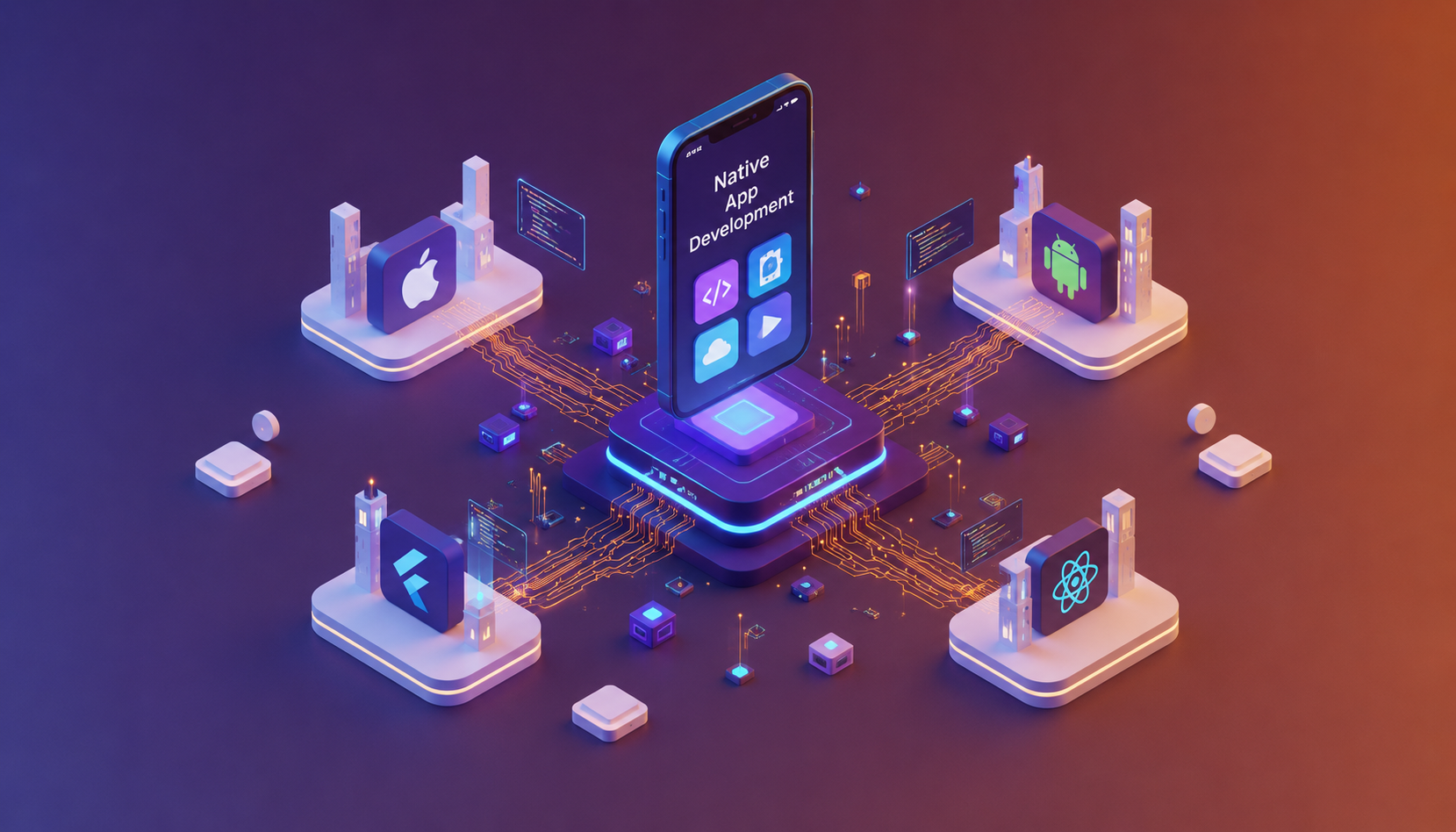
In the current digital environment, the definition of mobile excellence has shifted from simply “working on all devices” to “optimizing for every device.” To grasp the current technical shift, one must first define What is Native App Development in a world where hardware and software are more unified than ever. This approach involves building applications using the platform’s primary programming languages and tools, ensuring the software speaks the same language as the device hardware. For UAE enterprises, choosing native app development means moving away from generic, “good enough” experiences and toward high-performance solutions tailored for the sophisticated user base in Dubai and Abu Dhabi.

As of June 2026, the industry has standardized on Swift 6.3.2 for iOS and Kotlin 2.4.0 for Android. These languages allow developers to bypass the “middleman” layers found in hybrid frameworks. By providing direct access to the underlying operating system APIs, native apps remain the absolute benchmark for fluidity, responsiveness, and deep system integration. This direct connection is why native apps feel more “alive” than their cross-platform counterparts.

The Core Architecture of Native Applications

Native code doesn’t need a translator. It uses binary execution to run directly on the device’s processor, which leads to maximum efficiency and lower battery consumption. While hybrid apps often struggle with memory management because they rely on web views or complex bridges, native apps manage resources with surgical precision. This is vital for complex tasks like real-time data processing or high-fidelity graphics. Platform SDKs, such as the iOS 26 SDK, provide immediate access to the latest OS features. When a new system update drops, native developers can implement new features instantly without waiting for third-party framework maintainers to catch up.

Swift vs. Kotlin: The 2026 Ecosystem Overview

The current ecosystem is dominated by two powerhouses that have fully embraced declarative UI. SwiftUI has evolved into a mature, high-performance tool for creating interfaces across the entire Apple ecosystem. On the Android side, Jetpack Compose offers a similar modern approach, allowing for rapid iteration without sacrificing speed. While Kotlin Multiplatform (KMP) is often used to share business logic, the UI remains distinctively native to ensure a flawless user experience. Using specialized IDEs like Xcode 26.5 or Android Studio is essential. These tools offer deep debugging and profiling features that generic cross-platform editors simply can’t match. Choosing native app development ensures that your software can leverage every bit of power from the latest mobile processors.

Unrivalled Performance: Why Native Remains the Choice for Power Users

Performance in 2026 isn’t just a luxury; it’s a baseline requirement for user retention. Native apps operate by communicating directly with the device’s GPU and CPU, ensuring that intensive tasks don’t experience the lag often found in interpreted code. While cross-platform frameworks have improved, they still struggle to maintain a consistent 120Hz refresh rate on modern ProMotion and high-refresh displays. For a premium brand in Dubai, a stuttering interface is a reputation risk. Native app development ensures that every scroll, transition, and animation feels fluid and instantaneous, meeting the high expectations of the UAE’s tech-savvy population.

Efficiency extends beyond just visual speed. Native applications offer superior battery management because they don’t require an abstraction layer to translate commands to the hardware. This optimized resource management is critical for users who rely on their devices throughout a long workday. When choosing a development approach, enterprises must also consider how the app behaves when connectivity drops. Native apps handle local data storage and background synchronization with a level of reliability that hybrid wrappers can’t match, making them the superior choice for field operations or high-stakes financial tools.

Direct Hardware Access and On-Device AI

Modern mobile strategy in the UAE increasingly relies on real-time data. By using Apple’s CoreML and Google’s ML Kit, native apps process complex data on-device rather than sending it to a remote server. This is essential for low-latency AR experiences in real estate or secure biometric authentication in banking. Native apps access the Neural Engine directly to execute complex 2026 AI tasks with sub-millisecond latency, bypassing the overhead of cloud-based processing. For organizations looking to lead, integrating mobile app development with on-device intelligence provides a significant competitive edge.

Enhanced Security for National Enterprises

Security is a non-negotiable pillar for government-linked entities and large-scale enterprises across the Emirates. Native development allows teams to leverage hardware-level encryption and secure enclaves, which isolate sensitive user data from the rest of the operating system. This architecture significantly reduces the attack surface by eliminating the vulnerabilities often found in third-party cross-platform bridges. By using platform-specific security APIs, businesses can ensure strict compliance with national data protection standards. This level of protection is why native app development remains the preferred path for any application handling confidential information or high-value transactions.

Native vs. Cross-Platform: A Strategic Comparison for Modern Businesses

Choosing the right architecture requires looking far beyond the first launch. While cross-platform tools like React Native and Flutter promise to “write once, run anywhere,” they introduce a technical layer known as the “bridge.” This bridge acts as a translator between the app’s code and the device’s operating system. In high-stakes environments, this translation creates micro-delays that users can feel during complex interactions. Understanding the nuances of Mobile web vs. Native vs. Hybrid models is essential for any business leader before committing significant capital to a project.

Native apps avoid the “uncanny valley” where UI components look almost correct but behave unexpectedly. When a new OS version launches, native apps are ready on day one. Cross-platform developers often find themselves stuck waiting for third-party libraries to update, which can lead to broken features or security gaps. Native app development eliminates this dependency, providing a direct line to the latest platform innovations without the need for a middleman.

Performance and UX Benchmarks

Frame rate stability is where native code truly shines. Touch response times in native environments are measured in milliseconds, providing the tactile feedback users expect from high-end devices. Native apps also inherit system-wide features like Dark Mode and advanced accessibility settings automatically. By following Apple’s Human Interface Guidelines or Android’s Material Design natively, your app feels like a natural extension of the phone. This consistency builds trust and reduces the learning curve for your customers.

Total Cost of Ownership (TCO) and Scalability

Many UAE firms prioritize initial savings, but the Total Cost of Ownership (TCO) over a five-year period often tells a different story. Cross-platform projects can accumulate “technical debt” as teams spend hundreds of hours writing custom native modules to fix performance bugs the framework cannot handle. When you look at the app development cost uae enterprises face over a multi-year lifecycle, native often proves more economical. The lack of third-party library bloat and the ease of scaling make native app development a more sustainable long-term investment for growing brands.

Decision Framework: When to Invest in Native Development

Choosing the right path isn’t just about your current budget; it’s about your long-term vision. Enterprises in Dubai and Abu Dhabi often face a choice between speed and sustainability. If your app’s core value proposition relies on high-speed data processing or intricate hardware interactions, native app development is the only logical choice. You should ask yourself: Is performance a feature? For a banking app or a high-end retail experience, even a fraction of a second in latency can lead to significant user churn.

A “Platform-First” strategy can also be a powerful move. Instead of launching a mediocre version on two platforms simultaneously, many successful UAE brands perfect their iOS experience first. This allows you to gather deep user insights and refine your UI/UX before expanding to Android. It’s a strategic way to manage initial costs while ensuring that when you do scale, you’re building on a stable, high-performance foundation. You’ll also need to evaluate your internal team’s expertise. Hiring for native roles requires a focus on specialized Swift or Kotlin engineers, which ensures a deeper understanding of platform-specific nuances.

Assessing Complexity and Feature Requirements

The complexity of your feature set dictates your tech stack. You should choose native for:

  • AI-First Products: Apps requiring on-device machine learning for real-time translation or image recognition.
  • Graphic-Intensive Tools: Real estate apps using LiDAR for 3D room mapping or complex AR overlays.
  • High-Security Solutions: Fintech or government services that need hardware-level biometric integration and secure enclaves.

However, if you’re building a content-heavy app or a simple internal dashboard, cross platform app development might suffice for your initial launch. The key is to match the technology to the user’s ultimate goal without over-engineering simple solutions.

Evaluating Time-to-Market vs. Long-term Quality

While cross-platform tools might get you to market faster initially, they often lead to the “refactoring trap.” As your user base grows and features become more complex, you’ll likely spend more time fixing framework-specific bugs than building new features. Native app development avoids this by using the tools the OS was designed for, ensuring your app remains stable as it scales. For national-scale deployment across the diverse device landscape of the Emirates, starting with native ensures long-term stability and easier maintenance. If you’re ready to define your technical roadmap, our team specializing in mobile app development can help you navigate these strategic choices.

Building High-Impact Native Solutions with Shark Matrix

Success in the competitive UAE digital market requires more than just a functional application. It demands a solution that feels premium and performs flawlessly under pressure. At Shark Matrix Technologies LLC, we move beyond the basic build and launch cycle. Our engineering-first approach to mobile app development services prioritizes long-term stability and hardware optimization. We don’t just write code; we build digital assets that represent your brand’s commitment to quality in Dubai and across the Emirates.

As a leading ios app development company in dubai, Shark Matrix Technologies LLC specializes in navigating the specific technical requirements of the Apple ecosystem while maintaining a robust presence on Android. Our strategy integrates advanced AI automation and machine learning development services directly into the native core. This ensures your app isn’t just a static tool but an intelligent platform capable of real-time data processing and personalized user experiences. We manage the entire lifecycle from initial UI/UX design to national-scale deployment.

Our Native Engineering Philosophy

We build for reliability. Our engineering philosophy centers on creating quality-first codebases designed to maintain 99.9% crash-free sessions. This level of stability is achieved through rigorous testing on physical devices, not just simulators, to ensure platform-perfect performance across varying hardware specifications. By utilizing native-specific frameworks, Shark Matrix Technologies LLC integrates generative ai development services and ai chatbot-development services that run with minimal latency. This approach ensures that your native app development project delivers a smooth, uninterrupted journey for every user.

Future-Proofing Your Mobile Investment

Digital landscapes shift rapidly. Apple and Google frequently update their store policies and SDK requirements, such as the mandatory iOS 26 SDK transition discussed earlier. Shark Matrix Technologies LLC manages these updates proactively so your application never breaks on launch day. Our scalable architectures are designed to grow alongside your national user base, ensuring that a surge in traffic doesn’t compromise speed. Whether you need industry specific ai solutions or a high-performance e-commerce platform, we provide the technical foundation required for sustained growth. Contact Shark Matrix Technologies LLC for a strategic consultation on your next mobile project and discover how native app development can transform your enterprise’s digital footprint.

Future-Proofing Your Enterprise Mobile Strategy

The decision between platforms in 2026 is no longer a simple debate about initial budget. It’s a strategic choice about whether your brand can afford to lag behind in security, hardware integration, and AI readiness. Choosing native app development ensures your business isn’t just keeping pace with the UAE’s rapid digital transformation but leading it. You’ve seen how native architecture eliminates the bridge lag and provides the secure enclave necessary for sensitive national-scale operations. Investing in a platform-specific foundation today prevents the costly refactoring traps that often haunt cross-platform projects as they scale.

Shark Matrix Technologies LLC brings a specialized engineering team to your project, focusing on Swift and Kotlin to deliver 99.9% crash-free sessions. Our expertise in AI-driven mobile solutions and our proven track record with national-scale enterprise apps make us the ideal partner for your next digital milestone. Scale your business with high-performance native app development from Shark Matrix Technologies LLC. Your path to a high-performance, secure, and AI-ready mobile future starts with a clear technical roadmap tailored for the Emirates market.

Frequently Asked Questions

What is the main difference between native and cross-platform app development?

The fundamental difference lies in how the code communicates with the device’s hardware. Native development uses platform-specific languages like Swift or Kotlin to speak directly to the operating system. Cross-platform options use a shared codebase that requires an abstraction layer or “bridge” to translate commands. This distinction affects how smoothly the app interacts with specific hardware features and system-level APIs.

Is native app development more expensive than hybrid development in 2026?

Initial investment for native app development is generally higher because it requires separate codebases and specialized teams for iOS and Android. While cross-platform tools can reduce early effort by 30% to 40%, those savings often vanish during the maintenance phase. Native apps avoid the hidden costs of debugging third-party framework issues, making the total cost of ownership more predictable for UAE enterprises over a long-term lifecycle.

How long does it typically take to develop a native mobile application?

A standard enterprise-grade native app typically takes four to nine months to move from concept to launch. This timeline includes rigorous testing phases and compliance checks. For instance, Google now requires a mandatory 14-day closed testing period with at least 12 testers for new developer accounts. While building two separate apps takes more time upfront, the resulting stability often leads to a faster approval process during strict app store reviews.

Can native apps work offline better than cross-platform apps?

Native apps handle offline functionality more reliably because they have direct, unmediated access to local database systems and background synchronization protocols. This architecture allows the app to cache large amounts of data securely on the device without the performance bottlenecks seen in web-view-based hybrid apps. For field workers or users in Dubai’s high-rise elevators, native performance ensures the interface remains responsive even without an active internet connection.

Which programming languages are used for native app development today?

As of June 2026, the industry standards are Swift 6.3.2 for the Apple ecosystem and Kotlin 2.4.0 for Android development. These languages have matured to support declarative UI frameworks like SwiftUI and Jetpack Compose. Using these official languages ensures your app is fully compatible with the latest system requirements. This includes the iOS 26 SDK, which is now mandatory for all new submissions and updates to the App Store.

Should I build an iOS or Android app first for the national market?

The choice depends on your target demographic, but many UAE businesses prioritize iOS due to its high market share among affluent consumer segments. Starting with a single platform allows you to refine the user experience and validate your business model before investing in the second platform. If your service targets a broad, national-scale audience, a staggered release starting with the platform your core users prefer is often the most strategic approach.

How does native development improve app security for enterprises?

Native development enhances security by providing direct access to hardware-level encryption and secure enclaves on the device. This setup isolates sensitive data from potential software vulnerabilities. By removing the third-party “bridge” used in cross-platform frameworks, you eliminate a common attack vector. This level of protection is essential for meeting the strict data privacy and AI consent regulations currently enforced across the Emirates.

Do native apps perform better for AI and machine learning features?

Native apps significantly outperform other architectures for AI tasks because they tap directly into the device’s Neural Engine and GPU. This direct hardware access is vital for real-time generative AI services and on-device machine learning models that require low latency. By processing data locally rather than relying on cloud-based responses, native app development provides a faster and more secure experience for users interacting with intelligent features.

Categories
Development

Choosing the Best iOS App Development Company in Dubai: A 2026 Comparison Guide

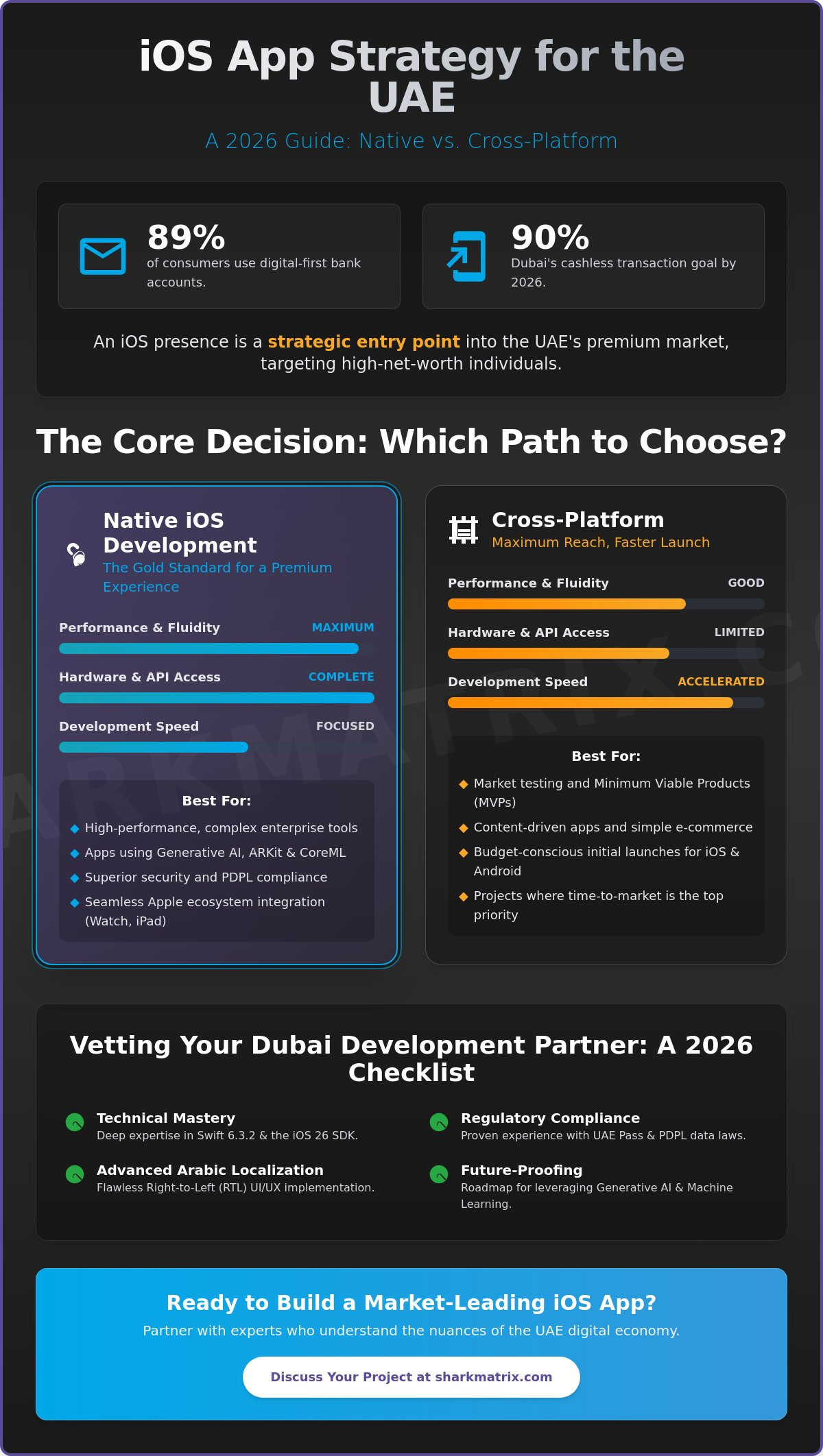
With 89% of UAE consumers now using digital-first bank accounts and Dubai aiming for 90% cashless transactions by the end of 2026, your mobile strategy is no longer just an “add-on” for your business. You’ve probably felt the pressure to launch a premium digital experience, yet you’re likely concerned about high development costs or whether a partner can handle the nuances of Arabic localization and UAE data laws. Choosing the right ios app development company in dubai is the difference between a forgotten icon on a home screen and a high-performance tool that drives measurable ROI.

This comparison guide helps you navigate these challenges by showing you exactly how to evaluate potential partners for the current market. We’ll break down the 2026 tech requirements, including the iOS 26 SDK and Swift 6.3.2, while providing a vetting checklist to ensure your app meets local standards. You’ll learn how to compare development methodologies and understand the importance of integrating essential features like UAE Pass and PDPL-compliant data security to ensure your iPhone application is truly market-ready.

Key Takeaways

  • Understand why native iOS development remains the gold standard for UAE brands seeking a premium market entry in 2026.
  • Compare the long-term ROI and maintenance costs of native Swift builds against popular cross-platform frameworks like Flutter.
  • Identify the critical design nuances, such as Arabic RTL support, required when selecting an ios app development company in dubai.
  • Explore a structured roadmap for app success, including how to leverage generative AI and machine learning to stay ahead of regional competitors.

The Strategic Importance of iOS App Development in the UAE

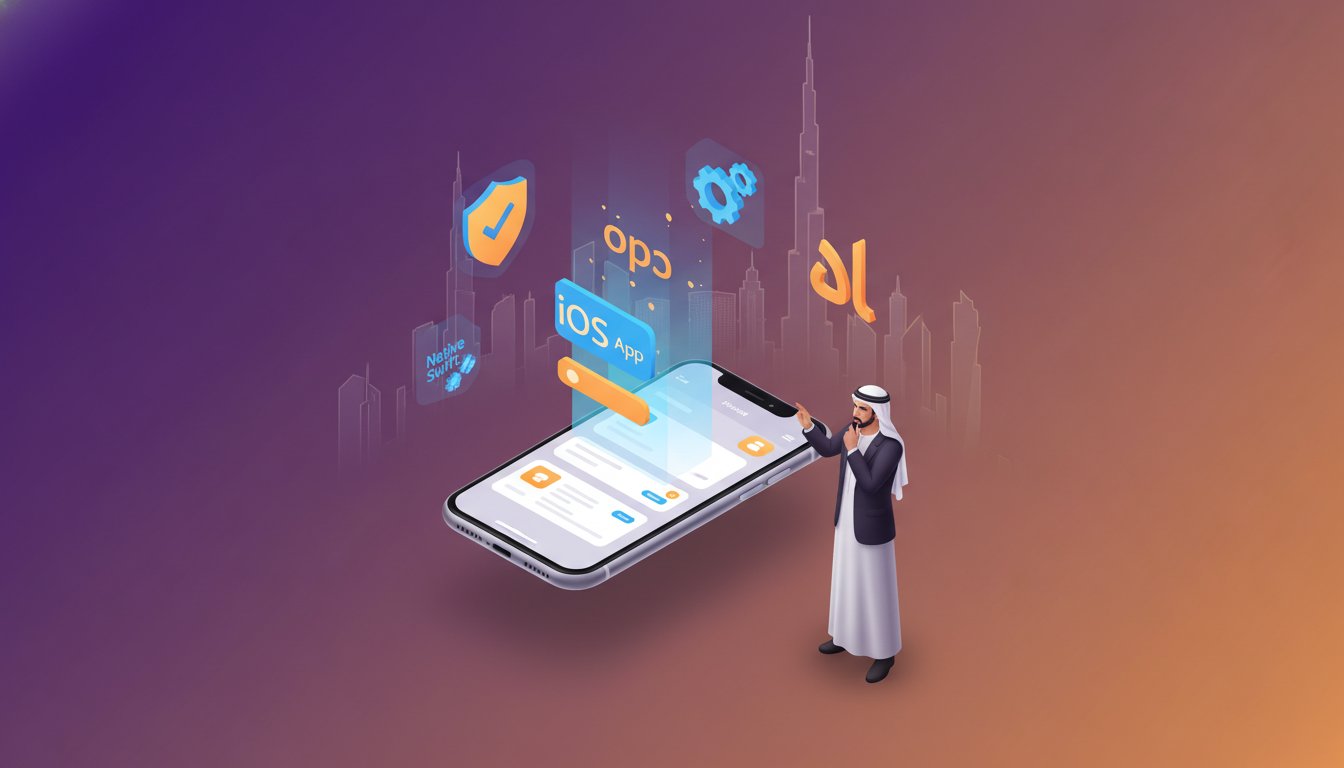
In 2026, the UAE continues to lead the region in smartphone adoption, with iPhone penetration reaching record levels among high-net-worth individuals and corporate decision-makers. For national brands, an iOS presence isn’t just a technical requirement. It’s a strategic entry point into a premium market segment that values security, aesthetics, and seamless performance. When you partner with an ios app development company in dubai, you aren’t just buying code; you’re investing in a platform that commands authority in a highly competitive digital economy.

High-performing apps drive customer loyalty by offering a frictionless experience that other platforms often struggle to replicate across fragmented hardware bases. By focusing on the Apple ecosystem, businesses can leverage the specific purchasing behaviors of UAE residents, who are statistically more likely to engage with digital-first banking and high-end e-commerce solutions. This focus on quality over quantity defines the modern approach to growth in the Emirates, where a polished app serves as a digital flagship for your brand.

Why Native iOS Development Matters for National Enterprises

Building with Swift and SwiftUI provides a level of fluid performance that cross-platform tools can’t always match. Native development allows your application to tap directly into the iPhone’s Neural Engine and advanced biometric sensors, which is critical for the “smart” features expected in 2026. Understanding The iOS Development Lifecycle helps enterprises realize that native builds offer superior security and deeper hardware integration. Key advantages include:

  • Superior memory management and battery efficiency for complex enterprise tools.
  • Full access to Apple’s latest ARKit and CoreML frameworks for immersive experiences.
  • Stricter adherence to the UAE Personal Data Protection Law (PDPL) through sandboxed environments.
  • Seamless integration with the Apple Watch and iPadOS ecosystems for a unified user experience.

Aligning App Strategy with UAE Digital Goals

The UAE’s push toward a cashless society and the National AI Strategy 2031 has created a unique environment where innovation is rewarded. A professional ios app development company in dubai will ensure your product aligns with these government initiatives, integrating features like UAE Pass for identity verification. Success in this market requires more than a functional app; it demands strategic mobile app development services that prioritize user experience as the primary differentiator. If your app doesn’t feel local and premium, users will quickly move to a competitor who understands the cultural nuances of the GCC market.

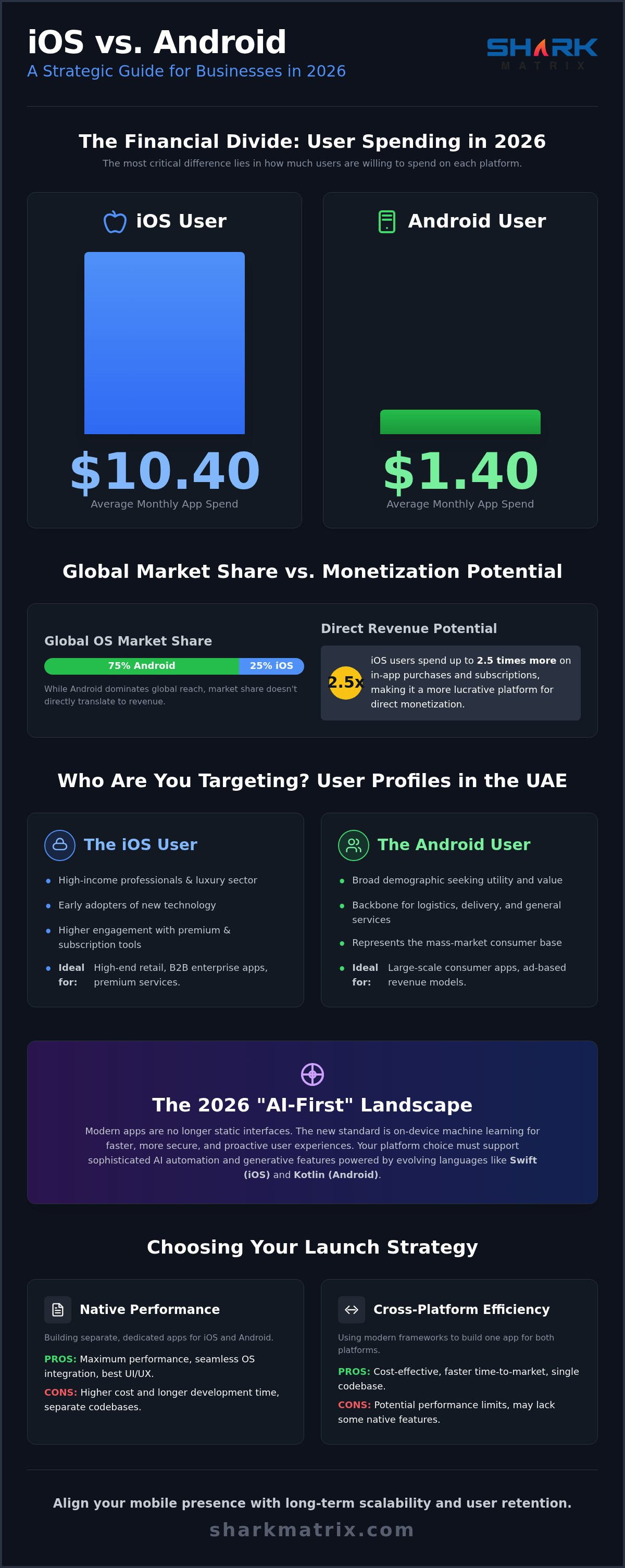
Native iOS vs. Cross-Platform: A 2026 Comparative Analysis

Deciding between native and cross-platform development is a pivotal moment for any enterprise. In 2026, the gap between these methodologies has narrowed, yet the choice significantly impacts your long-term success. A native build using Swift 6.3.2 ensures your app responds with the fluid precision that Dubai’s high-end users demand. Conversely, frameworks like Flutter allow you to hit both iOS and Android markets simultaneously. This is often an attractive route for businesses looking to test the market quickly without doubling their initial engineering team or budget.

Engagement metrics tell a compelling story. Native apps typically see higher retention rates because they feel “right” on the device. They follow Apple’s Human Interface Guidelines perfectly, ensuring that every swipe and tap behaves exactly as the user expects. When you consult an ios app development company in dubai, you’ll find that while cross-platform builds reduce initial time-to-market, they often struggle with complex animations or deep hardware integration. You must consider the criteria for evaluating a development partner to ensure they can handle the technical nuances of your chosen path.

When to Choose a Dedicated iOS App Development Company

If your project involves advanced generative AI, high-performance graphics, or complex machine learning services, native is the way to go. The “Premium Feel” is a currency in the UAE market. Users expect zero lag and perfect Arabic RTL localization that doesn’t break during OS updates. While cross-platform app development serves as an excellent alternative for simpler MVPs or internal business tools, it might not satisfy the elite expectations of a national consumer brand. High-traffic apps in sectors like fintech or luxury retail benefit immensely from the stability of a dedicated iOS build.

Cost Implications of Native vs. Cross-Platform

Financial planning for a digital product requires a long-term view. Native apps often require a higher upfront investment because you’re building a bespoke experience for one ecosystem. However, the app development cost in the UAE should also account for scalability. Choosing a cheaper hybrid route can lead to “Technical Debt” if you eventually need to rewrite the code for better performance as your user base grows. Understanding the full long-term ROI of your technology choices is essential, and a comprehensive look at native app development in 2026 can help you weigh the true cost of performance compromises against initial savings. A professional ios app development company in dubai will help you balance these costs against your business KPIs. If you’re ready to build a high-performance application, exploring mobile app development with a strategic partner can clarify your roadmap and ensure your tech stack supports your goals for years to come.

Choosing the Best iOS App Development Company in Dubai: A 2026 Comparison Guide

Critical Criteria for Evaluating an iOS App Development Company in Dubai

Selecting the right partner involves more than checking a list of completed projects. You need a team that understands the strategic role of a mobile application as a national brand asset. In 2026, the technical bar is higher than ever. A competent ios app development company in dubai must demonstrate a mastery of both global Apple standards and the specific cultural expectations of the UAE market. This includes a deep understanding of local user psychology and the technical ability to implement high-security features that align with regional regulations.

When you evaluate potential agencies, look for these specific indicators of quality:

  • Proven experience with the UAE Personal Data Protection Law (PDPL) and local data residency requirements.
  • A portfolio that showcases complex integrations with national systems like UAE Pass.
  • The ability to provide clear documentation for the entire development lifecycle.
  • Dedicated expertise in native performance optimization for the latest iPhone models.

Arabic Localization and Cultural Nuance

Finding a skilled ios app development company in dubai requires looking beyond English-only portfolios. In the GCC, Arabic localization is a fundamental requirement. True localization involves mastering Right-to-Left (RTL) design nuances. This isn’t just about translating words; it’s about ensuring that navigation drawers, progress bars, and even the direction of icons align with local reading patterns. If a developer simply flips the text without adjusting the layout, the user experience feels broken. Many businesses find that website design and development services provide the initial blueprint for these aesthetics, but a mobile app requires a more intimate understanding of touch-based interaction in an RTL environment.

AI and Future-Proofing Your iOS Application

By 2026, Apple has integrated sophisticated machine learning tools directly into the iOS SDK. You should evaluate whether a potential partner has experience with CoreML and Apple’s latest generative AI frameworks. A modern agency must be able to implement AI-driven personalization, which is now a standard expectation for national brands. Whether it’s predictive search in e-commerce or smart categorization in fintech, these features significantly boost user retention. Ask potential partners about their track record with automation and how they plan to use on-device AI to keep your data secure while providing a smarter user experience. Enterprises serious about deep hardware integration and AI-ready architecture should also review the definitive breakdown of native app development approaches for modern enterprises to benchmark what best-in-class technical capability looks like in 2026.

The iOS Development Lifecycle: A Roadmap to App Store Success

Launching a digital product in a high-stakes environment like the Emirates requires more than just clean code. It demands a disciplined lifecycle that mitigates risk while maximizing market impact. A top-tier ios app development company in dubai will guide you through a five-stage roadmap specifically designed for the 2026 tech ecosystem. This structured approach ensures that every dirham invested contributes to a stable, scalable, and secure application.

The lifecycle typically follows these essential milestones:

  • Strategic Discovery: Aligning your app’s core features with the UAE National AI Strategy 2031 and identifying specific market gaps.
  • Prototyping: Developing interactive wireframes that prioritize Arabic RTL layouts and Middle Eastern aesthetic preferences.
  • Agile Development: Using Swift 6.3.2 and the iOS 26 SDK to build the application in iterative sprints, allowing for regular feedback.
  • Quality Assurance: Conducting rigorous security testing to ensure 100% compliance with the UAE Personal Data Protection Law (PDPL).
  • ASO and National Launch: Executing a localized App Store Optimization strategy to ensure visibility among regional competitors.

From Discovery to Deployment

The discovery phase is the most critical step for avoiding scope creep, which can often derail enterprise projects. By defining every technical requirement early, you ensure the final build matches your business KPIs. Before the official national launch, a professional ios app development company in dubai will facilitate beta testing with actual UAE users. This provides invaluable data on how local audiences interact with your UI. While your app lives in the App Store, your broader digital presence shouldn’t be ignored. Utilizing search engine optimization (SEO) services ensures your brand remains visible across all web touchpoints, reinforcing the authority of your mobile application.

Post-Launch Optimization and Growth

Deployment isn’t the finish line; it’s the beginning of your app’s growth phase. In 2026, user expectations shift rapidly, and your app must evolve through regular updates to maintain compatibility with the latest iOS versions. Monitoring real-time analytics allows you to identify which features drive the most engagement and where users might be dropping off. To gain immediate traction in a competitive market, a PPC agency can provide the necessary catalyst, driving high-intent users to your App Store page through targeted campaigns. This multi-channel approach ensures that your technical excellence is matched by high visibility. If you’re ready to start this journey with a strategic partner, explore our mobile app development solutions to see how we turn complex ideas into market leaders.

Shark Matrix: Leading the Future of iOS Development in the UAE

Shark Matrix Technologies LLC stands at the intersection of technical precision and strategic growth. As a premier ios app development company in dubai, we don’t just build applications; we engineer digital assets that thrive in the UAE’s unique economic environment. Our 2026 approach integrates generative AI development services and machine learning directly into the iOS architecture, ensuring your business stays ahead of national innovation goals. We prioritize advanced data security to safeguard user trust while maintaining the high-performance standards Apple users expect. By focusing on ROI-driven development, we eliminate the fear of high costs without results, providing clear milestones and transparent progress throughout the journey.

Our team understands that the Dubai market demands a level of sophistication that goes beyond basic functionality. We bridge the gap between global innovation and local necessity, ensuring your app is fully optimized for the latest system requirements and hardware capabilities. Whether you’re a fintech startup or an established enterprise, Shark Matrix Technologies LLC acts as a strategic architect, balancing strict global standards with the specific regulatory and cultural requirements of the Middle East.

Our Full-Stack Approach to Mobile Success

We combine aesthetic UI/UX excellence with robust backend engineering. This ensures your app is beautiful on the surface and powerful under the hood. We specialize in industry-specific AI solutions that transform how businesses interact with their customers. Beyond the code, we understand that a mobile brand’s success depends on public perception. That’s why we integrate online reputation management into our broader strategy for UAE enterprises. Our team provides a tailored iOS roadmap that aligns your technical build with your long-term marketing goals, creating a cohesive digital presence that spans web and mobile platforms. You’ll work with experts who understand how to leverage AI chatbots and natural language processing to enhance user engagement from day one.

Why National Brands Trust Shark Matrix Technologies LLC

National enterprises require a partner capable of handling high-stakes launches and complex data-driven lead generation. Shark Matrix Technologies LLC offers an end-to-end service model that carries your project from the initial strategic discovery to a global App Store launch. Our expertise in content marketing and AI automation services allows us to build apps that actively contribute to your bottom line. We focus on brand protection and scalable growth, ensuring your application can handle thousands of concurrent users without compromising speed or security. Our commitment to professional digital marketing ensures that your technical excellence is matched by cultural resonance across the GCC. If you’re ready to dominate the local market, it’s time to Contact Shark Matrix Technologies LLC for a Strategic iOS Consultation and secure your place in the digital future.

Secure Your Digital Future in the UAE Market

Navigating the 2026 mobile landscape requires a balance of technical innovation and cultural precision. Success in the Emirates depends on more than just code; it requires a deep understanding of native performance, RTL design, and the latest PDPL regulations. By prioritizing a native build and integrating on-device AI, your business can offer the premium experience that Dubai’s high-net-worth users expect. The right ios app development company in dubai will serve as your strategic architect, ensuring every feature aligns with national digital goals and your specific business KPIs.

Shark Matrix Technologies LLC brings 15+ Years of Digital Excellence to every project, combining an Expert Arabic Localization Team with AI-Powered Mobile Solutions. We help you move beyond the development phase into a cycle of continuous growth and market dominance. Don’t let technical debt or poor localization hold your brand back in a competitive economy. It’s time to build a scalable, secure application that resonates with your audience and delivers a clear return on investment.

Partner with the Leading iOS Development Experts in the UAE and take the first step toward a market-ready iPhone application today. Shark Matrix Technologies LLC is ready to help you turn your digital vision into a national success story.

Frequently Asked Questions

How much does it cost to develop an iOS app in the UAE?

Costs vary significantly based on complexity, with industry estimates for basic MVPs starting around $8,000 and enterprise solutions exceeding $100,000. Factors such as AI integration, custom backend architecture, and the depth of Arabic localization influence the final investment. You should consult with an ios app development company in dubai to receive a detailed breakdown tailored to your specific business requirements and technical goals.

How long does the iOS app development process usually take?

A standard iOS project typically takes between 3 to 9 months from the initial discovery phase to the final App Store launch. Simple applications might reach the market in 12 to 16 weeks, while complex enterprise tools with multiple third-party integrations require more time. Each milestone, including UI/UX design and rigorous security testing, must be handled carefully to ensure a high-performance product that meets Apple’s standards.

Is native iOS development better than cross-platform for UAE startups?

Native development is generally better for startups targeting a premium audience or requiring complex features like advanced machine learning. While cross-platform frameworks like Flutter offer a faster initial launch, native Swift builds provide superior hardware integration and a more fluid user experience. Startups must balance the immediate speed of hybrid models against the long-term scalability and performance benefits of a dedicated iOS application.

Do I need a separate app for iPad and iPhone?

You don’t need to build separate applications because Apple utilizes a universal system that allows one binary to run across both devices. Developers use adaptive layouts and SwiftUI to ensure the interface automatically adjusts to different screen sizes and orientations. This unified approach reduces your long-term maintenance costs while providing a consistent brand experience for users across the entire Apple ecosystem.

How do I ensure my iOS app is optimized for the Arabic language?

Optimization requires a complete Right-to-Left (RTL) design strategy rather than just simple text translation. This involves mirroring the user interface, adjusting navigation patterns, and ensuring that icons and imagery are culturally resonant for the GCC market. Partnering with an ios app development company in dubai that understands these nuances is essential to prevent layout breaks that frustrate local users and damage your brand reputation.

Can an iOS app development company in Dubai help with App Store Optimization (ASO)?

Yes, professional agencies incorporate ASO as a vital part of the deployment phase to maximize organic visibility. This process includes optimizing your app’s title, metadata, and descriptions with keywords specifically researched for the UAE market. High-quality ASO ensures your application ranks higher in local search results, which is critical for driving downloads in a competitive digital landscape.

What security standards should a UAE mobile app follow?

Every application that collects user data must strictly comply with the UAE Personal Data Protection Law (PDPL). This involves implementing end-to-end encryption, secure API protocols, and multi-factor authentication to protect sensitive information. Adhering to these standards is a legal necessity and a fundamental way to build trust with a consumer base that is increasingly conscious of digital privacy and data residency.

How does AI integration improve an iOS app’s performance?

AI integration improves performance by enabling predictive search, personalized content delivery, and automated customer interactions through chatbots. By utilizing Apple’s CoreML framework, your app can process complex tasks directly on the device, which increases speed while maintaining user privacy. These intelligent features help national brands boost retention rates by creating a more intuitive experience that adapts to the specific behaviors of each user.