

Categories
Uncategorized

Improving PPC Conversion Rates Through Stronger Campaign Structure

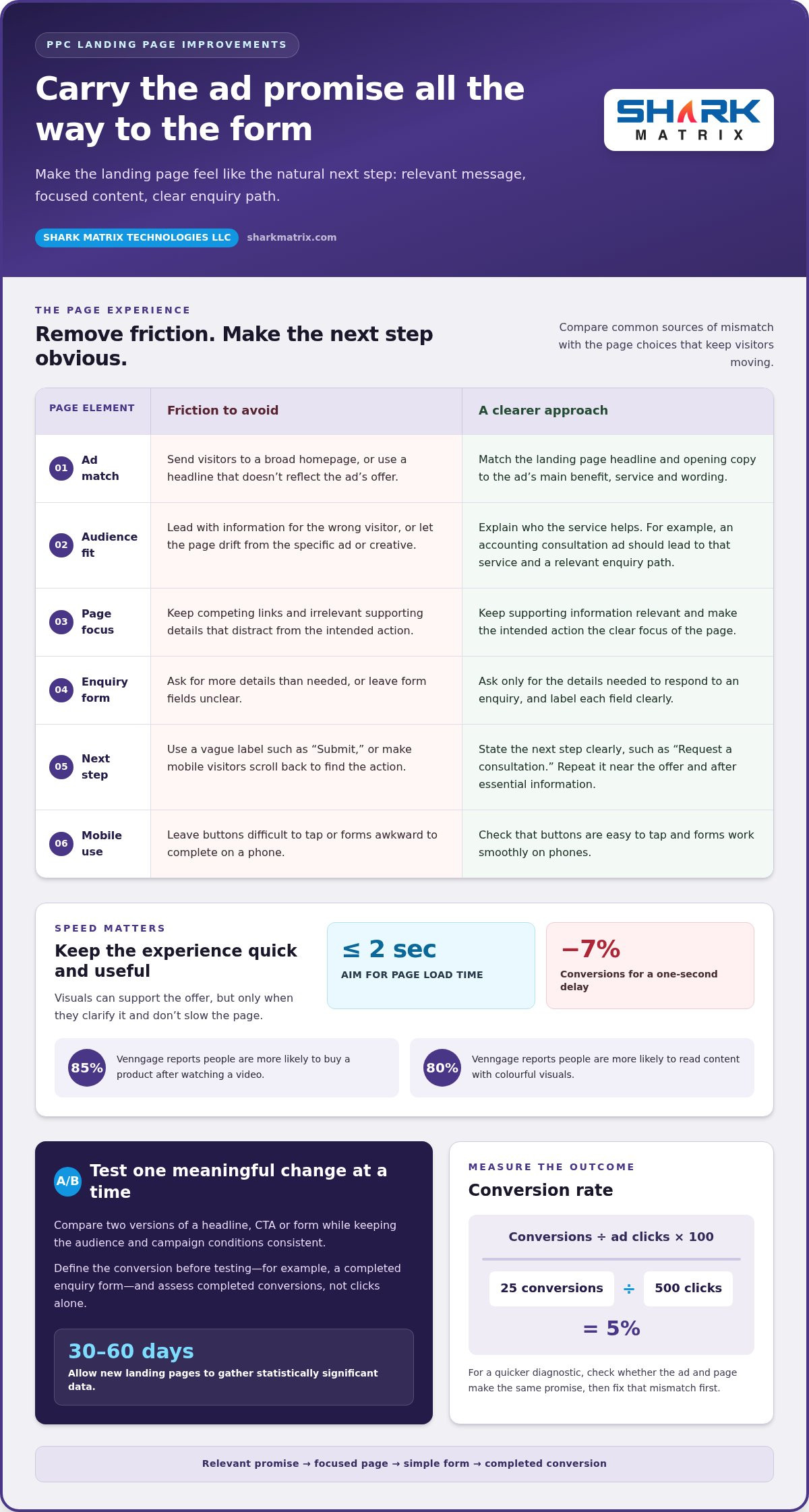
More clicks won’t fix a form that visitors abandon. Improving PPC conversion rates starts with matching each ad to a focused landing page, the right audience and a simple form; the conversion rate is calculated by dividing conversions by ad clicks and multiplying by 100. For example, 25 conversions from 500 clicks equals a 5% conversion rate.

It’s frustrating to pay for traffic that doesn’t turn into enquiries, especially when the problem may be what happens after the click. This guide explains how to improve PPC conversion rates by reducing form abandonment, making landing pages more relevant and usable, refining audience targeting, and organising campaigns around clear goals. You’ll also learn how to read conversion data and choose tests based on visitor behaviour rather than guesswork. From matching ads to landing pages to structuring campaigns, each improvement can make the next step clearer for potential customers across the UAE.

Key Takeaways

  • Make each landing page reflect the ad’s promise, keep its form focused, and make the next step clear on mobile.
  • Separate audiences by intent and tailor ad messages and landing pages to what each group needs.
  • Organise campaigns around distinct goals and relevant keywords so performance data can guide specific changes.
  • Track completed conversions alongside clicks to identify where visitors drop off and which adjustments improve results.
  • Use industry and platform benchmarks as context, then judge performance against your own campaign goals and lead quality.

1. Landing page improvements

A landing page should deliver on the promise made in its ad. If a Google ad promotes an accounting consultation, the page should lead with that service, explain who it helps, and present a clear enquiry form. Sending visitors to a broad homepage makes them search again, adding effort that can interrupt the path from interest to action.

Start by aligning the message. Match the ad’s main benefit, service, and wording to the landing page headline and opening copy. Then check that the content fits the intended audience: a page for business owners seeking support shouldn’t lead with information for job seekers. For Facebook campaigns, make sure the page reflects the specific offer or creative that brought visitors there. Keep supporting details relevant and remove competing links that distract from the intended action.

Use a focused form and a visible call to action (CTA). Ask only for the details needed to respond to an enquiry, and label each field clearly. Describe the next step in the CTA, for example, “Request a consultation,” rather than using a vague “Submit.” Repeat the CTA near the offer and after essential supporting information, so mobile visitors don’t have to scroll back to find it. Check that buttons are easy to tap and forms work smoothly on phones.

Test one meaningful change at a time. Compare two versions of a headline, CTA or form, while keeping the audience and campaign conditions consistent. Define the conversion before the test begins, such as a completed enquiry form, and assess completed conversions rather than clicks alone. Allow new landing pages 30-60 days to gather statistically significant data. For a quicker diagnostic, check whether the ad and page make the same promise, then fix that mismatch first.

Page speed and useful content also shape the experience. Aim for a load time of two seconds or less; a one-second delay can reduce conversions by 7%. Venngage reports that people are 85% more likely to buy a product after watching a video, and 80% more likely to read content with colourful visuals. Use video or visuals only when they clarify the offer, and keep them from slowing the page. A practical route to improving PPC conversion rates is to make every element support the same action, from the ad’s first claim to the form’s final button.

2. Audience targeting

Relevant targeting starts with what a person wants to do, not just who they are. Separate searches for “buy office chairs” from “office chair repair,” because they signal different needs. Match each keyword group to its own ad and conversion goal. Review search terms regularly, then exclude irrelevant queries that use budget without attracting suitable visitors.

Keyword targeting and search intent can improve conversions by connecting each query to an ad that addresses its underlying need. Someone comparing providers needs different information from someone ready to request a quote. Use search-term reports and conversion analytics to group queries by intent, refine ad messages, and direct each group to a relevant next step.

Build audience segments around meaningful differences, such as past enquiries, existing customers, or first-time visitors. Tailor retargeting for existing customers to their purchase history, product lifecycle, and needs between purchases. PPC retargeting of existing customers typically generates conversion rates three to five times higher than cold traffic. Keep each offer relevant to its segment instead of showing every visitor the same message.

Micro-moment targeting addresses a need when it arises. For example, someone searching for an urgent service on a mobile device may need a direct way to get in touch, while a researcher may need clear comparisons. Use the query, device, location targeting, and time context available in campaign analytics to shape the message. Make the ad’s next step fit the person’s immediate task to reduce friction.

Remarketing can reconnect with people who visited a key page but didn’t complete an enquiry. In a Mazda retargeting example, retargeted customers converted at a 53% higher rate and spent 98% more. Treat those figures as an example, not a forecast for every campaign. Create audience lists based on useful actions, such as viewing a service page, and exclude people who have already completed the intended conversion.

Email list targeting can help campaigns reach known customers or leads with messages suited to their relationship with the business. Segment lists by previous purchase, enquiry topic, or lifecycle stage, then tailor the ad and landing-page offer accordingly. Keep the goal consistent across channels: an existing customer may need a related service, while an unconverted lead may need a clear answer to a previous concern.

Audit conversion tracking by testing a real form submission and confirming that the intended conversion records once in campaign analytics. Compare ad-platform totals with website records, check that tags fire on the correct completion event, and review attribution settings for duplicate or missing credit. These checks help reveal whether a targeting change attracts qualified leads or simply shifts reported conversions. For stronger keyword planning across paid and organic search, explore SEO and keyword strategy.

3. Account structure and campaign strategy

Organise Google Ads campaigns around distinct business goals rather than using a catch-all account structure. A UAE firm could separate campaigns for service enquiries, branded searches, and competitor comparisons. Within each campaign, group closely related keywords so the ad clearly answers the search. This structure makes it easier to see which intent, message, or audience brings useful leads, then adjust that area without changing unrelated campaigns.

Keep each ad group focused. If a campaign targets “commercial cleaning” and “office cleaning,” separate the themes when their search intent or landing pages differ. Align keywords, ad messaging, and destination pages. Google’s Quality Score considers click-through rate, ad relevance, the landing page, and overall AdWords performance. Improving these connected elements gives account reviews a practical focus instead of treating each metric in isolation.

Kevin Brkal reported an 81% lift in conversion rate for a client after optimizing its advertising account. That result illustrates why structure deserves attention, but it isn’t a forecast for every account. Review campaign and ad-group performance together: a high-click ad with few qualified enquiries may need tighter targeting, while a relevant ad with low traffic may need broader keyword coverage or revised messaging.

Bidding strategies and campaign budgets affect conversions by shaping which auctions an account can enter and how consistently its ads appear. Choose a bidding approach that fits the measured goal, such as completed enquiries, and make sure conversion tracking reflects that action. Prioritise budgets according to campaign value and lead quality, then review spend alongside completed conversions. Increasing the budget alone won’t fix a weak match between searches, ads, and offers.

Separate campaigns when they need different goals, audiences, or budget decisions. For example, campaigns targeting distinct customer groups may need different settings and locally relevant messaging across the UAE. Keep campaigns together when their keywords, conversion goals, and landing-page experiences genuinely match. This balance gives account managers enough control without scattering similar data across numerous small campaigns.

Review performance regularly and make changes to answer a specific question. Compare search terms, conversion actions, device performance, and campaign results before changing bids or budgets. For LinkedIn campaigns, assess whether professional audience criteria fit the offer; for Google Ads, examine query intent and keyword relevance. Record each change and its result so the next strategy decision builds on evidence rather than guesswork.
Improving PPC Conversion Rates Through Stronger Campaign Structure

4. Reasons to optimize PPC conversion rates

Clicks measure attention, but completed actions show whether paid traffic supports a business goal. A campaign can attract visitors who leave without calling, enquiring, booking, or downloading a guide. Reviewing the conversion rate helps distinguish useful traffic from visits that use budget without producing the intended result. That distinction matters when deciding whether to change targeting, messaging, or the offer.

Optimization can also reveal friction between the ad and the next step. For example, a visitor who clicks an offer for a service may abandon a form that asks for unnecessary details. Review the journey from ad click to completed action and find where people stop. Addressing that specific barrier makes campaign decisions more practical than simply trying to generate more clicks.

Common PPC tracking mistakes include counting button clicks as completed leads, firing a conversion tag more than once, or overlooking broken tracking after a website change. These errors can distort bidding decisions and make weak traffic appear successful. Test the full action, such as submitting a form, and confirm that the recorded event represents a genuine completion.

Conversion data can also help prioritise campaigns. Compare lead quality alongside recorded actions: a campaign producing many low-value enquiries may matter less than one generating fewer suitable prospects. In Google’s cited data, the average advertiser doubles their return. Treat return as a business measure, not a substitute for checking whether leads progress to meaningful outcomes.

For context, a typical PPC conversion rate is between 2% and 5%, while exceptionally strong campaigns can exceed 10%. These are broad benchmarks, not a UAE-specific target or a promise for an individual account. In the UAE, compare campaigns with similar goals, platforms, audiences, and conversion definitions. A search campaign for urgent services should not be judged against a social campaign promoting a guide download.

Best practice starts with a reliable baseline. Define the conversion clearly, confirm the tracking event, and review results by campaign and device. Then change one factor at a time, such as the bid strategy, keyword focus, or form requirements. Record what changed and whether qualified conversions shifted. This makes each optimization easier to assess and prevents simultaneous edits from obscuring the cause.

Running PPC without reviewing completed actions can hide wasted spend and missed opportunities. Use conversion evidence to decide whether to refine the audience, improve the offer, or shift campaign priorities. If clicks rise while qualified conversions remain flat, investigate relevance and tracking before increasing traffic. A measured approach keeps optimization tied to business outcomes rather than surface-level activity.

5. What is a good PPC conversion rate by industry and platform?

A useful benchmark depends on the campaign’s industry, platform, audience, and conversion definition. For context, WordStream reported an average PPC conversion rate of 7.52% in its November 2025 update, while Ruler Analytics reported 5.4% in May 2026. These figures differ, so treat them as reference points, not interchangeable targets for UAE campaigns.

Industry differences matter, too. The reported median paid search conversion rate for ecommerce is about 3.5%, while SaaS averages about 2%. Agencies have a 2.4% benchmark, and business services have a 3.5% benchmark. These distinctions show why a UAE retailer should compare like with like, rather than judging its campaign against an unrelated service business.

Legal figures also vary by source and date. WordStream’s 2025 benchmark reports 5.09% for Attorneys & Legal Services, while Ruler Analytics reported 7.8% for Legal in May 2026. The gap underlines the importance of matching geography, campaign type, and conversion measurement before using a benchmark to set expectations.

Platform averages offer another reference, but they don’t remove the need for context. Reported averages are 2.85% for Google Ads and 2.94% for Bing across sectors. Facebook Ads range from 9% to 10%, LinkedIn Ads from 5% to 15%, and Instagram averages 1.08%. Compare the same objective and conversion action, since platforms can attract visitors at different stages of decision-making.

Some platform figures also shift by industry. Facebook Ads conversion rates are reported at 14.29% for fitness products and services, compared with 2.31% for technology. A UAE fitness campaign and a technology lead campaign therefore need different comparison sets. Look for benchmarks that resemble the campaign’s offer and audience, then use internal results to assess whether leads are relevant.

For a practical evaluation, calculate conversions using the same action and reporting period across campaigns. Separate enquiry submissions from calls, purchases, or downloads, then compare each category with its closest benchmark. Review the source, date, industry, and platform behind every reference. If definitions differ, treat the figure as broad context rather than a direct performance comparison.

A “good” rate is one that supports the campaign’s commercial goal and attracts suitable prospects. A higher percentage can still mislead if it counts low-quality actions, while a lower rate may bring more valuable enquiries. In the UAE, assess lead quality and campaign outcomes alongside the conversion rate, then use relevant benchmarks to guide, not replace, decisions. For a broader search visibility strategy, explore SEO strategy.

Shark Matrix Technologies: Search Engine Optimization (SEO)

Shark Matrix Technologies LLC can help when paid campaigns attract clicks but campaign management, organic visibility, or website experience needs attention. Its Pay Per Click (PPC) Management supports campaign planning and optimization, while Search Engine Optimization (SEO) helps strengthen visibility beyond paid ads. If the landing page creates friction, Web Design and Development can improve the site experience that contributes to conversion.

These services can work together to support the same business goals: relevant traffic, clear messaging, and meaningful actions. Consider this next step when your campaign data points to issues across targeting, search visibility, or the website rather than one isolated ad. To discuss your marketing needs, contact Shark Matrix Technologies LLC or visit sharkmatrix.com.

Build Your Next Campaign Around What You Learn

Make the next campaign decision deliberately. Choose a clear business outcome, then use incoming results to decide what needs attention. This keeps improving PPC conversion rates focused on meaningful progress, not change for its own sake. A useful review asks whether the campaign attracts the right prospects and whether the website supports their next step.

When paid campaigns, search visibility, and website experience need to work together, Shark Matrix Technologies offers Pay Per Click (PPC) Management, Search Engine Optimization (SEO), and Web Design and Development. These services can address connected parts of the visitor journey, from campaign traffic to the pages where prospects take action.

Bring your campaign goals and priorities into the next planning conversation. Contact Shark Matrix Technologies to discuss a practical next step for your digital marketing. Clear goals make it easier to keep learning, refine your approach, and move forward with confidence.

Frequently Asked Questions

How can I reduce form abandonment in PPC campaigns?

Reduce abandonment by making the form easy to complete and fixing errors that interrupt submission. On a UAE service enquiry form, label required fields clearly and show an understandable message beside any field needing correction. If the form has several steps, explain what comes next and show visitors their progress. Review analytics for the last completed field to find where people stop, then test a focused adjustment.

Should I create separate PPC campaigns for existing customers?

Create a separate campaign when existing customers need a different message, offer, or conversion goal from new prospects. For example, a business could separate a campaign encouraging repeat purchases from one focused on first-time enquiries. This makes each group’s results easier to interpret and helps avoid showing acquisition ads to people who have already converted. Keep campaigns together if their goals and audience treatment are genuinely the same.

What is a PPC conversion rate?

A PPC conversion rate is the percentage of ad clicks that result in a defined conversion. Depending on the campaign’s goal, a conversion might be a completed purchase, a submitted enquiry, or a completed download. Define the action before comparing campaigns: a rate based on form submissions cannot be compared directly with one based on purchases. Consistent definitions make performance reporting more meaningful.

What is the fastest way to improve PPC conversion rates?

Fix the clearest disconnect between a search, its ad, and the action visitors are asked to take. A message-match correction can show results in 7-14 days. For example, if an ad promotes a specific service but the destination discusses several services, make the relevant offer prominent. Then monitor completed conversions and lead quality to see whether the change improved the campaign’s outcome.

Why is call-to-action placement important for PPC conversions?

CTA placement matters because visitors need a clear next step when they’re ready to act. Place an action near the main offer, then consider another after supporting details for readers who need more information first. Keep the page’s primary action consistent, so a consultation button and a download button don’t compete. Track each CTA separately to learn which placement leads to completed conversions.

How do you calculate PPC conversion rate and conversion value?

Calculate conversion rate by dividing conversions by ad clicks and multiplying by 100. Conversion value is the total value assigned to the recorded conversions, such as transaction revenue for purchases. For lead campaigns, use a consistent internal valuation method rather than treating every form submission as equal. Keep conversion value distinct from conversion count, so reporting shows both how often people act and the business value attributed to those actions.

Which PPC landing page changes improve conversion rates?

Prioritise changes that remove uncertainty or help visitors assess the offer. Make service eligibility, included details, and the next step easy to find. Add relevant proof, such as customer reviews, where it supports the decision, and answer common objections near the enquiry form. For a UAE campaign, make sure the service wording on the page matches the audience and offer in the ad instead of relying on generic copy.

What A/B tests should you run to improve PPC conversion rates?

Test a specific decision point, such as whether a short form or one with an additional qualifying question produces more suitable leads. Other useful tests include different offer framing, the order of supporting information, or customer proof near the CTA. Keep the audience, campaign goal, and measurement consistent when comparing versions. Judge the winner by completed conversions and lead relevance, not clicks alone.

Categories
Uncategorized

Paid Media Campaign Management: Set Budgets and Plan Campaigns

Paid visibility is a choice, not a blank cheque. Paid media is promotion a business funds to reach a selected audience. Effective paid media campaign management connects that spend to a clear goal, such as awareness, leads or sales. Search ads, for example, can appear when someone searches for a relevant phrase, and advertisers often pay when a person clicks.

It’s understandable to want more control over advertising spend and a clearer sense of what it can achieve. You can set and adjust a campaign budget, while performance data shows which ads and keywords are attracting attention and which need refinement. The right approach depends on your objective, audience and platform, not on spending for its own sake.

This guide explains what paid media includes, how search advertising works and how to plan campaigns around flexible budgets. You’ll learn how to define a useful goal, choose relevant targeting, match ads with suitable landing pages and assess results using clicks, conversions and cost per acquisition.

Key Takeaways

  • Match social platforms and audience targeting to the people you want to reach, using relevant attributes such as interests, location and behaviour.
  • Choose search terms for relevance and intent, then make sure each landing page delivers on the ad’s message.
  • Compare paid placements by how they charge, such as per click or per thousand impressions, and select a format that fits your campaign goal.
  • Set a spending limit and use performance data to adjust bids, targeting and creative as the campaign runs.
  • Define the outcome you want before launch, then track meaningful measures such as conversions and cost per acquisition.

What is paid media?

Paid media is promotion a business funds to reach a selected audience through advertising placements. In the UAE, campaigns must comply with applicable advertising and privacy requirements, as well as the policies of each platform.

Audience Targeting Across Platforms

Audience targeting means choosing who sees an ad and where it appears, using platform options such as location, interests, demographics and behaviour. A retailer serving customers across the UAE, for example, needs different targeting from a business focused on one audience segment. Paid media campaign management links those choices to the campaign objective instead of treating every platform user as a potential customer.

For example, Facebook Ads can target customers using demographics and purchase history. A UAE-wide retailer could focus on people interested in its product category, while a business promoting a specialist service might target audiences based on relevant professional interests. Choose platforms that match the audience’s habits, and tailor the creative to the format, such as an image or video ad.

Reach and Brand Awareness

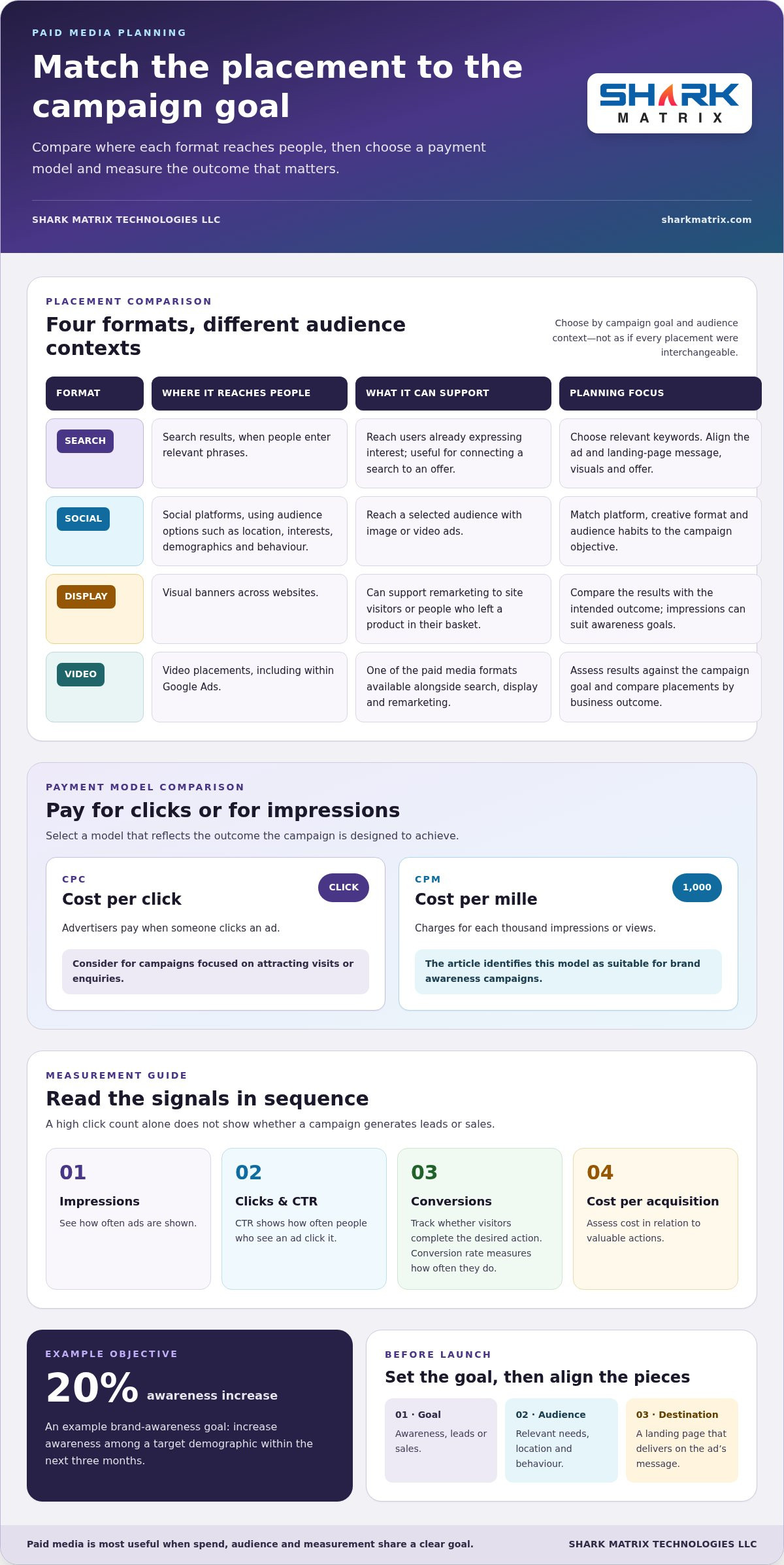
Paid media can increase visibility by placing promotional content in front of people who may not find a business through organic efforts. A brand awareness campaign, for example, could aim to increase awareness by 20% among a target demographic within the next three months. That specific objective gives the business a clear audience, outcome and timeframe to assess.

Reach alone doesn’t show whether an ad is relevant. A UAE business can compare audience responses across platforms and formats, then refine targeting or creative to better fit the people it wants to reach. Paid placements can also complement organic marketing: advertising amplifies a message, while SEO and useful content support visibility through unpaid channels.

Start with the desired outcome, then research the audience. Awareness, lead generation and sales each call for a different message and measurement approach. For awareness, track whether the campaign reaches the intended audience. For leads, focus on actions that show interest, such as a completed enquiry form. A clear goal makes subsequent campaign decisions more useful.

Audience research should identify the people a business wants to reach and the problem its offer addresses. A UAE business might distinguish between customers seeking a service available nationwide and decision-makers evaluating a business solution. Those groups may use different platforms and respond to different messages. Define the target audience by relevant needs, location and behaviour, not assumptions about the whole market.

Choose platforms and formats that fit audience habits. Social media ads can use images or videos, with advertisers selecting an audience and budget. A professional offer may need a different context from a consumer product, while a nationwide promotion benefits from relevant location targeting. Matching platform, format and audience keeps digital marketing focused on the campaign goal.

Search engine advertising

Search ads place paid messages on search engine results pages when people enter relevant phrases. Other formats, including display and social media ads, reach audiences in different contexts.

Search Ads and Captured Intent

Search advertising shows keyword-based ads to people searching for specific phrases, making it useful for reaching users already expressing interest. For example, a UAE customer searching for a particular service may see a related Google Ads placement. Choose relevant keywords that connect search intent with the offer, rather than pursuing unrelated traffic.

Build each ad around its selected keywords, then align the landing page’s message, visuals and offer with the ad. If an ad promises information about a service, its destination should explain that service clearly. Sitelink, call and location extensions can add useful information or options to eligible search ads. Conversion tracking shows which campaigns and keywords lead to valuable actions.

Evaluate search advertising through impressions, clicks, conversions and cost per acquisition. Click-through rate shows how often people who see an ad click it; conversion rate shows how often visitors complete the desired action. These measures answer different questions. A high click count alone doesn’t show whether a campaign is generating leads or sales.

Paid Media Advertising Formats

Paid media formats include search ads, social media ads, display banners and video placements. The format determines where people encounter the message and what action they can take. Choose based on the campaign goal and audience context, rather than treating every placement as interchangeable.

Social media advertising can use image or video ads, with advertisers selecting an audience and budget. Display advertising places visual ads across websites and can support remarketing to people who visited a site or left a product in their basket. These formats let a business reconnect with interested visitors after their original search.

Pricing varies by format and payment model. With cost per click, advertisers pay for ad clicks. Cost per mille charges for each thousand impressions or views, making it suitable for brand awareness campaigns. Choose a model that reflects the outcome the campaign is designed to achieve.

For example, a business focused on visibility may use display placements priced by impressions, while a campaign seeking enquiries may prioritize search ads and conversion tracking. Google Ads can include search, display, remarketing and video placements. Compare results by format to see which placements support the intended business outcome.

Definition and forms of paid marketing

Paid media is promotional content a business funds to reach a chosen audience. It can attract attention, generate traffic, build awareness or encourage conversions. For example, a UAE retailer might promote a seasonal offer to people interested in its product category. Payment buys an advertising placement; campaign strategy determines its audience, message and intended outcome.

Paid marketing can appear across search engines, social media, websites, newsletters and other channels. Formats include sponsored posts, banner ads, video ads, pop-ups and promoted articles. A business might use a sponsored social post to introduce a new service, then show a display banner to people who previously visited its website. Each format gives the message a different context.

Payment models also vary. With cost-per-click advertising, charges depend on how often people click an ad. Cost-per-mille pricing charges for each thousand impressions or views, making it suitable for brand awareness goals. Campaigns can also be structured around conversions. The model affects what the business pays for, so it should match the outcome being measured.

Paid media differs from owned media, which uses a company’s own channels. A business website, social media pages and email newsletter are examples of owned media. These channels give the business space to publish messages, while paid placements can extend their visibility. For instance, an ad can direct an audience to a product page on the company website.

Earned media is exposure gained through public relations or word of mouth. Online reviews, articles and search rankings can all contribute. Unlike a paid placement, a review is not an ad purchased by the business. A practical strategy can combine all three: promote an offer through paid media, explain it on an owned page, and attract attention through useful coverage or customer recommendations.

Organic marketing uses unpaid methods such as SEO, content marketing and social media engagement. Paid advertising can create immediate visibility, while organic efforts help build a lasting presence. For example, a UAE service business could publish an informative guide, then promote it to an audience likely to need that service. The paid placement attracts relevant visitors, and the guide provides useful detail.

Choose the mix by identifying the desired action and audience behaviour. Awareness may call for broad visibility and impression-based measurement; lead generation needs a clear next step and conversion tracking. If a campaign brings traffic but no enquiries, the message or destination may need improvement. Separating paid, owned and earned activity makes it easier to see how each contributes to the marketing objective.

Paid Media Campaign Management: Set Budgets and Plan Campaigns

Budget and campaign flexibility

Paid campaigns let businesses set spending limits and adjust delivery as performance data comes in. Budget decisions work best when tied to a clear goal, such as visibility, leads or sales.

In the UAE, paid media campaign management costs depend on campaign scope and are provided after a quote request. Factors include the platforms, campaign complexity, targeting and level of management required.

Campaign Budget Flexibility

A flexible campaign budget lets a business control spending and adapt campaigns to results. This matters when audience response or market conditions shift: budgets and placements can be adjusted instead of left unchanged.

Set a spending limit that reflects the campaign objective and the amount the business can allocate to advertising. Then monitor delivery and performance. For example, a UAE retailer promoting a seasonal offer can review which placements engage relevant shoppers and adjust the campaign as demand changes.

Flexibility doesn’t mean changing direction without evidence. Review the campaign objective alongside impressions, clicks and conversions. If visibility is the goal, impressions help show delivery; if enquiries matter, conversion tracking provides a more useful signal. These measures distinguish a campaign that is spending from one contributing to growth.

Bid and Budget Optimization

Bid and budget optimization means adjusting bids and spending based on campaign data to improve delivery against the chosen goal. It matters because a placement that attracts clicks without valuable outcomes may need different targeting or a lower bid.

Review audience, location and keyword performance before making adjustments. On LinkedIn, manual cost-per-click bidding is described as the cheapest way to pay for traffic 90% of the time. Advertisers using this approach can start with a lower bid, then raise it only enough to spend their daily budget by day’s end.

Across platforms such as Google, compare clicks with conversions and cost per acquisition. Remove search terms that spend without converting, and shift budget toward placements that produce meaningful actions. Regular monitoring helps businesses respond to campaign performance instead of relying on initial bid settings.

Paid Media Management Costs in the UAE

Paid media management costs in the UAE vary according to the work required, so the campaign’s scope is the key consideration. The management fee and the advertising budget are distinct parts of planning: one covers campaign work, while the other funds ad placements.

Platforms, campaign formats, targeting requirements and ongoing optimization all shape the work involved. A focused search campaign and a program spanning search, display and social placements have different management needs. Keep advertising budget separate from management costs when assessing overall spend.

Track both areas against the campaign objective. A business seeking brand visibility can assess impressions and reach, while one seeking leads can focus on conversions and acquisition costs. This makes budget reviews more useful: evaluate spending against the outcome it was intended to support, not just the number of ads shown.

Paid media campaign management includes setting objectives, selecting channels, defining audiences, allocating budgets and improving campaigns using performance data. Strong planning links each decision to a specific outcome, from brand awareness to qualified leads or sales.

Common risks include paying for irrelevant clicks, reaching the wrong audience and sending visitors to a mismatched landing page. Reduce them with relevant targeting, conversion tracking, consistent ad-to-page messaging and regular optimization.

Paid Media Management Components

Campaign management is the coordinated work of planning, launching, measuring and optimizing paid placements. Each part affects whether the budget supports the intended outcome.

Begin with a defined objective, such as lead generation, then select channels that fit the audience. LinkedIn can target professional attributes such as company, role, seniority and industry when reaching business buyers. Search ads can target relevant keywords, while social placements can support audience discovery. Conversion tracking connects campaign activity to valuable outcomes.

Planning also covers ad creative, destination pages, budget allocation and reporting. For example, an ad promising a product demonstration should lead to a page where visitors can take that action. Review clicks, conversions and cost per acquisition together, rather than treating traffic alone as success. A 90-day strategic plan can provide a framework for reviewing objectives and optimization over time.

Organic marketing can complement paid channels. SEO and useful content can build visibility beyond advertising placements, while paid promotion brings a message to selected audiences. Choose the combination according to the campaign goal and available resources, then assess each channel’s contribution separately.

Campaign Risks and Risk Reduction

Campaign risks are problems that waste spend or distort performance, such as irrelevant traffic, weak tracking or an ad that doesn’t match its landing page. Reducing these risks keeps campaign decisions tied to meaningful results.

For search campaigns, review keyword relevance and exclude terms that spend without converting. For social campaigns, refine targeting when audience response suggests the selected group is too broad. A 1% lookalike audience based on previous customers is one targeting approach described for campaign testing, but it should still be assessed against the campaign’s own conversion data.

Measurement gaps create another risk: without conversion tracking, clicks may look successful even when they produce no enquiries or sales. Track the action that matters, then compare outcomes across campaigns and keywords. Test creative in a controlled sequence: start with the image or video, then headlines, and finally the primary ad text.

Check that mobile users can read the ad and use its landing page easily. A responsive page with matching copy helps maintain continuity from placement to action. Paid media programs typically take about three months to complete their foundation phase, so build time for measurement and refinement into the plan rather than judging performance on clicks alone.

Shark Matrix Technologies: Search Engine Optimization (SEO)

Shark Matrix Technologies LLC helps businesses connect paid campaigns with longer-term visibility through Search Engine Optimization (SEO) and Pay Per Click (PPC) Management. This combination can suit businesses across the UAE that need search ads while building organic presence over time.

Campaign results also depend on what happens after someone clicks. If a landing page doesn’t support the ad’s message or next step, Web Design and Development can help improve the experience. The right focus depends on your goals, channels and website needs.

For support aligning search advertising with organic visibility or improving the pages behind your campaigns, contact Shark Matrix Technologies LLC to discuss your needs.

Make Your Next Campaign a Measured Step Forward

Give your next campaign a clear role in your wider business strategy. Decide what you want advertising to contribute, who needs to act and how the experience should continue after a click. This keeps paid media campaign management connected to customer needs, rather than treating each campaign as an isolated activity.

Shark Matrix offers Pay Per Click (PPC) Management for paid campaigns, Search Engine Optimization (SEO) to support organic visibility, and Web Design and Development for the pages visitors land on. These services address different parts of your digital presence, depending on your priorities.

If you’re ready to plan your next step, contact Shark Matrix Technologies to discuss your campaign goals and digital marketing needs. A focused conversation can help you decide where to put your attention next. Move forward with a plan that gives every campaign a clear purpose.

Frequently Asked Questions

How do you keep ad spend efficient?

Keep ad spend efficient by judging campaigns against valuable actions, not clicks alone. For example, a service business can compare which audience segments produce completed enquiry forms, then prioritize the stronger-performing segments. Review search terms and landing-page behaviour together: irrelevant searches or pages that fail to guide visitors can consume budget without supporting the campaign objective. Use those findings to refine where ads appear and what they communicate.

What is paid marketing?

Paid marketing is the use of purchased advertising placements to promote a business, product or service. A company might pay to show an ad to a selected audience, then direct interested people to a page or offer. It differs from publishing on the company’s own channels, where the business controls the content but does not buy that specific placement. The campaign may aim to build awareness, generate enquiries or drive sales.

Which platforms and campaign types do you manage?

Shark Matrix offers Pay Per Click (PPC) Management and social media campaigns. Formats can include paid search and social advertising, selected to suit the audience and business goal. Platform choice shapes targeting and placement, so campaign plans should link the channel to the intended result. For a UAE business, consider whether the audience and message fit the platform, not simply how many platforms are included.

What are the steps for managing a paid media campaign?

Managing a campaign involves setting its objective, choosing an audience and channel, preparing ads and landing pages, launching, then measuring and refining performance. Before launch, define a useful result, such as a qualified enquiry rather than any form submission. After launch, review whether the audience takes that action and whether the landing page supports it. Use those findings to guide adjustments.

What are typical paid media management fees and ad spend budgets?

Management fees and advertising budgets are separate costs, and both depend on the campaign’s scope. In the UAE, management pricing is provided after a quote request; relevant factors include platform mix, campaign complexity, targeting and ongoing optimization needs. Ad spend is the amount allocated to placements, and businesses can set spending limits. Decide that allocation according to campaign goals, audience size and the channels selected.

How do you set goals, KPIs, and budgets for paid media campaigns?

Start with the business outcome, then choose a KPI that measures it directly. For example, a lead-generation campaign can prioritize qualified enquiries, while an awareness campaign can assess reach and impressions. Set a budget around the goal and the platforms needed to reach the intended audience. Review the KPI alongside spend, so budget changes reflect progress toward the outcome rather than activity alone.

How do you choose between Google Ads, Meta Ads, LinkedIn Ads, and TikTok Ads?

Choose the platform that best fits the audience and campaign intent. Google Ads can reach people searching for specific phrases; Meta advertising can use audience attributes such as demographics and interests. LinkedIn suits campaigns where professional details, such as role or industry, matter. For TikTok, assess whether its audience and ad formats fit your campaign. Compare each option with the desired action and available performance data.

What tools are used to manage and measure paid media campaigns?

Campaign teams use advertising-platform analytics and reporting tools to review delivery and outcomes. Pair those reports with conversion tracking that records meaningful actions, such as a submitted enquiry or completed purchase. This connects campaign activity to business results instead of relying on impressions or clicks alone. A consistent reporting view also makes it easier to compare platforms, audiences and campaign periods using the same outcome definitions.