
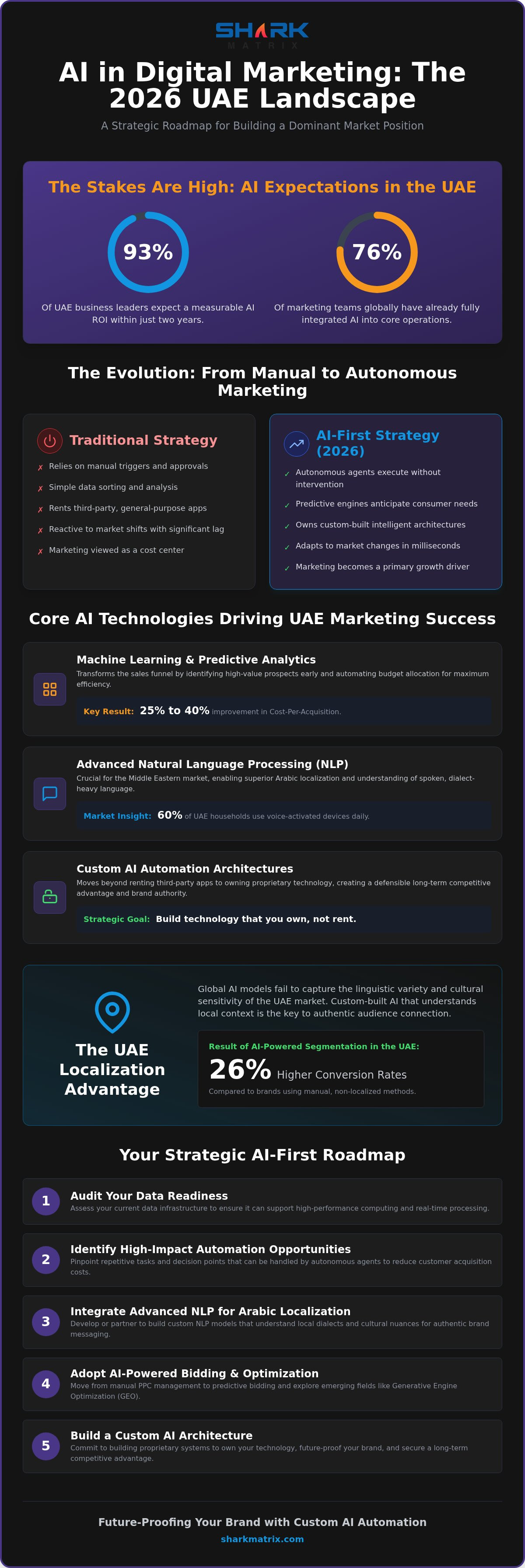
Did you know that 93% of UAE business leaders now expect a measurable ROI from their AI investments within just two years? It’s a high bar to clear, especially as the rapid evolution of ai in digital marketing uae makes it difficult to find technical partners who can build custom tools rather than just managing basic apps. You aren’t alone if you feel the pressure of the February 2026 Advertiser Permit regulations or worry that your competitors are already using advanced automation to outpace your growth.
We understand that staying ahead requires more than just following trends; it demands a shift toward building intelligent, custom architectures that predict the customer lifecycle. This guide provides a strategic roadmap to help you implement cutting-edge technologies for maximum ROI. You’ll discover how to refine your lead generation through predictive models, lower your customer acquisition costs, and leverage the synergy between SEO and AI development to secure a dominant market position throughout 2026.
Key Takeaways
- Learn why 2026 is the tipping point for autonomous marketing agents and how they are redefining brand authority across the nation.
- Discover how to integrate ai in digital marketing uae to achieve superior Arabic localization through advanced Natural Language Processing.
- Compare traditional strategies with AI-powered alternatives like Generative Engine Optimization and predictive PPC bidding for higher ROI.
- Use our strategic roadmap to audit your data readiness and identify high-impact automation opportunities that reduce customer acquisition costs.
- Understand the competitive advantage of building custom AI architectures that allow your enterprise to own its technology rather than renting third-party apps.
The Evolution of AI in Digital Marketing Across the UAE (2026)
The year 2026 marks a decisive shift in how brands operate within the national borders. We’ve moved past the era where Artificial intelligence in marketing was merely a tool for sorting data. Today, ai in digital marketing uae has evolved into a system of autonomous marketing agents that handle everything from budget allocation to creative iteration without human intervention. This transition is fueled by the UAE’s AI Strategy 2031, which has created a fertile ground for enterprises to build brand authority through technical sophistication rather than just high ad spend. If your strategy still relies on manual triggers, you’re competing against systems that learn and adapt in milliseconds.
AI-First Marketing is no longer about simple chatbots or generating basic blog posts. It represents a deeper integration of technology into the very fabric of business strategy. National digital transformation initiatives have accelerated this, pushing companies to move away from third-party apps toward custom-built intelligent architectures. This evolution ensures that marketing isn’t just a cost center but a predictive engine that drives growth by anticipating consumer needs before they are even expressed.
From Data Collection to Real-Time Execution
Modern marketing stacks now rely on high-performance computing to process vast amounts of local consumer data. This allows systems to execute campaigns across multiple platforms simultaneously, adjusting bids and messaging based on real-time feedback loops. AI-First Marketing is the integration of autonomous decision-making into every digital touchpoint. By removing the lag of manual approval, businesses can react to market shifts instantly. This level of agility is why 2026 is considered the tipping point; if your brand isn’t executing at the speed of an algorithm, you’re already falling behind the 76% of marketing teams globally that have fully integrated AI into their core operations.
The UAE’s Competitive AI Landscape
Local enterprises are finding a significant advantage over global brands by focusing on regional customization. Global AI models often struggle with the nuances of the local market, particularly when it comes to linguistic variety and cultural sensitivity. Success in the national market requires sophisticated natural language processing that understands the cultural context and specific dialects used across the country. Shark Matrix acts as a technical partner in this space, building custom AI tools that integrate these local insights directly into the marketing workflow. By owning these custom tools, national brands protect their digital reputation and ensure their ai in digital marketing uae strategy is authentically aligned with their audience’s expectations.
Core AI Technologies Driving National Marketing Success
By 2026, the gap between market leaders and laggards is defined by their technical stack. Successful ai in digital marketing uae strategies no longer rely on general-purpose software; they’re built on four specialized pillars: Machine Learning, Natural Language Processing, Computer Vision, and custom automation. These technologies allow brands to move from reactive campaigns to proactive, intelligence-led growth. Brands that utilize AI-powered segmentation in the national market have already seen 26% higher conversion rates than those sticking to manual methods. This isn’t just about efficiency; it’s about capturing market share in an environment where speed and precision are the primary currencies.
Machine Learning and Predictive Lead Scoring
Machine Learning (ML) has transformed how we view the sales funnel. Instead of waiting for a lead to convert, ML algorithms analyze historical data to identify high-value prospects early in their journey. National businesses using AI-driven campaign management typically see a 25 to 40% improvement in cost-per-acquisition. This is because ML development services enable dynamic pricing models and real-time budget allocation. If a specific channel shows a sudden spike in engagement at 2 PM on a Tuesday, the system automatically shifts resources to capitalize on that trend without human intervention. It’s a level of agility that manual PPC management simply can’t match.
Advanced NLP for the Middle Eastern Market
The Middle Eastern market presents unique linguistic challenges that standard AI models often miss. With 60% of UAE households now using voice-activated devices daily, optimizing for spoken, dialect-heavy Arabic is essential. Advanced Natural Language Processing (NLP) allows for intelligent sentiment tracking, ensuring your brand responds appropriately to customer feedback in both English and various Gulf dialects. Leveraging generative AI development helps brands create high-quality, localized content that resonates culturally. This ensures that your messaging feels authentic rather than like a translated afterthought, which is critical for maintaining trust in a competitive digital landscape.
Beyond text and data, Computer Vision is playing a larger role in visual search and social media monitoring. This technology identifies brand logos and products in user-generated content, giving marketers a clearer picture of how their brand is perceived in the real world. Building these capabilities into your workflow is complex, which is why many national leaders look to ai automation services to bridge the technical gap and streamline redundant tasks. By automating the “busy work,” your team can focus on the high-level strategy that drives long-term brand authority.
Traditional vs. AI-Powered Marketing: A Comparative Analysis
Traditional marketing methods are hitting a ceiling in the UAE’s high-velocity digital environment. While manual SEO and static PPC bidding were once standard, 2026 demands a shift toward autonomous systems that learn from every interaction. The fundamental difference lies in scalability and speed. Traditional workflows rely on human cycles; AI-powered strategies operate in real time. This evolution is most visible in how brands manage their search presence and how they interact with customers through ai chatbot-development. By moving from reactive support to proactive engagement, businesses can address consumer needs before they become complaints.
The Rise of GEO and AEO in 2026
Ranking at the top of a search results page is no longer the sole metric for success. In 2026, the focus has shifted toward Generative Engine Optimization (GEO) and Answer Engine Optimization (AEO). As more users rely on AI assistants for direct answers, your brand must be the cited source within those generated snapshots. This requires a transition from keyword stuffing to topical authority and conversational data structures. For those looking to bridge the gap between traditional and modern methods, our SEO services provide the necessary foundational context to survive this shift in ai in digital marketing uae.
Efficiency Gains and Resource Reallocation
The financial argument for AI is undeniable. Businesses using AI-driven campaign management in the UAE’s competitive market typically see a 25 to 40% improvement in cost-per-acquisition. Static PPC bidding often leaves money on the table by failing to adjust to micro-trends. In contrast, predictive bidding models analyze thousands of variables to place the right ad in front of the right person at the optimal moment. This isn’t just about saving money; it’s about reclaiming time. Our ai automation services help marketing teams reclaim roughly 40% of their working hours. This time is better spent on high-level strategy and creative innovation rather than manual data entry or campaign monitoring.
Standard content production cycles often take weeks. AI-augmented creative workflows reduce this time-to-market significantly. By using generative tools for initial drafts and data analysis, national brands can launch complex campaigns in days rather than months. This agility is essential for staying relevant in a market where consumer sentiment can shift overnight. Transitioning to an AI-powered model isn’t just an upgrade; it’s a necessity for any brand looking to maintain a competitive ai in digital marketing uae strategy throughout 2026.
Building an AI-First Marketing Strategy: A Strategic Roadmap
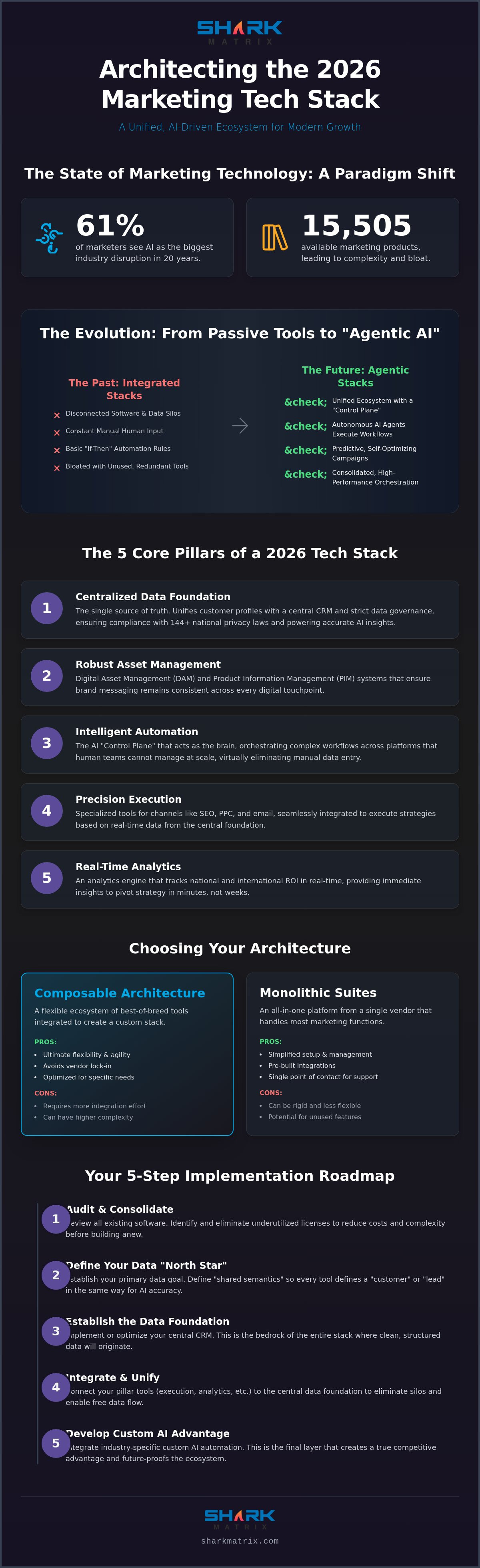
Developing a successful strategy for ai in digital marketing uae requires a shift from experimentation to structured implementation. In 2026, the market rewards businesses that treat AI as a core infrastructure rather than a series of plug-ins. To build a system that scales, you need a roadmap that moves from foundational data health to autonomous execution. If you don’t have a clear plan, you risk investing in tools that can’t communicate with each other, leading to fragmented customer experiences and wasted budget.
- Step 1: Audit Data Infrastructure. Evaluate your current data silos to ensure they’re ready for AI integration.
- Step 2: Identify Automation Opportunities. Look for high-impact areas where automation can reduce manual hours, such as lead scoring or content distribution.
- Step 3: Select Tooling. Decide between off-the-shelf software or custom AI development based on your specific business requirements.
- Step 4: Integrate Cross-Channel Data. Connect your social, search, and CRM data to provide the AI with a unified view of the customer.
- Step 5: Continuous Optimization. Set up iterative feedback loops where the AI learns from performance data to refine future campaigns.
Data Infrastructure: The Foundation of AI
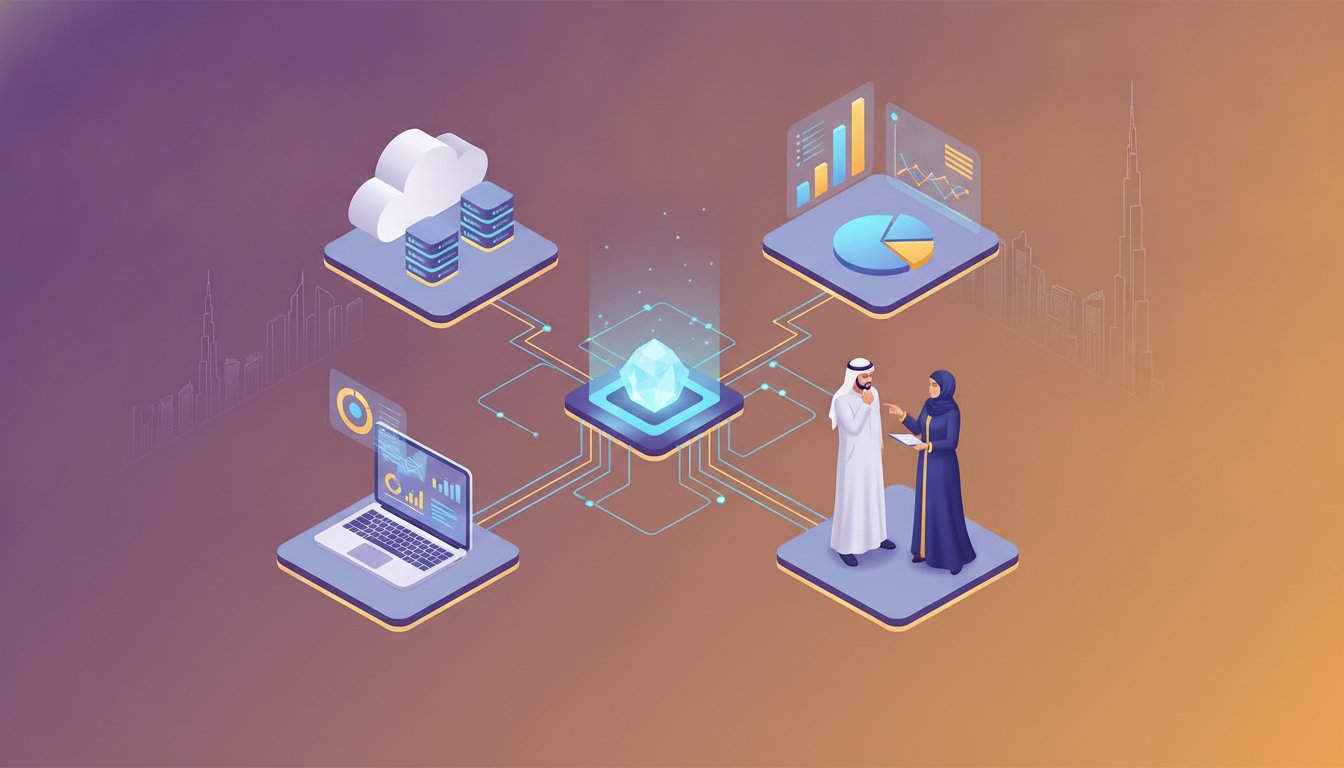
Clean, structured data serves as the fuel for your marketing engine. In 2026, Customer Data Platforms (CDPs) have become the central nervous system for national enterprises, allowing them to synthesize information from multiple touchpoints. You can’t achieve high-level ai in digital marketing uae without a solid foundation. This infrastructure must also ensure strict compliance with national data protection regulations, particularly regarding how consumer information is stored and processed for predictive modeling. Without organized data, even the most advanced algorithms will produce unreliable results.
Custom vs. Generic AI Solutions
While generic tools like ChatGPT offer a quick starting point, they often lack the nuance required for a dominant national presence. Proprietary models allow you to train the AI on your specific brand voice and historical customer interactions. This is where industry specific ai solutions provide a significant edge. They’re built to handle the unique challenges of your sector, from specialized Arabic terminology to local purchasing behaviors. Owning your AI architecture ensures that your intellectual property remains secure and your brand voice stays consistent across every automated interaction.
If you’re ready to move beyond generic tools and build a proprietary marketing engine, explore our custom AI development services to start your transformation today.
Future-Proofing Your Brand with Custom AI Automation
Owning the underlying technology is the final step in securing your brand’s future. While many agencies focus on managing third-party subscriptions, the real competitive advantage in 2026 comes from proprietary systems. By choosing ai for marketing in the UAE that is custom-built for your specific needs, you eliminate the risk of generic errors that could damage your digital reputation. Owning your code means your data remains private and your automation remains unique. This prevents competitors from simply copying your workflow and ensures your intellectual property stays within your organization. It’s the difference between renting a solution and building an asset.
Owning your AI assets allows for deeper integration with your existing CRM and sales data. This creates a closed-loop system where the AI doesn’t just send messages but learns which specific tone or offer leads to a conversion. Custom automation protects your digital reputation by ensuring that every interaction, from a chatbot response to a personalized ad, adheres strictly to your brand guidelines. Unlike generic models that can sometimes produce off-brand content, custom solutions are trained on your specific voice and historical successes. Integrating these systems with your web design and development allows for a truly dynamic user experience. Instead of a static site, your digital presence becomes a living entity that adapts to every visitor’s intent.
AI-Driven Personalization at Scale
Personalization is no longer a luxury. It’s the standard. We now deliver unique website experiences to every visitor in real-time, adjusting layouts and content based on predictive intent. This level of sophistication extends to mobile app development, where predictive UX anticipates the user’s next move. Whether it’s hyper-personalized email sequences or social media engagement that feels human, custom automation ensures your brand remains relevant across every channel. This ensures that ai in digital marketing uae is used to its full potential, creating a seamless journey from the first ad click to the final purchase.
Next Steps: Embarking on Your AI Journey
Initiating a pilot project is the most effective way to test these technologies without overwhelming your internal teams. A pilot project typically begins by identifying a single, high-friction process in your current marketing funnel. By automating this one area first, we can demonstrate a clear ROI before scaling the technology across your entire organization. Shark Matrix specializes in building these custom bridges, focusing on measurable outcomes like lowered acquisition costs and improved lead quality. Measuring the success of your implementation requires looking beyond vanity metrics and focusing on how autonomous systems impact your bottom line. If you’re ready to secure your market position, Consult with our AI experts at Shark Matrix to begin your transformation.
Secure Your Digital Dominance in 2026
The transition from using general AI tools to owning custom intelligent architectures is the defining shift of the year. We’ve explored how autonomous agents and generative engine optimization are reshaping the national landscape. Success now depends on your ability to integrate these technologies into a unified roadmap that prioritizes data health and cultural nuance. Implementing a robust strategy for ai in digital marketing uae isn’t just about efficiency; it’s about building a proprietary asset that your competitors can’t replicate.
With 15+ years of digital marketing excellence in the Middle East, Shark Matrix is the technical partner you need to navigate this evolution. Our expertise in custom machine learning and natural language processing development ensures your brand benefits from specialized Arabic AI localization that resonates with the local market. Don’t let your brand fall behind in an increasingly automated world. Scale Your Brand with Custom AI Marketing Solutions from Shark Matrix and take control of your digital future. The tools for transformation are at your fingertips; it’s time to build something extraordinary.
Frequently Asked Questions
How is AI currently being used in digital marketing across the UAE?
AI in the UAE has moved beyond simple automation to power autonomous marketing agents that manage entire customer lifecycles. Brands use ai in digital marketing uae to predict consumer behavior and deliver real-time personalized content. With 60% of households using voice devices daily in 2026, AI is also critical for voice search optimization. These systems analyze vast datasets to adjust campaigns instantly, ensuring that marketing spend is always directed toward the most profitable segments.
Can AI help with Arabic language digital marketing and SEO?
Yes, AI is essential for effective Arabic digital marketing. Advanced natural language processing services allow brands to understand and respond to various Gulf dialects with high accuracy. This technology ensures that SEO content and chatbot interactions feel culturally authentic rather than like a direct translation. Shark Matrix specializes in this area, using specialized AI localization to help brands build deeper trust with the audience through nuanced, linguistically accurate digital experiences.
What is the difference between SEO and Generative Engine Optimization (GEO) in 2026?
Traditional SEO focuses on ranking high in search engine results pages through keywords and backlinks. In 2026, Generative Engine Optimization (GEO) focuses on becoming the cited source for AI-generated snapshots and answer engines. While SEO drives traffic to your site, GEO ensures your brand authority is recognized by AI assistants. Both are necessary for a complete ai in digital marketing uae strategy, as they capture different types of user intent in a fragmented search landscape.
Is it better to use ready-made AI tools or invest in custom AI development?
Ready-made tools are useful for general tasks, but custom AI development offers a significant competitive advantage for national enterprises. Proprietary models allow you to own your technology and train it on your specific brand voice and customer data. This ensures your intellectual property remains secure and your automation is unique. While off-the-shelf apps are accessible, custom solutions provide the long-term scalability and specialized functionality needed to dominate a highly competitive digital market.
How does AI automation improve ROI for PPC campaigns in the UAE?
AI automation improves PPC ROI by using predictive bidding models to adjust ad spend in real time. These systems analyze thousands of variables to place ads when they are most likely to convert, reducing wasted spend. Businesses using AI-driven campaign management in the national market typically see a 25 to 40% improvement in cost-per-acquisition. By automating bid adjustments and audience segmentation, brands can achieve higher conversion rates while significantly lowering their overall marketing costs.
What are the ethical considerations for using AI in national marketing campaigns?
Ethical AI use in the UAE centers on data protection and transparency. Brands must comply with national regulations regarding how consumer data is collected and processed for predictive modeling. It’s also important to ensure that AI algorithms don’t perpetuate biases or deliver misleading information. Maintaining a human-in-the-loop approach helps protect your digital reputation, ensuring that automated content stays aligned with cultural values and brand standards while respecting user privacy at every digital touchpoint.
How can a small business start implementing AI marketing on a budget?
Small businesses can start by identifying a single high-impact process to automate, such as lead scoring or email personalization. Starting with a focused pilot project allows you to measure ROI before scaling. Many small businesses budget between AED 55,000 and AED 130,000 for these initial implementations. By focusing on specific automation services that reduce manual work, smaller brands can reclaim valuable hours and compete more effectively with larger organizations without an overwhelming initial investment.
What role does predictive analytics play in customer conversion for UAE brands?
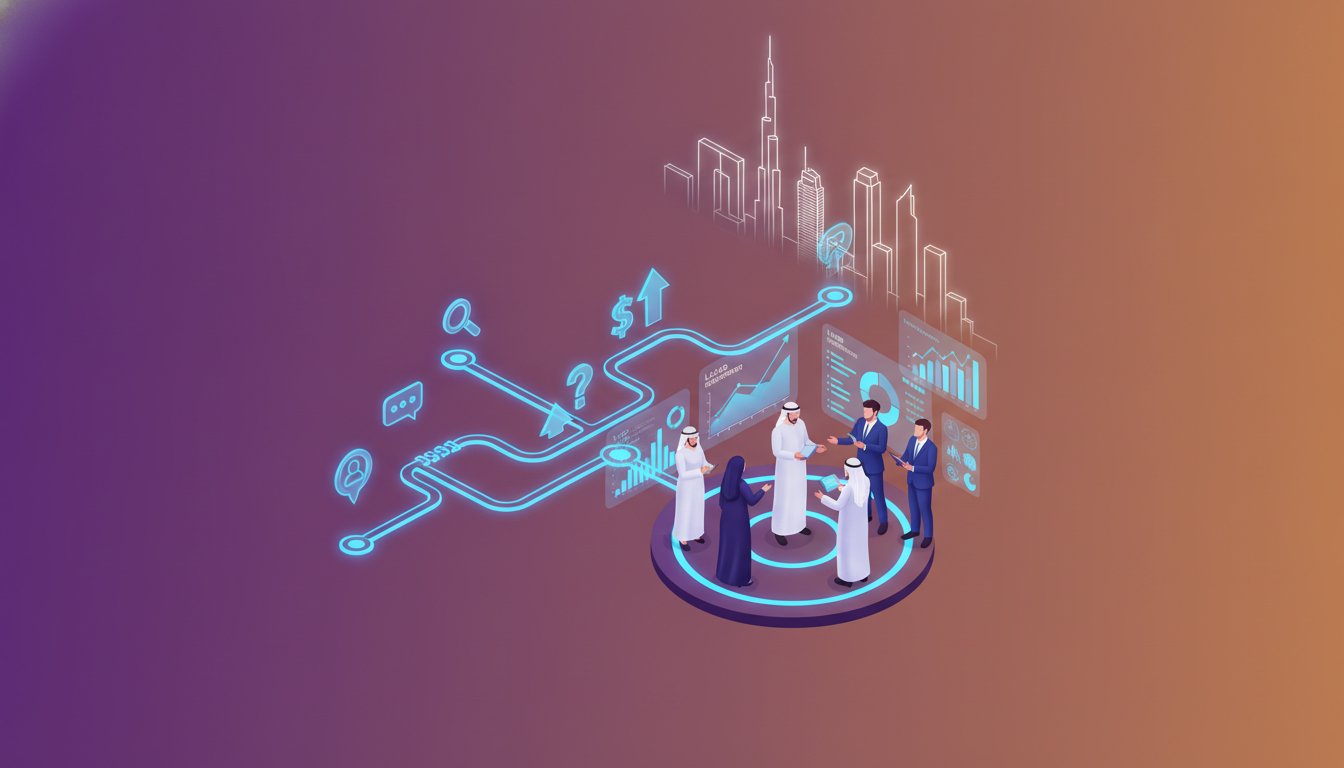
Predictive analytics helps brands forecast future consumer behaviors based on historical data. This allows for advanced lead scoring, where the system identifies high-value prospects before they even make a purchase. By understanding which touchpoints lead to a conversion, marketers can optimize the customer journey in real time. This proactive approach ensures that your brand is always present at the right moment, significantly increasing the likelihood of conversion in the country’s fast-paced digital environment.
 OpenAI
 Codex
Codex
 Vertex AI
 Cloud Vision
 OpenCV
 TensorFlow
 IBM Watson
 Cloud Natural Language
 Cognitive Services
 Bot Framework
 Mistral
 LLama
LLama
 Gemini
 Anthropic
 N8N
N8N