
Categories
AEO

How to Optimize Content for AI Search: 2026 Guide

What if the top spot on Google no longer guarantees a single click to your website? It’s a frustrating reality for many digital marketers who see their organic traffic dipping as AI summaries provide instant answers directly on the search page. You likely feel the pressure of this shift from traditional lists to synthesized responses, fearing your brand might become invisible in a sea of AI-generated text. Understanding the difference between traditional SEO and Answer Engine Optimization (AEO) is now the only way to protect your digital footprint.

Learning how to optimize content for ai search is no longer a futuristic goal; it’s a survival requirement for 2026. This guide will help you master Generative Engine Optimization (GEO) to ensure your brand isn’t just indexed, but actively cited as a trusted authority by AI engines. We’ll explore the technical shift toward natural language processing, the importance of intent-aligned entities, and the specific data structures you need to win citations in AI-driven results.

Key Takeaways

  • Understand the critical shift from traditional search lists to synthesized AI summaries and how it changes user behavior.
  • Leverage entity-based SEO and Natural Language Processing to ensure AI engines correctly interpret your brand’s expertise.
  • Learn how to optimize content for ai search by moving your strategy from simple keyword matching to earning authoritative citations.
  • Identify the practical steps for conducting an AI visibility audit and restructuring pages for better data extraction.
  • Discover how to build a technical, AI-ready infrastructure that supports long-term brand visibility in a generative search environment.

From Keywords to Conversations: What is AI Search Optimization?

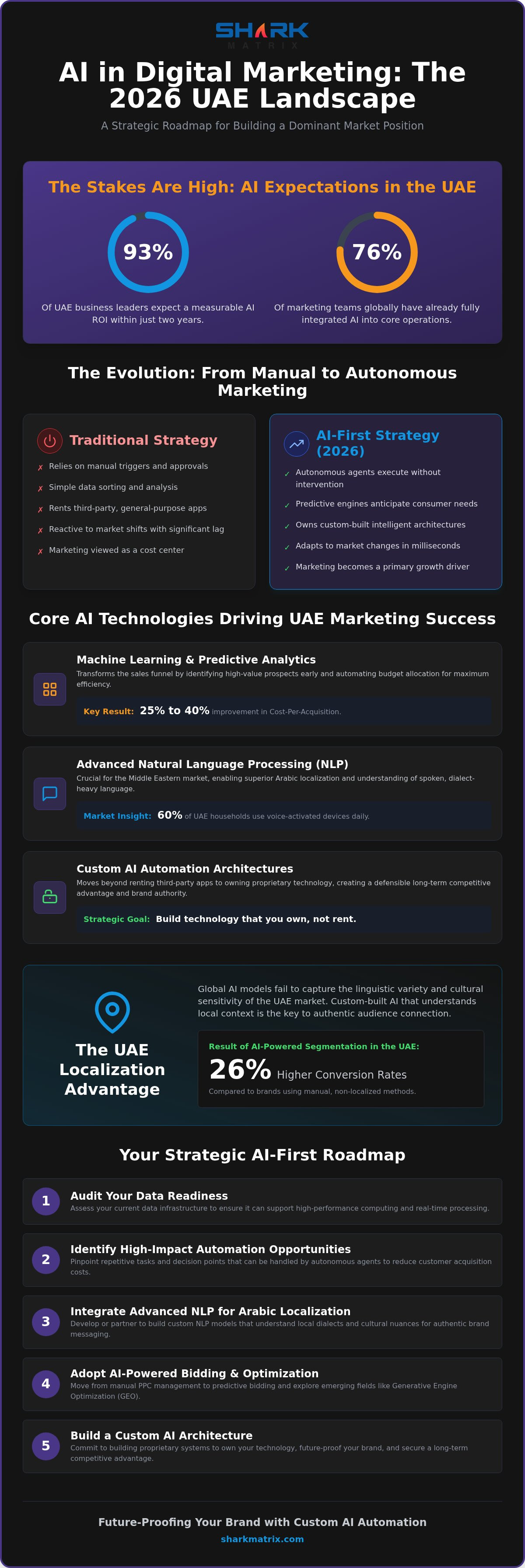
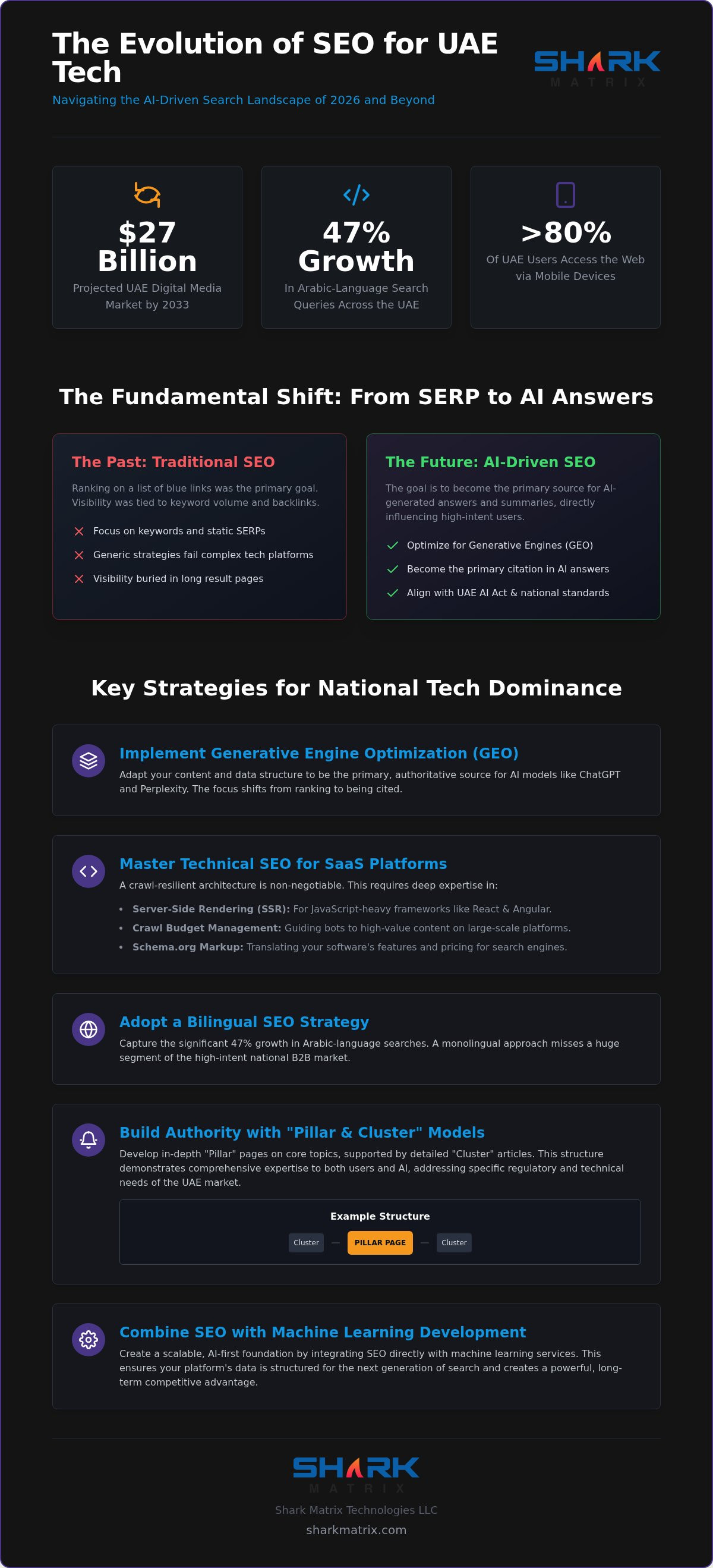
Search has undergone its most significant transformation since the invention of the crawler. For decades, Traditional SEO focused on a predictable goal: securing a spot in the “10 blue links” on a results page. In 2026, that model is no longer the primary driver of digital discovery. We’ve entered a period where Large Language Models (LLMs) act as the definitive gatekeepers between your brand and your audience. Understanding how to optimize content for ai search means moving beyond simple keyword strings and embracing the conversational nature of modern queries.

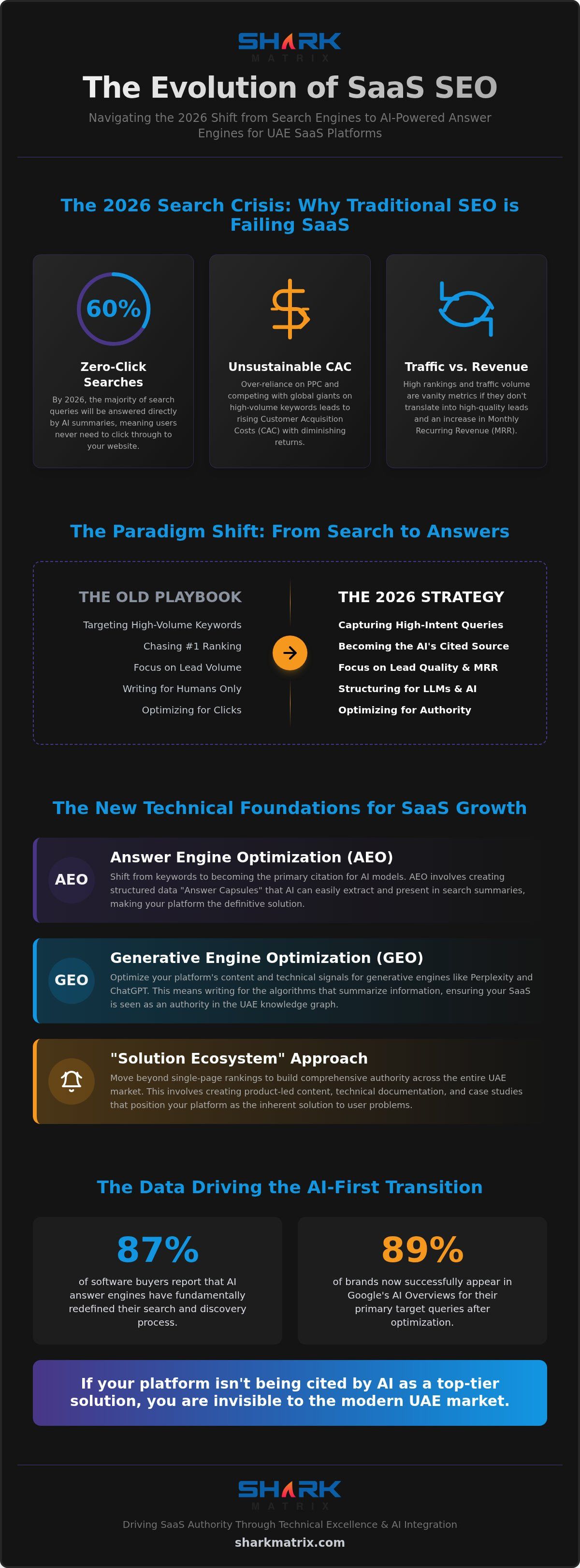
Two new frameworks define this evolution: Answer Engine Optimization (AEO) and Generative Engine Optimization (GEO). While they overlap, they serve distinct roles in a brand’s visibility. AEO focuses on providing direct, factual answers to specific user questions. GEO is broader, focusing on how your brand’s entire digital presence is perceived and cited by generative AI when it creates a synthesized summary. Instead of clicking through to your site, users now receive the information they need directly from the AI, making your status as a cited source the new benchmark for success.

The Mechanics of Answer Engine Optimization (AEO)

AI engines don’t just look for matches; they extract concepts. When a user asks a question, the engine scans high-authority content to find the most concise, accurate response. This has turned “position zero” into the only position that truly matters for many informational queries. To win here, your content must be structured for easy extraction. AI prefers clear hierarchies and data that’s presented without unnecessary fluff. If your information is buried under layers of flowery prose, the algorithm will likely skip it in favor of a competitor who provides a direct answer. Using natural language processing techniques ensures your content speaks the same language as the systems trying to read it.

Why Your Brand Needs a GEO Strategy Now

Waiting to adapt is a recipe for digital invisibility. As organic click-through rates from traditional search results fluctuate, brands in competitive markets like the UAE are finding that being an early adopter of GEO provides a massive advantage. AI search is proactive. It doesn’t just wait for a query; it anticipates intent based on previous interactions. By building an AI-ready infrastructure today, you ensure your brand is the one the LLM trusts to cite when a user asks for a recommendation or a solution. Shark Matrix Technologies LLC specializes in bridging the gap between technical AI development and strategic marketing through our SEO company Dubai services, helping national brands stay relevant as search logic evolves from simple matching to complex reasoning.

The Core Pillars of Generative Engine Optimization (GEO)

If the previous section established the “why” of the AI shift, this section focuses on the technical architecture of success. Success in 2026 requires more than just high-quality writing; it demands a deep understanding of how to optimize content for ai search through structural and semantic precision. AI models no longer view your pages as a collection of keywords. Instead, they see a web of interconnected entities and facts that must be verified for accuracy and relevance.

Schema markup remains the most critical bridge between your human-readable content and an AI’s processing requirements. By using structured data, you provide a clear map that Large Language Models (LLMs) use to categorize your brand, products, and expertise. This technical layer removes ambiguity, ensuring that when an AI engine synthesizes an answer, it pulls from your verified data rather than making an educated guess. To effectively Optimize Your Content for AI Citations, you must prioritize this factual transparency alongside authoritative sourcing.

Mastering Entity-Based Content Strategy

Building an entity-based strategy means moving from “strings to things.” You need to identify the core entities in your industry and define their relationships using semantic triples, which consist of a subject, a predicate, and an object. AI models map relationships between entities by analyzing the context and frequency of their co-occurrence across diverse datasets to build a structured knowledge graph. By explicitly stating these relationships in your content, you make it easier for AI to recognize your brand as a primary authority in your niche.

Leveraging NLP for Better AI Recognition

Language is the interface for AI search, so your content must align with how machines interpret human speech. This doesn’t mean writing like a robot; it means using clear, conversational language that answers specific long-tail queries without unnecessary jargon. Clarity and factual density are your best tools for winning citations in AI summaries. Our natural language processing services enhance content discoverability by aligning your brand’s voice with the specific linguistic patterns and intent-based structures that AI engines prefer. If you’re looking to scale these technical improvements across your entire site, exploring ai automation services can help streamline the implementation of these pillars at a national level.

How to Optimize Content for AI Search: 2026 Guide

Traditional SEO vs. AI Search Optimization: A 2026 Comparison

Traditional SEO isn’t obsolete; it’s the bedrock upon which AI visibility is built. While the old goal was matching a user’s query with a keyword-rich page, 2026 search logic focuses on the underlying intent. AI models don’t just look for words; they look for the reason those words were typed. This shift changes how to optimize content for ai search from a game of density to a game of relevance. You aren’t just competing for a spot in a list. You’re competing to be the definitive answer that an AI synthesizes for the user.

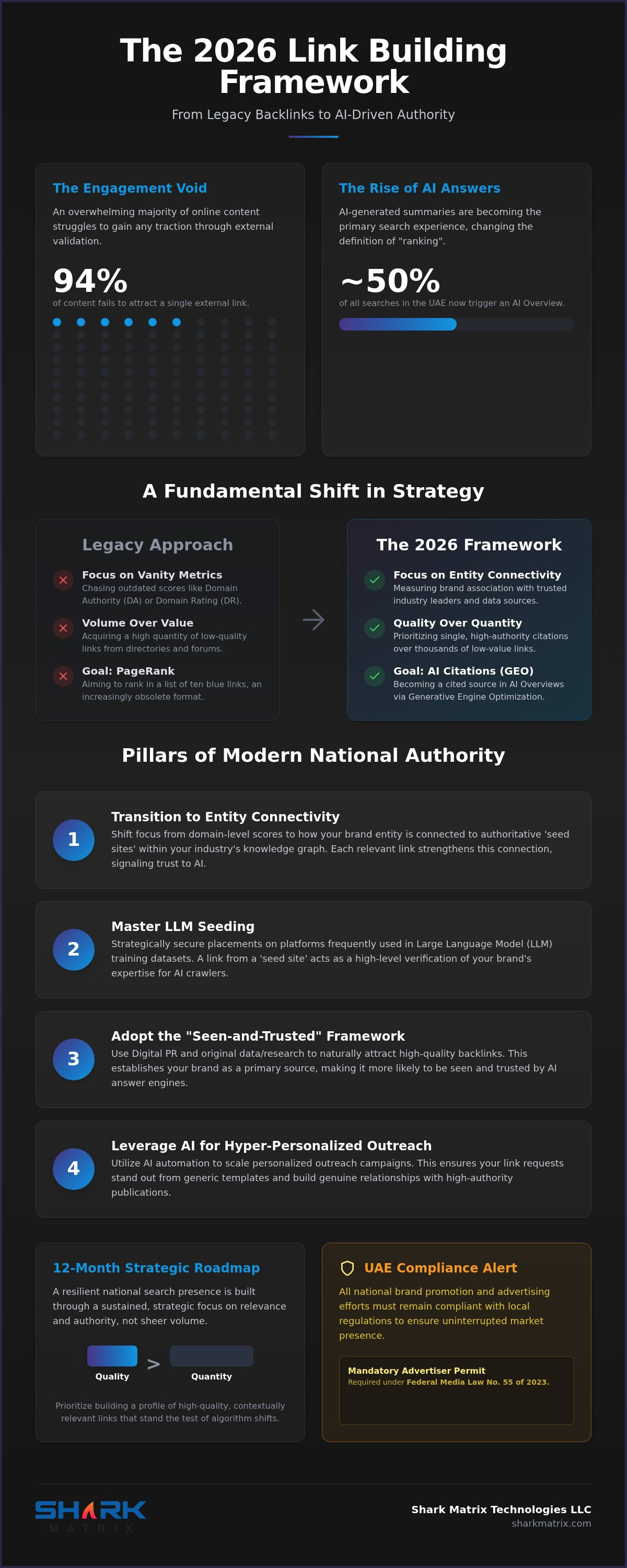
Backlinks remain a signal of authority, but citations are the new currency of visibility. In a traditional search environment, a link from a high-authority site boosts your rank. In an AI summary, a citation proves to the LLM that your brand is a reliable source for a specific fact. Similarly, while page speed is vital for user retention, AI engines prioritize fact density. They want to extract the maximum amount of verified information in the shortest possible crawl. Understanding how to optimize content for ai search requires a mindset shift from static pages to dynamic data sources that provide high value per kilobyte.

The Evolution of E-E-A-T for AI

AI engines have refined the concept of Experience, Expertise, Authoritativeness, and Trustworthiness (E-E-A-T). In 2026, they favor first-party data and original research over recycled content. If your brand publishes unique case studies or proprietary data, you’re more likely to be cited. AI models look for consistent mentions across multiple platforms to verify your authority. It’s not enough to say you’re an expert; you need a digital footprint that proves it through verified facts and cross-referenced citations across the web.

Integrating SEO and GEO for National Brands

Successful national brands don’t choose between SEO and GEO. They integrate them. You still need traditional rankings to capture users who prefer manual browsing, but you also need to be AI-ready for those using conversational search. Using comprehensive SEO services ensures your site serves both masters. Shark Matrix Technologies LLC bridges this gap by building digital infrastructures that maintain legacy rankings while preparing content for AI extraction. This dual approach ensures you don’t lose traffic as search behaviors continue to shift toward AI-driven answers in the UAE.

Step-by-Step: How to Optimize Your Content for AI Citations

Moving from theory to practice requires a systematic approach to your existing digital assets. Learning how to optimize content for ai search begins with a thorough AI visibility audit. Instead of checking traditional rank trackers, you must query major LLMs to see if they recognize your brand and what specific sources they cite when answering industry-related questions. If the AI currently pulls data from a competitor, you’ve identified a citation gap. This audit provides a baseline for your strategy, allowing you to target the exact queries where your brand is currently invisible or misrepresented.

Once you’ve identified these gaps, the next step involves implementing advanced Schema markup that goes beyond standard organization tags. For national brands in the UAE, this means using industry-specific properties that define your unique value proposition and verified data points. Monitoring these mentions is an ongoing task because AI models are updated frequently. A source cited today might be replaced tomorrow if a more factual or better-structured alternative emerges. Staying ahead requires constant refinement of your data layers to ensure you remain the most reliable option for AI extraction.

Structuring Content for AI Extraction

AI engines prefer content that mirrors the natural way humans ask questions. Use your H2 and H3 headings to state these questions directly, followed immediately by a fact-dense summary sentence. An AI-optimized summary should lead with a direct definition or answer, followed by two supporting facts and a concluding piece of evidence, all within a 50-word limit. This specific structure makes it incredibly easy for an engine to identify your text as a “snippet-ready” candidate for a generative summary. By removing the preamble and leading with the answer, you increase the likelihood of being cited as the authoritative source.

Technical Optimization for Generative Engines

The technical side of how to optimize content for ai search often involves moving toward headless CMS environments and API-driven content delivery. These setups allow AI crawlers to access your data without the noise of traditional front-end code. Shark Matrix Technologies LLC helps brands build these search-ready infrastructures from the ground up, ensuring that technical SEO basics like XML sitemaps and robots.txt files are explicitly configured for AI agents. Our expertise in generative ai development ensures your content is delivered in a format that machines can process with maximum efficiency. If you’re ready to secure your place in AI results, our team can help you implement these technical standards through our ai automation services.

Future-Proofing Your Visibility with Shark Matrix AI Solutions

National brands in the UAE face a unique challenge as we move through 2026. The convergence of AI automation and digital growth means that your infrastructure must be as intelligent as the engines crawling it. Shark Matrix specializes in building these AI-ready foundations from the ground up. We don’t just help you understand how to optimize content for ai search; we provide the technical architecture required to sustain that visibility over the long term. This involves custom AI development that addresses industry-specific search challenges, ensuring your brand remains a primary source in AI-generated answers regardless of how the underlying models evolve.

Building a future-proof brand requires more than just following trends. It requires an infrastructure that can handle the demands of generative engines while maintaining the core principles of brand authority. We help you bridge the gap between technical data science and creative content marketing, ensuring your digital presence is both human-centric and machine-readable. By focusing on verified first-party data and clear entity relationships, we turn your website into a high-density information source that AI engines trust and prefer.

End-to-End AI and SEO Integration

Success in the generative era requires a multi-disciplinary strategy that traditional agencies often miss. You can’t rely on high-quality content alone if your technical backend doesn’t support rapid, structured data extraction for Large Language Models (LLMs). By combining our AI automation services with strategic content marketing, we ensure every piece of data on your site is optimized for both human readers and machine processors. This holistic approach is why national leaders consult with our SEO company to build a sustainable GEO roadmap. We act as the bridge between technical machine learning development and consumer-facing messaging, ensuring your expertise is never lost in translation.

Staying Ahead of the Generative Curve

The search market moves with incredible speed. Algorithm shifts and changing citation patterns mean your digital strategy must be inherently agile. Continuous monitoring of how different LLMs interpret and cite your brand is essential for identifying new citation gaps before they impact your bottom line. Technical agility isn’t just a buzzword; it’s the primary difference between being a cited authority and becoming digitally invisible. We help you stay ahead by integrating AI automation into your marketing workflows, allowing for real-time adjustments to your content structure. Mastering how to optimize content for ai search is an ongoing commitment to data accuracy and semantic precision.

Your next step is clear. Auditing your brand for the 2026 AI search landscape is the only way to protect your market share. Contact Shark Matrix today for a comprehensive AI search readiness assessment. We’ll evaluate your current visibility, identify technical bottlenecks, and build a customized plan to ensure your brand remains the preferred source for AI summaries across every major engine.

The search landscape has fundamentally transitioned from simple keyword matching to complex, conversational AI summaries. Winning citations in 2026 requires a technical shift toward entity-based content and structured data that Large Language Models can easily extract. Mastering how to optimize content for ai search is now the most critical step in protecting your national visibility and ensuring your expertise isn’t lost in a sea of synthesized answers.

Shark Matrix leads the market as a national UAE leader in SEO, backed by specialized NLP and AI automation teams. Our expertise in generative AI development allows us to build the technical bridges your brand needs to stay relevant. We don’t just react to algorithm shifts; we build the infrastructures that define them. Ready to dominate the AI search landscape? Contact Shark Matrix for a GEO Strategy Audit today. The future of search is conversational, and your brand deserves to be the definitive answer.

Frequently Asked Questions

What is the difference between SEO and GEO?

Traditional SEO targets rankings in the standard list of search results, while GEO (Generative Engine Optimization) focuses on winning citations in AI-generated summaries. SEO is about being found in a list; GEO is about being the source the AI trusts to build its synthesized response. This requires a deeper focus on entity relationships and how Large Language Models perceive your brand’s authority across the entire web.

How do I get my website cited by AI search engines like ChatGPT or Perplexity?

You get cited by providing factual, high-density responses that AI models can easily verify and extract. These engines prioritize first-party data, original research, and unique insights over recycled content. Consistency across multiple platforms also helps the AI verify your brand as a trusted authority, making it more likely to quote you in its summaries.

Is traditional keyword research still relevant for AI search?

Keyword research is still necessary, but the focus has shifted to conversational intent and semantic entities. You need to understand how users phrase questions to AI assistants rather than just typing short, static phrases. Understanding how to optimize content for ai search in 2026 involves targeting these natural language patterns and identifying the entities your audience is most interested in.

How does structured data help with AI search optimization?

Structured data provides a clear, machine-readable map of your website’s information using Schema.org. It helps AI models identify entities like people, places, products, and facts without ambiguity. This technical layer reduces the risk of the AI misinterpreting your data, making your content a much more attractive candidate for AI extraction and citation.

Can AI-generated content rank well in AI search engines?

AI-generated content can rank, but only if it provides significant information gain. Search engines prioritize E-E-A-T, meaning they look for signs of real-world experience and proprietary expertise. If your content is just a generic summary of existing web data, it’s unlikely to be cited as a primary source by a generative engine.

What are the most important factors for Answer Engine Optimization (AEO)?

The core pillars of AEO are clarity, factual accuracy, and directness. You should place the most important information at the beginning of your sections to help AI bots find the answer quickly. Mastering how to optimize content for ai search through AEO means removing unnecessary fluff and focusing on high-value facts that answer specific user questions.

How often should I update my content to stay relevant for AI engines?

Content should be updated as soon as new facts, data points, or industry shifts occur. AI models are updated frequently and often have access to the live web to provide the most current answers possible. To maintain your position as a cited authority, your content must always be more accurate and up-to-date than the competing sources.

Does site speed affect my visibility in AI search summaries?

Site speed impacts how efficiently AI bots can crawl and process your data. While the final AI summary is text-based, technical issues or slow load times can prevent an engine from indexing your latest updates. A fast, clean technical structure ensures your optimized content is always accessible to the AI when it needs to verify a fact.

Categories
GEO

Mastering Generative Engine Optimization: Your 2026 Strategy Guide

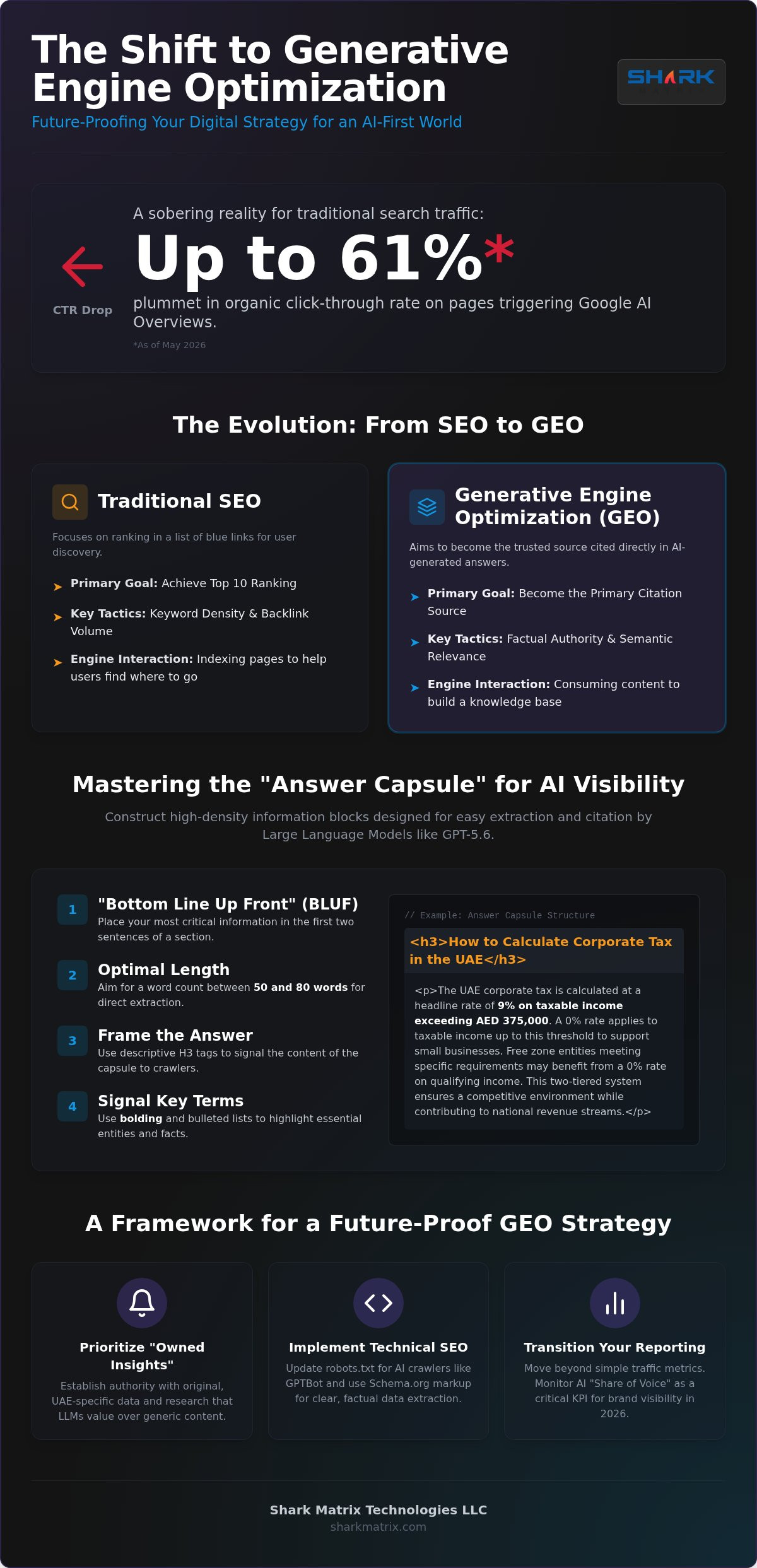
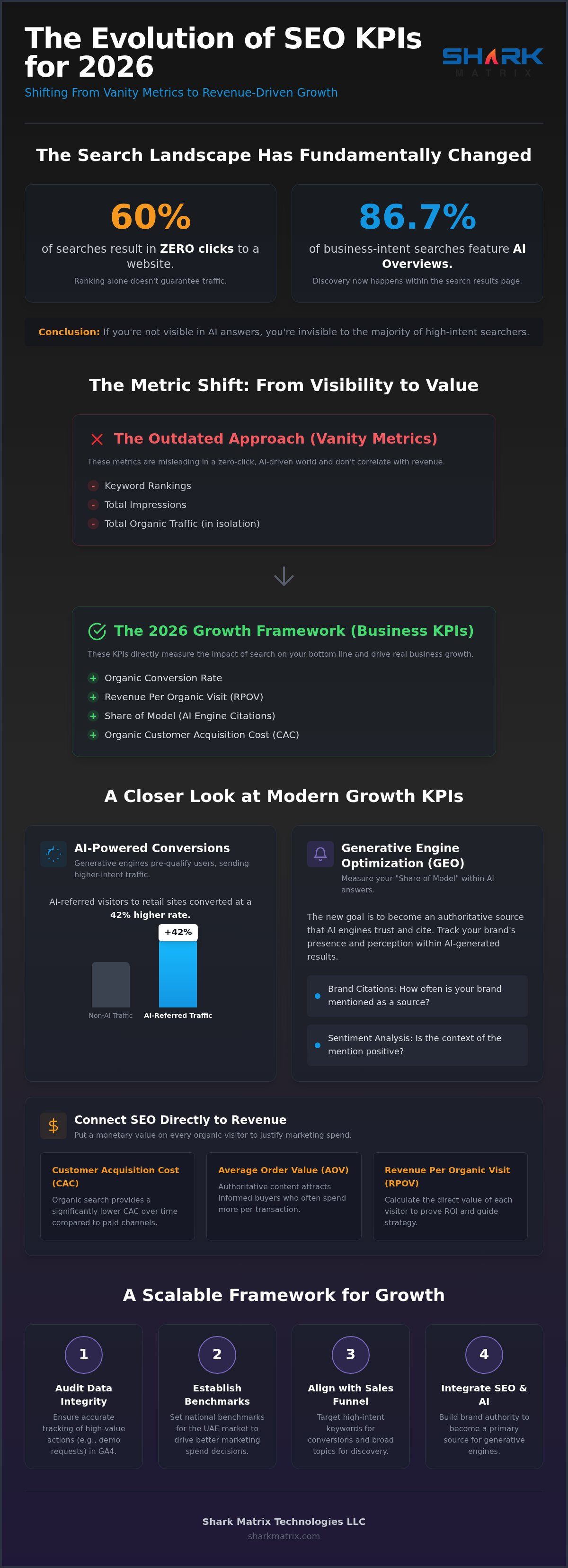
Did you know that the presence of a Google AI Overview can slash your organic click-through rate by as much as 61%? It is a startling reality for many digital marketers who find their hard-earned content buried behind automated summaries. As we look toward the future, sticking to old playbooks is no longer an option. You need a comprehensive generative engine optimization strategy 2026 to ensure your brand remains visible in a world where ChatGPT and Gemini now dominate search behavior.

It is completely understandable to feel concerned that LLMs are hiding your expertise from the very people you want to reach. You have likely noticed that traditional search traffic is harder to capture, and the way AI engines choose their sources can feel like a total mystery. This article will help you transition from traditional SEO to a high-impact strategy that secures brand citations directly within AI-driven results. We will provide a clear roadmap for 2026 visibility, covering everything from Schema.org 30.0 updates to the importance of earned media in securing those coveted AI mentions.

Key Takeaways

  • Understand the fundamental shift from traditional blue links to synthesized answers and why 2026 is the critical tipping point for your digital presence.
  • Learn how Retrieval-Augmented Generation (RAG) works so you can optimize your content for real-time AI retrieval and cross-platform corroboration.
  • Develop a high-impact generative engine optimization strategy 2026 that balances traditional search rankings with the need for high-authority AI citations.
  • Master the pillars of visibility, including deep entity optimization and advanced Schema markup that defines your brand as a trusted node in the knowledge graph.
  • Discover why technical expertise in AI automation and development is essential for maintaining real-time data accuracy in the complex 2026 search landscape.

What is Generative Engine Optimization (GEO) in 2026?

By 2026, the digital landscape has fundamentally shifted from a list of “blue links” to a stream of synthesized answers. Generative Engine Optimization, or GEO, is the strategic process of optimizing your digital assets specifically for Large Language Models (LLMs) and Answer Engines. While traditional search engines once directed users to a variety of websites, today’s AI engines aim to provide the answer directly on the results page. Developing a comprehensive generative engine optimization strategy 2026 is the only way to ensure your brand is the one being synthesized into those answers.

The primary players in this space, including Google AI Overviews, Perplexity, ChatGPT Search, and Gemini, don’t just look for keywords. They look for authoritative entities that can corroborate a claim. Traditional ranking factors like backlink quantity or keyword density are no longer sufficient. AI engines require content that is structured for machine consumption while maintaining deep human expertise. If your brand isn’t cited by these engines, you simply don’t exist for a significant portion of your audience.

The Evolution from SEO to GEO

The transition from SEO to GEO represents a move from semantic relevance to entity relationship. In the past, you might have optimized for “best coffee maker.” Today, you must define your product as a specific node within a broader knowledge graph. This shift is driven by natural language processing services that allow engines to understand the “why” behind a query. Users no longer want to find a site; they want a solution. To understand the foundational concepts, many experts look at What is Generative Engine Optimization? to see how the industry has matured from simple indexing to complex synthesis.

The Business Impact of AI Citations

AI search results are often “winner-takes-all” scenarios. If an AI engine provides a single, definitive answer and cites your brand as the source, the intent of that traffic is significantly higher than a standard organic click. These users aren’t just browsing; they are consuming a recommendation from a platform they trust. Generative Engine Optimization serves as the bridge between technical data and AI understanding, and eCommerce businesses can discover eComQB for specialized strategies to thrive in this new environment.

A May 2026 analysis found that 84% of AI citations come from earned media, such as third party publications, rather than brand owned websites. This underscores why your generative engine optimization strategy 2026 must extend beyond your own domain. By aligning your content with the way LLMs retrieve information, you position your brand to capture high-value citations that competitors using outdated methods will miss. It’s about building a digital footprint that AI engines can’t ignore.

How AI Engines Process and Cite Content

AI engines don’t simply “rank” websites in a list. They ingest, synthesize, and reason through data to build a coherent response for the user. To stay visible, your generative engine optimization strategy 2026 must focus on technical accessibility. If an LLM cannot parse your site efficiently, it will simply skip over your expertise in favor of a source that is easier to “digest.” This process is largely driven by how models distinguish between their static training data and the real-time information they pull from the live web.

A critical part of this process is corroboration. AI models are trained to prioritize consensus. If multiple authoritative platforms mention your brand in a consistent context, the AI is more likely to trust and cite you as a factual source. This is why appearing in third-party publications is so vital; a May 2026 analysis found that 84% of AI citations come from earned media rather than brand-owned sites. You aren’t just optimizing for a bot; you’re optimizing for a global network of digital trust.

Retrieval-Augmented Generation (RAG) Explained

Engines like Perplexity and ChatGPT Search rely on Retrieval-Augmented Generation (RAG) to provide up-to-date answers. Instead of relying solely on what they learned during training, they use a search index to find current facts and then use the LLM to explain them. For your content to be selected, it needs to be “chunkable.” This means using clear headings and concise paragraphs that allow the engine to pull specific “vectors” of information. Understanding GEO vs. SEO: The Hybrid Search Strategy is essential here, as it highlights how traditional indexing still supports these modern retrieval methods.

Knowledge Graphs and Entity Authority

AI engines build a “Brand Memory” by connecting dots across the internet. They look for entities, which are unique people, places, or brands, and map the relationships between them. To help these engines understand your brand’s role, you should utilize natural language processing services to structure your data correctly. This technical footprint tells the AI exactly who you are and what you are an expert in. If you’re struggling to map your existing data to these new formats, exploring specialized ai automation services can help bridge the gap between your content and AI reasoning.

Crawlability is the final piece of the puzzle. With ChatGPT dominating 76.85% of the AI search market as of April 2026, ensuring that GPTBot has access to your site via your Robots.txt file is non-negotiable. Additionally, the tone of your content matters more than ever. Models now prioritize “Expert Advice” blocks that pull from content with high sentiment and first-hand experience. Maintaining a helpful, unbiased, and authoritative tone ensures that when an engine retrieves your data, it views your brand as a safe and reliable recommendation for the end user.

Mastering Generative Engine Optimization: Your 2026 Strategy Guide

GEO vs. SEO: The Hybrid Search Strategy

Traditional SEO isn’t going away. Instead, it’s becoming the bedrock upon which AI discovery is built. You can’t have a successful generative engine optimization strategy 2026 without a robust SEO foundation. AI engines like Perplexity and Google’s AI Overviews still rely on traditional search indexes to find the information they synthesize. If your site isn’t indexed or lacks authority in the eyes of standard algorithms, it won’t make it into the retrieval pipeline. The two disciplines now exist in a symbiotic relationship where one provides the traffic and the other provides the authority.

The primary difference lies in the end goal. SEO focuses on Click-Through Rate (CTR) by making your link the most attractive option for a human user. GEO focuses on Citation Optimization, ensuring the AI model views your brand as the definitive source. Implementing a dual-purpose generative engine optimization strategy 2026 allows you to capture both traditional clicks and AI citations. As of early 2026, informational queries trigger AI Overviews about 50% of the time. This means your visibility depends on being the “expert” the AI quotes, rather than just a link in a list.

Technical SEO as the Foundation for GEO

AI crawlers require a clean technical environment to ingest data without friction. Site speed and mobile optimization remain critical benchmarks for bot efficiency. However, the real power lies in structured data. By March 2026, the latest version of Schema.org is 30.0. Using this version to mark up datasets and expert advice blocks is essential for AI engines to verify your claims. Internal linking also acts as a roadmap for LLMs. It helps models understand the hierarchy and context of your information, allowing them to “chunk” your content more effectively for real-time retrieval.

Measuring Success in the AI Era

Success in 2026 is measured by “Share of Model” (SoM). This involves tracking how frequently an AI engine cites your brand compared to your competitors for specific topics. You should also monitor the sentiment of these citations. Google’s updated AI Overviews now include specific “Expert Advice” blocks that pull directly from authoritative voices. If your brand is featured but the context is neutral or negative, your authority is at risk. Partnering with an experienced seo company dubai can help you navigate these new metrics while accounting for the specific dynamics of the Middle Eastern market and Arabic language processing.

5 Pillars of a Winning 2026 GEO Strategy

Building a successful generative engine optimization strategy 2026 requires moving from passive content creation to active technical authority. You can’t rely on keywords alone when AI models are looking for verified entities and corroborated facts. To secure your place in the synthesized answers of tomorrow, you must treat your digital presence as a structured knowledge base rather than a collection of pages.

  • Step 1: Entity Optimization. Define your brand as a unique node in the global knowledge graph. AI engines need to understand your relationship to other high-authority entities in your industry.
  • Step 2: Structured Data Supremacy. Go beyond basic tags. Use the latest Schema.org version 30.0, published on March 19, 2026, to provide deep context that AI crawlers can digest instantly.
  • Step 3: Authoritative Citations. Since 84% of AI citations come from earned media, your strategy must include high-trust third-party platforms to validate your brand’s expertise.
  • Step 4: Direct Answer Optimization. Structure your content with clear “Question-Answer” pairs. This makes it easier for RAG-based systems to extract your expertise for real-time queries.
  • Step 5: Technical AI Alignment. Integrate generative ai development to optimize how your internal data is presented to external models.

Optimizing for Specific Engines

Each engine has its own “personality” and retrieval preferences. Google AI Overviews, following the May 6, 2026 update, place a heavy emphasis on “Expert Advice” blocks and first-hand experience. You should leverage your E-E-A-T signals to win these spots. For Perplexity, focus on academic-style citations and real-time data accuracy. ChatGPT currently dominates the market with a 76.85% share as of April 2026. To win here, your content must provide conversational value and a clear brand narrative that the model can easily summarize for the user.

Content Structuring for AI Extraction

LLMs use H-tags as semantic signposts to “chunk” your information. Use an “Inverted Pyramid 2.0” approach by leading every section with a direct, concise answer before diving into the details. This increases the likelihood of your content being captured as a featured snippet or AI citation. Implementing these structures across thousands of pages is a massive task. Utilizing professional ai development services helps automate this content structuring at scale, ensuring your entire site is machine-readable without losing its human appeal. If you want to future-proof your brand authority, explore how ai automation services can transform your technical SEO into a high-impact generative engine strategy.

Implementing GEO: Why a Technical Partner is Essential

By 2026, the sheer volume of data processed by Large Language Models makes it impossible to manage a generative engine optimization strategy 2026 through manual effort alone. Traditional SEO was often a game of patience and spreadsheets, but the AI landscape moves at the speed of compute. AI search engines are dynamic; they require real-time content updates and technical precision that only specialized software and engineering can provide. This is where ai automation services become indispensable. They ensure your brand’s data remains fresh and ready for retrieval by engines that update their indexes in minutes rather than weeks.

Shark Matrix Technologies serves as the critical bridge between software engineering and digital marketing. In a world where 76.85% of AI search usage is dominated by a single platform, you can’t afford technical friction. We specialize in building the infrastructure that allows AI crawlers to “read” your brand’s authority without ambiguity. Our expertise in Middle Eastern market dynamics and Arabic digital marketing adds another layer of complexity that generalist agencies often miss. We don’t just optimize for a bot; we build a technical ecosystem where your brand is the most logical answer for any engine to cite.

Custom AI Development for Search Dominance

Winning in the AI era requires more than just following best practices; it requires building your own tools. Advanced machine learning development services allow businesses to predict which content pieces are most likely to be cited based on current LLM behavior. Instead of guessing, you can use custom models to audit your site’s “chunkability” and entity authority. This technical approach extends to automating the deployment of Schema.org 30.0 across thousands of pages instantly, ensuring no manual errors slow down your visibility. By integrating ai chatbot-development services, you can also capture zero-click search intent directly on your own platform, keeping users engaged with your brand rather than a third-party engine.

Future-Proofing Your National Brand

For national-scale brands, the stakes are incredibly high. A drop in organic visibility due to AI Overviews can cripple revenue if you aren’t prepared to pivot. Shark Matrix is the preferred partner for national-scale execution because we treat your generative engine optimization strategy 2026 as a long-term technical roadmap. We focus on building a “Brand Memory” that persists across different models and updates. If you’re ready to secure your brand’s future and ensure your expertise isn’t hidden behind a wall of generated text, contact Shark Matrix for a 2026 GEO Audit today. Our team will help you transition from traditional search to AI-driven authority with a clear, data-backed plan.

Secure Your Brand’s Authority in the AI Era

The search landscape of 2026 demands more than just traditional keyword optimization. It requires a deep understanding of how Large Language Models retrieve and synthesize information. By prioritizing entity authority and technical accessibility, you can ensure your brand isn’t just indexed but cited as a primary source. Success now hinges on balancing human-centric expertise with machine-readable data structures that AI engines trust. You don’t have to navigate this transition alone.

Implementing a high-impact generative engine optimization strategy 2026 is a technical challenge that goes beyond standard marketing. Shark Matrix has been a leader in digital strategy since 2010, bringing deep roots in software engineering to the world of search. As specialists in AI and machine learning development, we provide the comprehensive national SEO and digital strategy needed for large-scale visibility. It’s time to bridge the gap between your content and the engines that define your brand’s reputation.

Partner with Shark Matrix for a Technical GEO Strategy and secure your place in the next generation of search. The future is automated, and your brand is ready to lead it.

Frequently Asked Questions

What is the main difference between SEO and GEO?

SEO focuses on ranking your website in traditional search results to drive direct clicks from human users. In contrast, GEO aims to have your brand cited and recommended within the synthesized answers generated by AI models. While SEO optimizes for users browsing blue links, GEO optimizes for LLMs that ingest and summarize your data into conversational responses.

How do I get my website cited by ChatGPT or Google AI Overviews?

Getting cited requires a strong presence on third-party authoritative platforms because AI models prioritize corroborated facts. A May 2026 analysis found that 84% of AI citations come from earned media rather than brand-owned sites. You must also ensure your site is technically accessible to crawlers like GPTBot and structured in a way that AI can easily “chunk” and retrieve your information.

Does traditional SEO still matter in 2026?

Traditional SEO is more important than ever because it provides the indexable data that AI engines rely on for real-time retrieval. A successful generative engine optimization strategy 2026 uses technical SEO as a foundation. Without high site speed, mobile optimization, and proper indexing, your content won’t even reach the stage where an AI can consider it for a citation.

How can AI development services improve my search visibility?

Custom ai development services allow you to build proprietary tools that audit your content’s entity authority and “chunkability.” These services can automate the implementation of advanced Schema markup and use machine learning to predict which content structures will perform best in AI search results. This technical edge is essential for managing large-scale digital footprints that manual SEO can’t handle effectively.

What are the best metrics to track for Generative Engine Optimization?

You should track Share of Model (SoM) to see how often you are cited compared to your direct competitors. Additionally, monitoring the sentiment of AI-generated answers and the frequency of “Expert Advice” block appearances provides a clearer picture of your digital authority. Traditional metrics like organic traffic are still useful, but they no longer tell the full story of your brand’s reach in an AI-dominated market.

How does structured data help with AI search engines?

Structured data provides the explicit context that AI engines need to verify facts and understand entity relationships. By implementing the latest Schema.org 30.0 markup, you reduce the chance of AI engines misinterpreting your data or “hallucinating” details about your brand. This technical clarity makes your website a much safer and more attractive source for an LLM to cite in its synthesized answers.

Can I use AI to optimize my content for GEO?

Yes, you can use generative tools to identify semantic gaps and reformat your content for better machine extraction. AI is particularly helpful for creating concise “Question-Answer” pairs and ensuring your headers act as clear signposts for retrieval bots. Using AI to optimize for AI creates a feedback loop that aligns your content with the specific way modern models process and summarize human language.

What is Share of Model (SoM) and why is it important?

Share of Model measures the percentage of times an AI engine mentions or recommends your brand for a specific category of queries. It’s the 2026 equivalent of “share of voice” in traditional media. A high SoM indicates that the AI’s training and retrieval data consistently point to your brand as a trusted authority, which is vital for maintaining visibility when AI Overviews appear in 50% of informational searches.

Categories
Digital Marketing

2026 Guide: Optimizing Websites for AI Overviews

Did you know that as of early 2026, AI Overviews now appear in nearly 50% of all US Google queries? For many brands, this shift has triggered a sharp decline in organic click-through rates, with some studies showing a 65% drop when an AI summary dominates the screen. You’re likely feeling the pressure of this transition as traditional search evolves into a generative experience. Successfully preparing website for ai overviews is no longer optional; it’s a critical technical requirement to ensure your brand remains visible.

We understand the confusion surrounding the leap from SEO to Generative Engine Optimization (GEO). This guide provides a technical roadmap to secure your brand’s place in Google AI Overviews and master the shift from keyword matching to authoritative entity validation. We’ll examine how to resolve technical debt, leverage structured data, and align your content with the latest E-E-A-T standards to turn AI summaries into your primary traffic driver.

Key Takeaways

  • Understand the shift from traditional search rankings to “share of voice” metrics within the mature 2026 AI Overview ecosystem.
  • Learn the technical essentials for preparing website for ai overviews, including advanced JSON-LD schema markup to clarify your brand’s entities.
  • Adopt the “Inverted Pyramid” writing style and prioritize primary source data to ensure your content is selected by AI synthesizers.
  • Optimize your site infrastructure for rapid AI crawling by addressing technical debt and prioritizing Core Web Vitals.
  • Discover how bridging the gap between digital marketing and generative AI development helps future-proof your brand against further search engine changes.

The Evolution of Search: Why AI Overviews Dominate in 2026

In 2026, the search bar has moved past the era of the “ten blue links.” Most users now interact with AI Overviews (AIO) as their primary interface for complex queries. The Evolution of Search has transformed the result page from a directory into a conversational engine. While the Search Generative Experience (SGE) was once an experimental feature, it’s now a mature ecosystem handling 48-50% of US Google queries as of early 2026. This shift has fundamentally changed user behavior. Instead of clicking through to multiple sites, users get synthesized answers immediately. This shift has led to a significant 65% drop in organic click-through rates for some queries. In this new environment, securing a citation within the AI summary is the new “Rank 1.”

How Google Selects Sources for AI Summaries

Google uses a process called Retrieval-Augmented Generation (RAG) to build these summaries. It doesn’t just guess; it retrieves specific data from the web and synthesizes it using advanced models like Gemini 3.6 Flash. Factual density and source reliability are the primary filters for selection. For “Your Money or Your Life” (YMYL) topics, such as healthcare where AIO prevalence hits 88%, Google prioritizes high-authority national sites. If you’re preparing website for ai overviews, you must focus on being a “Primary Source” that provides original research or proprietary data that the RAG process can’t find elsewhere.

The Shift from Keywords to Entities

Success in 2026 requires moving beyond simple keyword matching. Google now organizes information through the Knowledge Graph. The Knowledge Graph is the database of real-world objects and their relationships. Being a recognized “entity” in this graph is more valuable than ranking for a high-volume keyword. When Google’s natural language processing systems identify your brand as an authority on a specific topic, you’re more likely to be cited. Preparing website for ai overviews involves clarifying these entity relationships through technical infrastructure. This ensures the AI models understand exactly who you are and what expertise you provide, making your content the logical choice for a synthesized response.

Mastering Generative Engine Optimization (GEO) vs. Traditional SEO

In 2026, digital marketing has split into two parallel tracks: traditional SEO and Generative Engine Optimization (GEO). While SEO still handles the foundational aspects of site health and blue-link rankings, GEO is the specific discipline of optimizing for Large Language Models (LLMs) and AI synthesizers. When you are preparing website for ai overviews, you aren’t just trying to “rank” in the old sense. You are trying to become the definitive source the AI uses to build its summary. This shift has changed how we measure success. Traditional metrics like “position” are becoming less relevant as AI Overviews occupy the most valuable real estate on the screen. Instead, brands now track “share of voice” within these AI responses.

Conversational language is the new standard for content. Search prompts are getting longer and more complex, with 60% of question-style queries now triggering an AI summary. This makes Answer Engine Optimization (AEO) a critical subset of your strategy. You need to provide direct, concise answers to the specific questions your audience is asking. If you want to see how this works in practice, this AI Overviews optimization guide offers a deeper look at these new ranking factors.

The GEO Framework: Structure, Authority, and Directness

Success in GEO relies on three pillars. First, structure. Your data hierarchy must be crystal clear so AI crawlers can parse it without friction. Second, authority. The 2026 version of E-E-A-T is more rigorous than ever. Google’s systems look for verified experience and expertise before citing a source in an AIO. Finally, directness. “Fluff” content is the biggest enemy of AI citations. If your content takes too long to get to the point, the AI will simply skip it in favor of a more direct source that answers the user’s intent immediately.

Adapting Content for LLM Consumption

LLMs read content differently than traditional crawlers. They don’t just look for keyword matches; they use natural language processing to understand the underlying intent and semantic relevance of your writing. This means keyword density is officially a relic of the past. To win, your content must be semantically rich and contextually accurate. Preparing website for ai overviews requires a technical partner who understands these AI models from the inside out. If you’re struggling to adapt, exploring professional SEO services can help align your technical infrastructure with these new requirements.

2026 Guide: Optimizing Websites for AI Overviews

The Content Strategy for AI Visibility: Quality Over Quantity

Successfully preparing website for ai overviews requires a departure from the high-volume content mills of the past. In 2026, AI synthesizers don’t need thousands of words of filler to understand a topic. They need “Primary Source” content. This includes original research, proprietary case studies, and unique data sets that your brand owns. When Google’s Retrieval-Augmented Generation (RAG) systems scan the web, they prioritize information that isn’t already duplicated across a thousand other sites. If you’re providing fresh, verified data, you’re much more likely to earn that coveted citation in an AI summary.

Your writing style must also adapt to the “Inverted Pyramid” format. Traditional SEO often buried the answer at the bottom of a page to increase dwell time. In the age of AI Overviews, this strategy fails. You must provide the answer first and the context later. AI models are programmed to find the most efficient response for the user. If your introductory paragraph doesn’t directly address the search intent, the model will likely pass you over for a competitor who gets straight to the point.

Focus on creating “Un-AI-able” content. These are human insights, nuanced perspectives, and first-hand experiences that a large language model cannot simply hallucinate or replicate. By emphasizing the “Experience” part of E-E-A-T, you provide a level of depth that adds value beyond a basic factual summary. This human element is what keeps users clicking through to your site even after they’ve read the AI’s brief overview.

Structuring Articles for Answer Extraction

To help AI models parse your site efficiently, treat your H2 and H3 tags as “query-answer” pairs. Each heading should represent a specific question, followed immediately by a fact-dense paragraph that provides a clear solution. This structure makes it easy for crawlers to identify exactly which part of your page solves the user’s problem. Bulleted lists act as “hooks” for AI summary generators by providing clearly delineated data points that the model can easily extract and present to the user. When you’re preparing website for ai overviews, these structural cues are just as important as the words themselves.

Building Brand Authority Through Digital PR

AI models don’t just look at your website; they look at what the rest of the internet says about you. External citations in national news outlets and high-authority industry platforms act as a validation layer for Google’s AI. There’s a direct connection between online reputation management and your performance in AIO. If your brand is mentioned frequently across multiple trusted platforms, the AI is more likely to view your site as a safe, authoritative source to cite. This multi-platform trust is the backbone of search visibility in 2026.

Technical Roadmap: Preparing Your Website Infrastructure

A high-performance technical foundation acts as the bridge between your content and the AI models that synthesize it. When you’re preparing website for ai overviews, the goal is to eliminate any friction that prevents AI agents from parsing your data. This roadmap focuses on five critical steps to modernize your infrastructure for the 2026 search environment.

  • Step 1: Implementing Advanced Schema Markup. Use JSON-LD to provide explicit entity clarification, helping Google’s Knowledge Graph connect your brand to specific topics.
  • Step 2: Optimizing Site Speed. AI models like Gemini 3.6 Flash require rapid access to content. High Core Web Vitals scores ensure that retrieval processes don’t time out during the synthesis phase.
  • Step 3: AI-Friendly Sitemaps. Create a specialized sitemap that highlights your highest-value informational pages, making it easier for AI-specific crawlers to find your primary research.
  • Step 4: Automated Auditing. Utilize ai automation services to audit and tag your content library at scale. This ensures every page has the correct semantic metadata without manual bottlenecking.
  • Step 5: Mobile-First Excellence. Since most conversational search interactions happen on mobile devices, your site must provide a seamless experience for mobile-based AI agents.

Advanced Schema for 2026: Beyond the Basics

Schema markup has evolved into a sophisticated tool for voice and AI compatibility. Implementing Speakable Schema and FAQ Schema helps AI engines identify parts of your text that are suitable for verbal or summarized responses. You should also use “SameAs” properties to link your brand’s digital identity to established nodes in the Knowledge Graph. For businesses in the commercial space, Product and Review schema are essential. These tags help secure commercial AIO placements by providing structured data on pricing, availability, and user sentiment that AI models can verify and trust.

API-First Content and Technical Accessibility

The way you deliver data is just as important as the data itself. Headless CMS architectures are increasingly effective because they provide an API-first approach to content delivery. This allows search engines to pull raw data without wading through heavy front-end code. You must also update your robots.txt file to ensure it allows access for both standard Googlebot and newer AI-specific agents. Investing in generative ai development can help you build custom site tools, like interactive calculators or data synthesizers, that AI engines love to cite as authoritative sources.

If technical debt is holding back your AI visibility, you need a partner that understands the engineering behind the search engine. Explore our ai development services to modernize your infrastructure for the generative era.

Future-Proofing Your Brand with Shark Matrix Technologies LLC

Partnering with an AI-native agency is essential for maintaining search visibility in 2026. Traditional marketing firms often struggle with the technical complexities of software engineering and digital visibility. Shark Matrix Technologies LLC bridges this gap by combining specialized SEO services with deep AI engineering expertise. This dual approach is necessary because modern search engines are complex generative platforms rather than simple directories. Our national approach ensures your brand remains dominant as the search landscape shifts toward AI-driven results. We focus on the underlying mechanics of the models to ensure your site is built for the way systems like Gemini 3.6 Flash process and retrieve information.

Ongoing monitoring is the cornerstone of our strategy. AI algorithms change at a significantly faster pace than traditional search ranking factors. A strategy that earns a citation today might need adjustment tomorrow as Google updates its structural layouts or source selection logic. By maintaining a constant pulse on these shifts, Shark Matrix Technologies LLC helps you maintain brand authority in a landscape where traditional rankings have been replaced by generative dominance.

Data-Driven GEO Strategies

We move beyond guesswork by using proprietary tools to track your brand’s “AI Share of Voice” across diverse query types. This data allows for the continuous optimization of your content based on real-time AI citation patterns. To maximize the value of the traffic you receive, Shark Matrix Technologies LLC integrates ai chatbot development to engage users the moment they land on your site. This ensures that high-intent visitors driven by AI citations find the answers they need immediately, reducing bounce rates and improving conversion through personalized interactions.

Start Your AI Search Transformation

The first step in preparing website for ai overviews is a comprehensive AI-readiness audit. We analyze your technical debt, entity clarity, and factual density to identify exactly what’s preventing your content from being synthesized into AIO results. Transitioning to an AI-first digital presence requires a structural shift in how your website communicates with search agents. Preparing website for ai overviews today is the only way to safeguard your traffic against the rise of zero-click searches. Reach out to Shark Matrix Technologies LLC for a national consultation on search dominance and secure your brand’s place at the top of the generative era.

Lead the Generative Search Revolution

The transition to a generative search environment isn’t a temporary trend; it’s the new standard for digital visibility. Success now depends on moving beyond surface-level keyword matching to focus on deep technical infrastructure and verified entity authority. By prioritizing original research and structured JSON-LD data, you ensure that AI models recognize your site as a trusted source. Successfully preparing website for ai overviews is the most effective way to turn the rise of zero-click searches into a long-term advantage for your brand.

Shark Matrix Technologies LLC acts as your technical partner in this new era. As national brand growth specialists, we provide the specialized engineering required to integrate AI and SEO seamlessly. Our expertise in Generative Engine Optimization (GEO) ensures your brand isn’t just visible but dominant in the summaries your customers read every day. Secure your brand’s future in AI search with Shark Matrix Technologies LLC and lead the shift toward a more intelligent search presence. The future of search has arrived, and it’s time to claim your place at the top.

Frequently Asked Questions

What is the main difference between SEO and GEO in 2026?

Traditional SEO focuses on ranking factors for standard blue links, while Generative Engine Optimization (GEO) optimizes for Large Language Model synthesis. SEO aims for a specific position on the page. In contrast, GEO aims for “share of voice” within a generated summary. It’s a fundamental shift from being a suggested link to being the actual source of the answer.

Will AI Overviews reduce my website traffic?

AI Overviews often reduce total organic clicks for simple informational queries that result in zero-click searches. However, being cited in an AIO frequently drives higher-intent traffic to your site. Users who click a citation link are usually further along in their journey. This makes preparing website for ai overviews essential for maintaining high-quality lead generation.

How long does it take to see results from AI Overview optimization?

You can often see changes in AI citations within a few weeks of implementing technical updates. Google’s AI agents re-evaluate entity relationships much faster than traditional ranking systems. If you update your schema and content structure correctly, your brand can appear in new summaries as soon as the next crawl cycle finishes.

Do I need to change my existing content to rank in AI Overviews?

Most existing content requires restructuring to follow an “answer-first” format. You should prioritize direct, factual answers at the beginning of your sections and remove unnecessary filler. AI models prioritize factual density and concise delivery. If your current articles are too long or vague, they’re less likely to be selected as a primary source for a summary.

Is structured data more important for AI than it was for traditional search?

Structured data is now the primary tool for providing explicit entity clarification to AI models. In traditional search, schema was largely used for rich snippets. In 2026, JSON-LD acts as the blueprint that tells Large Language Models exactly how your data relates to the Knowledge Graph. Without it, the AI might misinterpret your expertise or ignore your site.

Can I opt out of my website being used in Google AI Overviews?

There’s currently no way to opt out of AI Overviews without also removing your pages from Google Search results entirely. Using `noindex` tags will stop the AI from citing you, but it also hides your site from traditional rankings. Google treats indexing and AI synthesis as a package deal. Most brands find it more effective to optimize for the citation instead.

How does Google verify the facts in its AI-generated summaries?

Google’s systems use Retrieval-Augmented Generation (RAG) to cross-reference your content against other high-authority data points. The model prioritizes information that is consistent across multiple trusted platforms. This is why building digital PR and external citations is critical. If your facts are corroborated by national news or industry journals, the AI views your content as more reliable.

What role does mobile optimization play in AI search results?

Mobile optimization is critical because most conversational AI searches happen on mobile devices. Since over 60% of question-style queries occur on mobile, your site must load instantly for mobile-based AI agents. Preparing website for ai overviews requires a mobile-first approach to ensure that technical data delivery is never interrupted by slow speeds or poor responsive design.

Categories
GEO

How to Get Cited by ChatGPT: The 2026 GEO Guide

Did you know that 44.2% of all ChatGPT citations are pulled directly from a page’s introductory content? As of August 2026, the GPT-5.6 series, including the Sol, Terra, and Luna models, has redefined how users find information. Traditional search traffic is shifting toward AI summaries, leaving many brands fearing erasure from the digital landscape. Learning how to get cited by chatgpt is the most effective way to protect your brand authority and drive high-intent referral traffic.

At Shark Matrix Technologies LLC, we specialize in bridging the gap between traditional SEO and generative engine optimization. We recognize the uncertainty that comes with this new era of search. This guide provides a technical roadmap to transform your website into a primary source for leading AI answer engines. You’ll learn exactly what it takes to master the 2026 landscape, from understanding the consensus mechanism to implementing the specific schema markup that boosts visibility by up to 40%.

Key Takeaways

  • Grasp the evolution of Generative Engine Optimization (GEO) to stay visible as LLMs become the primary interface for online search.
  • Uncover the “consensus mechanism” ChatGPT uses to verify facts and learn exactly how to get cited by chatgpt through high-liquidity data.
  • Implement semantic formatting and H2/H3 signposts that help transformer models easily parse and quote your expert insights.
  • Ensure your technical infrastructure is AI-ready by optimizing robots.txt for GPTBot and using advanced Schema.org markup to provide explicit context.
  • See how Shark Matrix Technologies uses generative AI development to help brands build the “cite-worthy” authority required for 2026.

The Shift to Generative Engine Optimization (GEO) in 2026

Generative Engine Optimization (GEO) is the strategic process of structuring digital content so Large Language Models can effectively synthesize and attribute it. In 2026, we’ve reached a tipping point where AI-first search is the standard behavior for the majority of users. We have moved away from the era of “Ten Blue Links” and into a period defined by the single authoritative answer. Instead of presenting a list of possible sources, these engines provide a synthesized response that credits the most relevant and reliable data provider. Platforms like ChatGPT, Perplexity, and Google’s Search Generative Experience now act as the primary interface for information. To remain visible, brands must understand how to get cited by chatgpt by prioritizing information liquidity over simple keyword density.

Why Traditional SEO Isn’t Enough Anymore

Informational traffic is being cannibalized by AI summaries that provide immediate gratification. A user looking for a quick explanation will likely read a summary rather than clicking through to a blog post. Traditional SEO often fails here because it focuses on keyword matching rather than semantic intent resolution. You must understand how large language models work to ensure your content is chosen for these summaries. Ranking in the top position is a great achievement, but it no longer guarantees that your brand will be the one quoted by the AI.

The Rise of Answer Engine Optimization (AEO)

Answer Engine Optimization (AEO) is a critical new stage in the modern marketing funnel that prioritizes directness and factual density. Research indicates that pages featuring original data tables earn 4.1 times more citations, making them essential for high-impact visibility. Shark Matrix Technologies LLC assists brands in this transition by offering generative engine optimization and comprehensive search engine optimization (SEO) services. By building “answer capsules” and utilizing original data, we solve the technical challenge of how to get cited by chatgpt. This approach ensures your brand remains the verified source behind the AI’s response.

Decoding the AI Selection Logic: How ChatGPT Chooses Its Sources

ChatGPT doesn’t browse the web like a human; it processes it through a consensus mechanism. To understand how to get cited by chatgpt, you must first grasp how these models verify information. When a user asks a question, the model cross-references your content against a broader dataset to ensure accuracy. This is why government (.gov) and educational (.edu) domains dominate citations; they provide high-authority, verifiable facts that align with a global consensus. Popularity or high traffic doesn’t equate to authority in the eyes of an LLM. Instead, the model looks for corroborated facts that appear across multiple trusted sources.

A deeper understanding of LLMs reveals that “extractability” is the second pillar of selection. If a transformer model cannot easily parse your data, it will move on to a competitor. Currently, there is a massive “citation gap” where brands appear in less than 1% of AI responses. This happens because most commercial content is buried under marketing fluff that obscures the actual data points. AI models favor information liquidity, which is the ease with which a fact can be moved from your page into a chat interface without losing its context or accuracy.

The Anatomy of an Answer Capsule

An answer capsule is a self-contained, fact-dense block of text designed for immediate extraction by an AI crawler.

These capsules are the primary target for AI systems because they minimize the computational work required to summarize a page. An ideal capsule is typically between 40 and 60 words. It should use a “subject-verb-object” structure to ensure maximum clarity. By placing these capsules at the top of your page, you significantly increase your chances of being quoted as the primary authority. These blocks should be devoid of flowery adjectives and focused entirely on providing a direct answer to a specific user prompt.

The Role of Original Data and Owned Insights

Primary research and unique benchmarks act as citation magnets in the 2026 landscape. ChatGPT prioritizes original data because it adds unique value to the generated response. When presenting this data, you should use clear labels and structured lists that are optimized for natural language processing. Avoid the “aggregation trap” of simply summarizing what others have said. If your content doesn’t offer a new, verifiable data point, the AI has no reason to cite you over the original source. Shark Matrix Technologies LLC helps brands bridge the citation gap by implementing ai automation services that identify and highlight your most cite-worthy internal data.

How to Get Cited by ChatGPT: The 2026 GEO Guide

Content Traits that Drive ChatGPT Citations

While the consensus mechanism validates your facts, the specific traits of your content determine whether an AI can actually use them. AI models are picky eaters. They prefer information that is pre-digested and organized into a logical hierarchy. Using H2 and H3 tags isn’t just for human readability anymore; these tags serve as semantic signposts that tell an LLM exactly what a section covers. If you’re investigating how to get cited by chatgpt, you should prioritize a neutral, encyclopedic tone. Marketing fluff and hyperbolic adjectives like “revolutionary” or “best-in-class” act as noise that models often filter out in favor of objective data.

There’s also a “link density” paradox to consider. In traditional SEO, internal linking is a powerhouse for authority. However, for Generative Engine Optimization, excessive linking within a single paragraph can confuse the extraction process. When a model identifies too many competing URLs, it may struggle to attribute a specific fact to a single source. It’s better to provide a clean, fact-heavy paragraph with a clear author byline. Verifiable expertise is crucial; including a short bio that links to an author’s LinkedIn or professional credentials helps the model verify the “Experience” and “Expertise” signals it requires before citing a brand.

Structuring for Direct Extraction

To capture a citation, you must adopt an inverted pyramid structure designed for AI. Put your most important answer in the first 20 words of the section. This ensures that even a brief crawl captures the core value of your page. Bulleted lists are equally effective for process-oriented queries because they provide a structured sequence that models can easily convert into a chat response. Don’t forget to bold key entities and data points. This highlights the most relevant “tokens” for the model, making your content stand out during the initial synthesis phase.

Building Cross-Platform Consensus

ChatGPT doesn’t just look at your website; it looks at what the rest of the internet says about you. Earning mentions on authoritative third-party sites like Reddit, industry journals, and specialized forums builds the cross-platform consensus that LLMs crave. Consistent brand claims across these platforms signal to the AI that your information is reliable. Our team at Shark Matrix helps brands manage this digital footprint through strategic online reputation management. By ensuring your data is corroborated across multiple domains, you create a safety net of trust that makes it much easier for AI models to select your site as a primary citation source.

The Technical Blueprint: Optimizing Infrastructure for LLM Crawlers

Content strategy defines what the AI says, but your technical infrastructure determines if the AI sees you at all. Many brands fail the first step of how to get cited by chatgpt by accidentally blocking the very crawlers they need to attract. You must ensure your robots.txt file explicitly permits user agents like GPTBot and OAI-SearchBot. If these crawlers are restricted, your site effectively doesn’t exist to the GPT-5.6 Sol, Terra, or Luna models. Beyond access, the efficiency of your code matters. LLMs prefer “Clean HTML” where the actual content isn’t buried under layers of unnecessary JavaScript or CSS. A streamlined site allows crawlers to process more of your pages within their allocated resources. This is where API-driven content delivery becomes a game-changer, providing a direct, structured feed that bypasses front-end bloat.

Advanced Schema for AI Context

Schema markup is associated with a 30% to 40% higher visibility to AI systems. To maximize this, you should implement advanced types like Speakable, FactCheck, and Dataset schema. These provide explicit context that helps the model categorize your information as a primary source. Linking your entities to Wikidata or Knowledge Graph entries further solidifies your authority by providing a “source of truth” the model can verify. Our team at Shark Matrix uses ai automation services to audit your schema health and ensure every data point is correctly mapped for LLM extraction. This technical layer bridges the gap between raw text and structured knowledge.

LLM Crawler Management

Monitoring your server logs is essential for understanding how AI crawlers interact with your site. You should prioritize your “crawl budget” for high-value informational pages that are most likely to be cited. If your site relies heavily on dynamic, client-side rendering, make sure you provide a server-side rendered version for non-JS crawlers. AI models often struggle with complex JavaScript, so static snapshots of your most important content are a safer bet. By managing these technical hurdles, you ensure that your site remains visible and accessible to the next generation of answer engines. If you’re ready to modernize your site’s foundation, our web development agency dubai can optimize your infrastructure for maximum AI-readiness.

Scaling AI Visibility with Shark Matrix Technologies

Success in the 2026 search landscape requires moving beyond reactive fixes. While individual page optimizations are a start, true dominance comes from a systemic integration of generative AI development into your content pipeline. Shark Matrix Technologies positions your brand at the intersection of traditional SEO and AI-driven visibility. We focus on creating “cite-worthy” authority by generating original data that LLMs like GPT-5.6 Sol and Terra prioritize. By transforming your proprietary insights into structured, high-liquidity assets, we solve the puzzle of how to get cited by chatgpt at a national scale.

Our approach leverages the synergy between custom AI tools and Answer Engine Optimization (AEO). We don’t just wait for crawlers to find you. We proactively build the digital footprint necessary for models to recognize your brand as a consensus leader. This proactive GEO strategy ensures your brand isn’t erased in the era of single-answer responses. Instead, your expertise becomes the foundation upon which AI answers are built.

Custom AI Solutions for Brand Authority

We develop proprietary tools that generate original industry data, giving you a distinct advantage over competitors who rely on generic aggregation. By using machine learning development services, we can predict citation trends before they peak. This allows your team to publish answer capsules for emerging queries ahead of the curve. We also implement ai automation services to streamline the consensus-building process. This ensures your core claims are corroborated across authoritative platforms, journals, and databases, which is a critical factor in how to get cited by chatgpt consistently.

Your Roadmap to AI Search Dominance

Our engagement begins with a comprehensive audit of your current AI visibility. We calculate an “extractability score” to see how easily models like GPT-5.6 Luna can parse your site’s data. Following this, we develop an answer-first content map tailored to your specific industry. This strategy identifies the informational gaps where your brand can provide the most direct, cite-worthy value. Finally, our execution phase combines technical infrastructure upgrades with high-impact content marketing. We ensure your site is fully optimized for the 2026 landscape, turning AI-first search behavior from a threat into your biggest growth lever.

Own the Answer in the AI-First Era

The transition from traditional search to generative answers is the most significant shift in digital marketing since the mobile revolution. Staying visible requires a focus on information liquidity through structured answer capsules and high-authority original data. Technical readiness is just as vital; your site must be accessible to GPT-5.6 crawlers and supported by advanced Schema.org markup. Mastering how to get cited by chatgpt ensures your brand remains a primary source rather than a forgotten footnote.

Shark Matrix Technologies has delivered national-scale SEO success since 2010. Our expert AI and machine learning development team specializes in Generative Engine Optimization, helping brands bridge the gap between static content and AI synthesis. We don’t just optimize for rankings; we build the cross-platform consensus that LLMs require to trust your data. Future-proof your brand with Shark Matrix’s GEO and AI services. The 2026 search landscape is yours to lead if you start building for the future today.

Frequently Asked Questions

What is the difference between Google SEO and ChatGPT citation?

Traditional Google SEO focuses on ranking your page within the “Ten Blue Links” to drive clicks. ChatGPT citation is about “information liquidity” or how easily an AI can synthesize your data into a single, authoritative answer. While SEO targets keywords, citation success depends on your content being verifiable and extractable by transformer models.

Does high domain authority help in getting cited by ChatGPT?

Yes, but it works through a consensus mechanism. AI models cross-reference facts across multiple trusted domains to ensure accuracy. High-authority domains like .gov and .edu are often cited more because they provide the reliable benchmarks that LLMs use to verify information from commercial websites.

How long does it take for ChatGPT to recognize and cite new content?

Content updated within the last 30 days receives citation priority. If your technical infrastructure allows GPTBot and OAI-SearchBot access, the GPT-5.6 models can often index and cite your content within a few days. Regular updates are essential to stay relevant in the fast-moving AI search landscape.

Can I pay to be cited or featured in ChatGPT responses?

No, there is currently no paid placement for citations in ChatGPT. Unlike PPC management, appearing in AI responses is strictly an organic process. You must earn these mentions by learning how to get cited by chatgpt through high-impact Answer Engine Optimization (AEO) and data-driven content strategies.

Which AI models are the most likely to cite external sources in 2026?

The GPT-5.6 series, including the Sol, Terra, and Luna models, are the most prominent citing engines. Perplexity and Google’s Search Generative Experience also provide frequent citations. These platforms use retrieval-augmented generation to credit the specific sources that provide the most direct and factual answers to user prompts.

Does blocking AI crawlers in robots.txt affect my Google rankings?

Blocking GPTBot or OAI-SearchBot does not negatively impact your traditional Google rankings. However, it effectively erases your brand from the AI-driven search era. If you block these crawlers, your site will not be synthesized or cited in ChatGPT responses, leading to a loss in high-intent referral traffic.

How do I track referral traffic coming specifically from ChatGPT?

You can track this traffic by analyzing the “Referrer” headers in your server logs or analytics platform. Referral sources from AI answer engines typically appear as `chatgpt.com` or `openai.com`. Using custom UTM parameters in your most cite-worthy links can also help you attribute specific traffic to AI platforms.

What kind of schema markup is most important for AI answer engines?

Speakable, FactCheck, and Dataset schema are the most critical for AI visibility. Implementing these specific types provides the explicit context that LLMs need to categorize your content. This technical optimization is a core part of how to get cited by chatgpt, as it can boost your visibility to AI systems by 30% to 40%.

Categories
GEO

Measuring Generative Engine Optimization Success: The 2026 KPI Framework

What if your brand’s most valuable traffic in 2026 doesn’t show up in a keyword ranking report? You’ve likely noticed that traditional organic click-through rates are sliding as AI-generated overviews take center stage. It’s frustrating to watch your hard-earned visibility vanish into a black box where “Share of Model” feels more like a theory than a trackable metric. You aren’t alone in the struggle to explain these shifts to executives who still demand to see a page-one position. Mastering the art of measuring generative engine optimization success is the only way to prove your digital strategy is actually working in this new era.

This guide provides a concrete set of KPIs designed to quantify your brand’s presence within LLM-generated responses. We’ll show you how to move past the “black box” of AI search by establishing a dashboard for tracking AI-driven referrals and improving your authority within AI knowledge graphs. By the end, you’ll have a clear framework to report on brand visibility that traditional tools simply can’t see. You’ll gain the specific metrics needed to demonstrate how your content influences the final synthesis of the world’s most powerful AI models.

Key Takeaways

  • Understand why traditional SERP tracking is evolving into a model that measures brand presence within AI-synthesized responses.
  • Master the four essential metrics for measuring generative engine optimization success, including citation frequency and your physical “Answer Share.”
  • Learn to configure GA4 and Google Search Console to identify and track referral traffic from AI engines like ChatGPT and Perplexity.
  • Identify the “Authority Gap” by benchmarking your brand’s citation profile against competitors within major AI knowledge pools.
  • Discover how to integrate real-time AI visibility dashboards with reputation management for a unified, future-proof digital strategy.

The Shift from SERPs to Synthesis: Why 2026 Measurement is Different

The search landscape has fundamentally fractured. For decades, success meant climbing a linear list of blue links. In 2026, the game is about synthesis. Measuring generative engine optimization success now requires tracking how often and how prominently your brand appears within the narrative outputs of Large Language Models (LLMs). This isn’t just about rankings; it’s about being the data that powers the answer. While SEO was about visibility, GEO is about influence.

We’ve entered a “Zero-Click” reality. Users no longer need to visit your website to find what they need because the AI provides the solution directly. While this might seem like a loss for traffic, it’s a massive win for brand authority if you are the cited expert. The battlefield for national brands has moved into the Knowledge Pool, which is the vast dataset where AI models pull their facts. If your brand isn’t in the pool, you don’t exist in the answer. You aren’t just competing against other websites anymore; you’re competing to be the most trusted data point in a model’s training set or retrieval window.

SEO vs. GEO: A Comparative Framework

Traditional SEO metrics focus on impressions and click-through rates (CTR). GEO shifts the focus to citations and “Answer Share.” Instead of fighting for a click, you’re fighting for the AI to mention your brand as the definitive source. Success is no longer measured by how many people landed on your blog post, but by how many AI-generated recommendations included your product. This requires a psychological shift in how marketing teams report value to stakeholders.

  • Metrics: SEO tracks impressions; GEO tracks citations.
  • Goal: SEO seeks link clicks; GEO builds brand authority in AI-generated advice.
  • Method: SEO relies on keyword density; GEO relies on factual density and source credibility.

Answer Share is the percentage of an LLM response dedicated to your brand’s data.

The Rise of Agentic Search in the UAE Market

The UAE is a global leader in AI adoption, and we’re seeing a rapid shift toward agentic search. Tools like Gemini and ChatGPT aren’t just summarizing text; they’re performing tasks. They book flights, compare insurance policies, and draft business plans. Measuring “Agentic Readiness” is now the first step in a modern strategy. It determines if your data is structured so that an AI agent can actually use it to complete a task for a user.

Integrating your brand into these workflows requires sophisticated AI automation services to ensure your data remains accessible and accurate for these agents. Measuring generative engine optimization success in this context means tracking how often your brand is the “actionable” choice in an agent’s workflow. If an agent can’t verify your pricing or availability, it will simply move to a competitor that has prioritized AI-readable data structures.

The 4 Critical KPIs for Measuring GEO Success

Success in the generative era isn’t a single data point. It’s a composite of how AI models perceive, prioritize, and present your brand. When measuring generative engine optimization success, you must look beyond the click to understand your brand’s footprint within the AI’s logic. These four KPIs provide the foundation for a 2026 reporting framework that executives can actually understand.

  • Citation Frequency: This is your new baseline. It tracks how often an LLM uses your content as a factual source. If you aren’t being cited, you aren’t part of the conversation.
  • Answer Share: Think of this as the digital real estate you occupy. It measures the percentage of the total generated response dedicated to your brand’s specific information or solutions.
  • Sentiment and Context: Being mentioned isn’t enough. You need to know if the AI frames your brand as the industry leader or merely a secondary alternative. This qualitative data is often more valuable than raw volume.
  • Referral Quality: While volume may be lower than traditional search, the intent is higher. Users who click through from an AI citation have already been “pre-sold” by the engine’s synthesis.

Tracking these metrics allows you to see the direct impact of your content strategy on AI outputs. It’s a shift from counting visitors to counting influence. If you’re struggling to track these nuances, our team at Shark Matrix can help you implement the ai automation services needed to monitor these shifts in real time.

Measuring Citation Order and Authority

The order of citations matters immensely. Being the “Primary Source,” or the first link provided, signals the highest level of LLM trust. Models often lean on one authoritative source for the bulk of an answer while using others for minor details. You can improve your chances of becoming the primary source by utilizing robust structured data. This makes your facts easier for the model to verify. Diversity also plays a role. You should track whether you’re being cited for top-of-funnel informational queries or bottom-of-funnel commercial comparisons.

Brand Sentiment in AI Synthesis

The way an AI describes your brand can define your market position. We use advanced natural language processing services to analyze the tone of AI responses. This helps identify “Trust Signals” within a synthesized paragraph. For instance, does the AI use authoritative verbs when discussing your services? Or does it use hedging language? Quantifying these signals allows you to adjust your content to ensure the AI views your brand as a definitive leader rather than a budget-friendly backup.

Measuring Generative Engine Optimization Success: The 2026 KPI Framework

Technical Implementation: Tracking AI Referrals and Mentions

Moving from theory to practice requires a fundamental update to your analytics stack. Measuring generative engine optimization success isn’t possible with out-of-the-box configurations. You need to build a tracking environment that recognizes the difference between a standard Google click and a referral from a conversational agent. This technical shift ensures that your marketing team can justify the resources spent on GEO by showing a direct line between AI mentions and business outcomes.

One of the first steps involves refining your view in Google Search Console. While Google has integrated “AI Overviews” into standard reporting, you should specifically monitor the “Search Appearance” tab to isolate impressions coming from synthesized responses. Simultaneously, you must track unlinked brand mentions across the web. LLMs treat these mentions as “trust signals” during their training and retrieval phases. Even if a user doesn’t click a link, the AI’s awareness of your brand grows every time your name appears in a high-authority context. This makes digital PR a core component of modern technical SEO reporting.

GA4 Configuration for the AI Era

Standard GA4 settings often bucket AI traffic into “Direct” or “Referral” without distinction. To fix this, you should create a custom Channel Group specifically for “AI Search.” By using a regex-based filter in your Data Settings, you can capture traffic from sources like openai.com, perplexity.ai, and anthropic.com. This allows you to track “Conversational Clicks” as a distinct metric. Once separated, you can analyze how these users behave compared to traditional searchers. You’ll likely find that AI-referred users have higher engagement rates because they’ve already received a tailored recommendation before landing on your site.

Using Custom AI Monitors for Share of Model (SoM)

Standard SEO tools are designed for crawlers, not LLMs. They often fail to capture how Perplexity or Gemini synthesizes information in real time. To bridge this gap, national brands are turning to custom monitoring tools. Our expertise in generative AI development allows us to build scrapers that query LLMs at scale for specific keyword sets. These tools aggregate data into a “GEO Scorecard.” This dashboard tracks your Share of Model (SoM) across different platforms, giving you a unified view of your brand’s authority. By identifying where your competitors are being cited instead of you, you can pinpoint the exact “Knowledge Gaps” in your content strategy and fix them before the next model update.

Benchmarking Success Against Competitors in AI Knowledge Pools

Understanding your position in the generative landscape requires a shift in how you view competition. In traditional search, you competed for a spot on a list. In 2026, you’re competing for a spot in the AI’s “Knowledge Pool.” Measuring generative engine optimization success involves identifying the “Authority Gap,” which is the distance between your brand’s perceived expertise and that of your top competitors. If an LLM consistently omits your brand when answering industry queries, it’s likely because your competitor’s citation profile is more robust across the third-party datasets the AI trusts.

Analyzing these citation profiles within models like ChatGPT and Gemini reveals the sources the AI relies on most. Often, these aren’t just high-ranking websites. They’re niche directories, industry-specific forums, and deep technical documentation. By quantifying how often competitors are mentioned in these “seed sources,” you can see exactly where your visibility is lacking. There is a significant first-mover advantage here. National brands that secure their place in these knowledge pools now will be harder to dislodge as the models become more entrenched in their training data.

The AI Competitor Audit

You can perform a manual audit by prompting LLMs to identify the “top providers” or “industry leaders” in your specific niche. Pay close attention to the justifications the AI provides. Does it cite a specific review site or a white paper? Reverse-engineering these responses allows you to identify content gaps. If the AI frames a competitor as the “best value” option while ignoring your premium features, your content strategy needs to feed the model more data points regarding your specific value proposition. This is a critical step in measuring generative engine optimization success and refining your brand’s narrative.

Tracking Conversion in Agentic Commerce

The next frontier is “Agentic Commerce,” where AI agents move beyond answering questions to actually performing tasks. Success in this phase is measured by “Agentic ROI.” This includes metrics like how many demos were booked or how many transactions were initiated entirely through an AI interface. Reporting these figures to stakeholders requires a new type of attribution model that tracks the agent’s path from synthesis to execution. If your data isn’t structured to allow an agent to complete a task, you’re losing revenue to competitors who have prioritized agentic readiness.

Ready to close the authority gap? Explore our AI automation services to see how we can build custom monitors for your brand’s AI visibility.

Future-Proofing Your Strategy with Shark Matrix AI Analytics

Static SEO reports have become relics. In the fast-moving world of LLMs and real-time data retrieval, a monthly PDF showing keyword movements is no longer sufficient. Measuring generative engine optimization success requires a live, real-time visibility dashboard that reflects how AI models are currently synthesizing your brand’s information. Because AI models update their weights and retrieval windows frequently, your visibility can shift overnight. You need a monitoring system that alerts you to these changes as they happen, not weeks after the fact.

We believe that GEO cannot exist in a vacuum. It must be integrated with Online Reputation Management (ORM) to create a unified national brand image. AI models are highly sensitive to sentiment and factual consistency across the web. If your brand has conflicting information or negative sentiment in its primary “seed sources,” the AI will likely deprioritize you in its final response. By aligning your GEO efforts with a robust ORM strategy, you ensure that the “Knowledge Pool” the AI drinks from is clean, authoritative, and consistently positive.

Our approach goes beyond simple tracking. We use custom machine learning models to predict the likelihood of a specific piece of content being cited by an LLM. By analyzing the structural and semantic markers that models like Gemini and Claude prefer, we help you build content that is “pre-optimized” for synthesis. This moves your strategy from reactive measurement to proactive dominance, ensuring you aren’t just watching the results but actively shaping them.

Advanced Monitoring with Custom AI Solutions

Our technical department specializes in building proprietary tools that track “Answer Share” across multiple generative engines simultaneously. These aren’t standard SEO tools; they are custom-built monitors developed through our ML development services. We also leverage custom chatbots to gather granular data on user intent. By analyzing the questions users ask your brand’s own AI interfaces, we can identify emerging trends and knowledge gaps before they appear in mainstream search data. This data is then used to refine your broader content strategy.

The Shark Matrix GEO Roadmap

A national-scale strategy requires a partner with deep technical and SEO roots. Our roadmap is designed to take you from uncertainty to automated visibility in three clear phases. We start with a baseline visibility audit to see where you currently stand in the AI knowledge pool. Next, we move into content optimization, where we restructure your data for maximum citation potential. Finally, we implement automated monitoring to protect your “Answer Share” against competitors. This end-to-end approach ensures your brand remains the definitive answer in an AI-driven world. Contact Shark Matrix for a comprehensive GEO audit and start securing your brand’s future in the age of synthesis.

Owning the Answer in a Synthesized Future

The search landscape won’t return to the simple days of blue links. Success now depends on your brand’s ability to influence the Knowledge Pool and secure a dominant Answer Share. By focusing on citation frequency and technical attribution, you move from guessing to knowing. Measuring generative engine optimization success is the bridge between traditional SEO and the era of agentic commerce. It ensures your brand remains the primary source for AI models and the users who rely on them.

At Shark Matrix, we combine 15+ years of search expertise with a specialized custom AI and ML development team. As national UAE strategy specialists, we build the proprietary tools needed to track these elusive metrics. It’s time to stop reacting to AI shifts and start directing them. Ready to dominate AI search? Get your custom GEO success roadmap from Shark Matrix today.

The transition to AI search is a massive opportunity for brands that act now. Your future visibility starts with the metrics you track today. Don’t wait for the models to update; start building your authority now.

Frequently Asked Questions

What is the most important metric for GEO success in 2026?

Citation frequency is the most critical metric. It measures how often an LLM uses your brand as a primary source for its synthesis. Without citations, your brand doesn’t exist in the final answer share. This metric is the cornerstone of measuring generative engine optimization success because it proves your content is authoritative enough to be the foundation of an AI’s response. It’s the new version of the top organic spot.

How can I track traffic coming specifically from ChatGPT or Gemini in GA4?

You can track this traffic by setting up custom referral channels in GA4. By using a regex filter to isolate traffic from domains like chatgpt.com or gemini.google.com, you can create a dedicated “AI Search” bucket. This allows you to distinguish conversational referrals from standard organic traffic. It’s essential for understanding the high-intent users who click through after receiving a tailored AI recommendation. Most standard configurations bucket this under direct traffic, which obscures your ROI.

Does traditional SEO still matter if I’m focusing on Generative Engine Optimization?

Traditional SEO remains vital because it ensures your site is discoverable by the crawlers that feed AI models. LLMs rely on indexed data for both their initial training and their real-time retrieval windows. If your technical SEO is poor, the models won’t be able to access or verify your information. Think of traditional SEO as the ticket to entry for the knowledge pool. You can’t be cited if the engine can’t crawl your facts.

Why is my brand not appearing in Google’s Search Generative Experience (SGE)?

Failure to appear in SGE usually stems from a lack of clear, structured data or a missing presence in trusted third-party datasets. Google’s model looks for verified facts and authoritative sources to build its answers. If your content is buried in complex layouts or lacks clear trust signals like expert reviews, the engine will favor competitors whose data is easier to synthesize. It’s often an authority gap rather than a ranking issue.

How do unlinked brand mentions impact my visibility in AI search engines?

Unlinked brand mentions are significantly more powerful in the age of AI. Large Language Models don’t just follow links; they analyze the relationship between entities. When high-authority sites mention your brand in a specific context, it strengthens your authority in that knowledge pool. This helps the AI associate your brand with relevant queries, even if there isn’t a direct backlink. It’s a fundamental shift in how trust is calculated by generative engines.

Can I use standard keyword tracking tools to measure GEO performance?

Standard keyword tracking tools are largely ineffective for GEO. They are designed to monitor static lists of blue links, while GEO is about narrative synthesis. To truly track performance, you need custom scrapers that query LLMs directly and analyze the resulting text for brand presence. Measuring generative engine optimization success requires tools that can quantify answer share and sentiment rather than just position numbers. Standard tools simply don’t see what the AI is saying.

What is ‘Share of Model’ and how do I calculate it for my business?

Share of Model (SoM) is the percentage of an LLM’s response that is dedicated to your brand’s data or solutions. To calculate it, you must query an AI model for a specific set of keywords and use natural language processing to measure your brand’s real estate in the output. This metric provides a clear picture of your dominance within the AI’s final synthesized answer compared to your competitors. It’s the most accurate way to measure AI visibility.

How does sentiment analysis affect my ranking in AI-generated answers?

Sentiment analysis is a primary filter for AI engines. If LLMs detect negative sentiment or conflicting information about your brand in their training data, they are less likely to recommend you as a definitive solution. The models prioritize sources that appear reliable, authoritative, and helpful. Maintaining a positive sentiment across the web is now a core requirement for appearing in synthesized recommendations. Negative mentions can effectively de-index you from AI answers.

Categories
SEO

How to Conduct a Competitor SEO Analysis: The 2026 UAE Business Guide

If your website ranks on page one but doesn’t appear in the latest AI Overviews, does your search presence even matter in the current 2026 landscape? It’s a common frustration for Dubai-based businesses to watch aggressive rivals snatch up market share while their own manual analysis processes feel slow and outdated. You probably agree that the old ways of tracking keywords aren’t enough to stay ahead in a market where 89% of the population consists of expatriates with incredibly diverse search habits.

This guide will teach you exactly how to conduct a competitor seo analysis that works for the modern UAE market. You’ll master a framework to identify, analyze, and outrank rivals in both traditional search results and AI-driven discovery platforms like Perplexity or ChatGPT Search. We’ll show you how to find untapped keyword opportunities and navigate the new UAE Media Council Advertiser Permit regulations. By the end of this article, you’ll have a clear roadmap to build topical authority and secure the citations that drive visibility in the age of generative search.

Key Takeaways

  • Identify the critical distinction between direct business rivals and SERP competitors to focus your optimization efforts on the players actually stealing your traffic.
  • Master the modern framework for how to conduct a competitor seo analysis to uncover lucrative keyword gaps and AI discovery opportunities your rivals are currently exploiting.
  • Shift your backlink strategy from simple link volume to niche relevance to build the entity authority required for top rankings in the unique UAE digital landscape.
  • Analyze competitor sentiment within AI search responses to refine your Generative Engine Optimization (GEO) and ensure your brand is the one being recommended.
  • Use AI automation to monitor competitor strategy shifts in real-time, helping you maintain a dominant share of voice across both traditional search and hybrid AI platforms.

Why Competitor SEO Analysis is Critical in the AI Era

Competitor SEO analysis is the strategic process of reverse-engineering the content, technical, and authority-building tactics used by websites that outrank you. In 2026, this isn’t limited to just the “blue links” on a search page. It now includes analyzing why certain brands are cited by AI Overviews and LLMs while others are ignored. Understanding the broader context of competitor analysis allows businesses to move beyond surface-level tactics and into strategic positioning that secures long-term growth.

Ignoring your rivals in this hybrid landscape is a recipe for wasted marketing spend. Many UAE businesses pour thousands of Dirhams into keywords that are already dominated by entrenched authorities. Learning how to conduct a competitor seo analysis helps you identify where your budget will actually move the needle. Instead of fighting for crumbs, you can find ROI-positive content gaps where your competitors have grown complacent. This shift moves your focus from simple keyword rankings to a more holistic Share of Voice strategy.

This holistic approach is especially critical for firms in the finance sector, where you might explore Permanent Fintech Recruitment to find the experts who can bridge the gap between technical SEO and industry-specific authority.

Traditional SEO vs. AI-Driven Competitive Intelligence

The 2026 SEO environment requires looking past traditional metrics. While keywords still matter, AI search engines prioritize entities and brand authority. LLMs perceive your competitors based on how often they’re mentioned as experts across the web. If you want to outrank them, you have to understand their entity SEO profile. This means looking at their presence in multilingual directories and local UAE news outlets. To keep up with these complex changes, forward-thinking brands often integrate ai automation services to monitor rival movements and entity mentions in real-time.

Setting Your Goals and KPIs for Analysis

Before you dive into the data, you need to define what success looks like for your specific niche. High traffic volume is useless if it doesn’t translate into high-quality lead generation. Start by benchmarking your current Visibility Score against your top three rivals. This score should account for both traditional search rankings and AI citations. Share of Voice is the primary 2026 SEO metric that tracks your brand’s total percentage of visibility across all search and discovery platforms compared to your competitors. By setting these KPIs early, your analysis remains focused on capturing market share rather than just collecting data points.

Step-by-Step: Identifying and Mapping Keyword & AI Gaps

Your journey into how to conduct a competitor seo analysis begins with a clear distinction between who you compete with for customers and who you compete with for clicks. Your direct business rivals are those offering the same services in Dubai or Abu Dhabi. However, your SERP competitors might be international publishers or directory sites that don’t actually sell what you do. Successfully mapping these players requires robust market research and competitive analysis to ensure you aren’t chasing the wrong targets.

Once you’ve identified your rivals, follow these steps to map the landscape:

  • Step 2: Use gap analysis tools to find keywords where rivals rank in the top 10 but your domain is nowhere to be found.
  • Step 3: Analyze ‘Answer Engine’ triggers. Look at which competitors win citations in AI Overviews for your primary service terms.
  • Step 4: Categorize these gaps by funnel stage. TOFU gaps build awareness, while BOFU gaps represent immediate revenue opportunities.
  • Step 5: Audit the Arabic-English search crossover. With expatriates making up 89% of the UAE population as of June 2026, search journeys are often bilingual. If rivals capture this flow and you don’t, you’re losing a massive segment of the local market.

Uncovering High-Value Content Gaps

Focus your energy on ‘low-hanging fruit’ keywords that carry high commercial intent but moderate competition. Analyze your competitor’s content depth to see if they’re winning with massive pillar pages or a cluster of smaller, high-frequency supporting articles. If you find they lack depth in a specific area, that’s your opening to establish authority. For a deeper look at how to structure these responses, our comprehensive search engine optimization (SEO) services guide provides a framework for building content that outlasts algorithm shifts.

Mapping the Hybrid SERP: Traditional vs. AI Overview Gaps

In 2026, the SERP is no longer a static list. You must identify ‘Zero-Click’ searches where competitors are capturing the audience via AI-generated summaries. Spotting which entities AI search engines trust as primary sources is the new frontier of competitive intelligence. AI Overviews have shifted the value of long-tail keywords in 2026, turning them into the primary data points LLMs use to verify your brand’s expertise before recommending you to a user. To truly dominate these hybrid results, partnering with an expert SEO company in Dubai can help you automate the tracking of these citations across multiple languages.

Trust is the primary currency of the 2026 search algorithm. While the quantity of links used to be the main focus, niche relevance now dictates who wins the top spots. High-authority mentions from local UAE news outlets or industry-specific Arabic portals carry significantly more weight than hundreds of generic global links. If you’re learning how to conduct a competitor seo analysis, you must look at the quality of these connections. A toxic-free profile isn’t just about avoiding spam; it’s about ensuring every link reinforces your brand’s standing as a national authority. Dissecting whether a rival relies on digital PR, guest posting, or resource pages helps you understand where they’re vulnerable and where you can leapfrog their progress.

Competitors often use brand reputation management to secure these high-authority mentions. By monitoring their press releases and media appearances, you can identify which journalists or publications are interested in your niche. This is particularly effective in the UAE, where local media plays a massive role in establishing credibility. If a rival is consistently featured in regional business journals, they’re building a moat of trust that traditional keyword optimization alone can’t bridge.

Reverse-Engineering Rival Backlink Strategies

To beat your rivals, you need to understand their ‘Source of Power’. Using a reliable competitive research tool helps you identify which specific domains are providing the most equity to their pages. Look for ‘Common Backlinks’, which are websites that link to multiple competitors but haven’t linked to you yet. These represent your highest-priority outreach targets. Pay close attention to anchor text distribution. In the UAE market, successful brands often balance English and Arabic anchors to capture the 89% expatriate audience alongside the local population. If your competitor’s anchor profile is 100% English, they’re likely leaving a massive gap in the Arabic-speaking market that you can exploit.

From Links to Entities: Establishing Brand Dominance

Modern SEO has moved beyond simple links toward entity-based authority. Search engines now categorize brands as ‘Known Entities’ based on their total digital footprint. Analyzing a competitor’s Knowledge Graph presence and their use of schema markup reveals how they communicate their expertise to AI platforms. To improve your brand’s ‘Citatability’ in AI-generated answers, you need to secure mentions that associate your name with specific, high-value topics. This is especially critical in the UAE, where bilingual content clusters help LLMs understand your relevance across different cultural segments. Brands that dominate these citations often work with a specialized seo company dubai to ensure their technical markup and entity associations are flawless.

Turning Competitive Data into a Winning GEO Strategy

Turning raw data into a winning Generative Engine Optimization (GEO) strategy is what separates market leaders from the also-rans in 2026. GEO is the process of making your content the preferred choice for AI answer engines. When you’re figuring out how to conduct a competitor seo analysis, you have to look beyond their backlink count and focus on their sentiment. Are LLMs recommending them as a trusted solution or just listing them as a generic reference? This ‘Seen and Trusted’ framework is the new gold standard for authority. To replicate rival success, you must identify the specific semantic triggers they use to earn these high-value citations.

Conversational search is exploding in the UAE, driven by a mobile-first population that values speed. By optimizing your site for natural language processing, you ensure that your content is easily digestible for both users and AI models. This gives you a massive advantage in voice search, where being the first and only answer is the only way to win. If you want to dominate these AI-driven conversations, you need to align your content with the way local audiences ask questions in both English and Arabic. Capturing this intent allows you to beat competitors who are still stuck in the era of static keyword matching.

Analyzing Technical SEO and Core Web Vitals

Technical performance remains a critical battleground. Compare your mobile-first readiness and site speed against industry leaders to see where you’re falling behind. With YouTube ads reaching 74.1% of the total UAE internet user base as of October 2025, mobile performance is non-negotiable for capturing traffic. Spotting technical flaws like broken schema, poor indexing, or slow server response times on rival sites gives you an immediate opening to exploit. If your own platform is lagging, our web development services can help you build a faster, more resilient site that search engines prefer.

Content Quality and E-E-A-T Benchmarking

To win in 2026, you must close the E-E-A-T Gap, which is the measurable difference between your brand’s demonstrated expertise and that of your top-ranking rivals. Evaluate rival ‘Experience’ and ‘Expertise’ signals by looking at their author bios, case studies, and primary research. Creating ’10x Content’ means producing resources that are so much better than the competition that their pages look obsolete by comparison. Focus on adding unique UAE-specific data points or multilingual perspectives that rivals ignore. By consistently providing more value than the top-ranking results, you establish the topical authority needed to own the SERP.

If you’re ready to turn these insights into a dominant search presence, it’s time to implement a professional generative engine optimization (geo) strategy that puts your brand ahead of the curve.

Scaling Competitive Intelligence with AI and Automation

Manual methods are dead. In 2026, the speed of change in the UAE digital market is too fast for spreadsheets and monthly manual checks. Learning how to conduct a competitor seo analysis now involves building automated systems that alert you the moment a rival shifts their strategy. By utilizing ai automation services, you can monitor site changes, new backlinks, and AI citation shifts in real-time. This level of intelligence allows you to react within hours rather than weeks, ensuring your rivals never gain a permanent foothold on your hard-earned rankings.

Building custom dashboards to track ‘Hybrid Visibility’ is the next logical step for any serious Dubai business. These dashboards aggregate data from traditional SERPs and generative AI engines, providing a single source of truth for your market share. To fill the content gaps identified during your analysis, generative ai development provides the scale needed to produce high-quality, multilingual content. This content must meet the strict standards of the UAE Media Council’s 2026 Advertiser Permit regulations. Since February 1, 2026, all promotional content must comply with Federal Media Law No. 55 of 2023. While tools provide the raw data, a professional SEO agency is essential for interpreting these complex patterns and turning them into a profitable strategy.

Leveraging Machine Learning for Predictive Analysis

Predictive analysis is the ultimate competitive advantage. By integrating machine learning development services, you can forecast which keywords your competitors are likely to target next based on their historical patterns. This proactive approach helps you identify new market entrants before they become a genuine threat to your rankings. Integrating this competitive data into your broader PPC and social media strategy ensures your brand remains dominant across every touchpoint. If a rival starts winning an AI Overview for a specific service, you can immediately counter with a targeted PPC campaign to maintain visibility while you adjust your organic strategy.

Your Action Plan for 2026 Dominance

Success requires a disciplined approach to implementation. Start by prioritizing quick wins, such as fixing technical errors or optimizing existing content for AI citations. Once the foundation is solid, shift your focus to long-term authority building through high-quality backlink acquisition and entity SEO. Set a monthly cadence for your audits to ensure you never lose sight of rival movements. If you’re ready to stop guessing and start winning, contact Shark Matrix for a professional competitor SEO audit. We combine deep local expertise with advanced AI tools to ensure your brand stays at the top of the hybrid search landscape.

Dominating the UAE Search Landscape in 2026

The search landscape has evolved into a hybrid environment where AI citations and traditional rankings coexist. Mastering how to conduct a competitor seo analysis is no longer just about tracking keywords; it’s about understanding why LLMs trust your rivals and how you can reclaim that authority. By mapping content gaps across English and Arabic search journeys and building a robust entity profile, you position your brand for long-term visibility.

Scaling these insights requires more than manual effort. You need the precision of machine learning and real-time automation to stay ahead of market shifts. Shark Matrix brings expertise in AI-driven SEO automation and a proven track record in the UAE national market to every project. We provide comprehensive technical and content audits that turn competitive data into a clear roadmap for growth.

Ready to outrank your rivals? Get your custom SEO strategy from Shark Matrix

The digital landscape in Dubai and beyond is moving fast. With the right framework and a data-driven approach, your business is perfectly positioned to lead the way.

Frequently Asked Questions

What is the difference between a keyword gap and a content gap?

A keyword gap refers to specific search terms your competitors rank for while your site does not. In contrast, a content gap is a broader lack of topical coverage or landing pages that address a specific stage of the buyer’s journey. Identifying both is essential when learning how to conduct a competitor seo analysis to ensure your content strategy is comprehensive and addresses every user need.

How often should I conduct a competitor SEO analysis in 2026?

In the fast-moving 2026 search landscape, you should perform a deep competitive audit at least once a month. However, high-growth brands in the UAE often use automation to track rival movements in real-time. This allows you to respond immediately to new content launches or sudden shifts in AI search citations that could impact your market share.

Can I perform an SEO analysis without expensive tools?

You can start your analysis using free methods like manual SERP inspection and Google Search Console. While these don’t offer the deep data of premium tools, they help you see which rivals are winning AI Overviews and featured snippets. For a more professional approach, many businesses eventually move to paid platforms or agency-led audits to save time and increase data accuracy.

How does AI search change the way I should look at my competitors?

AI search shifts the focus from simple rankings to brand sentiment and citations. You need to analyze whether AI engines recommend your competitors as experts or simply mention them in passing. Understanding this distinction is a core part of how to conduct a competitor seo analysis in the era of generative search where being a cited authority is the new goal.

What are the most important metrics to track during a competitive audit?

Focus on Share of Voice, AI Citation frequency, and topical authority scores rather than just individual keyword positions. These metrics provide a better picture of your overall market influence in a hybrid search environment. Tracking the diversity of a competitor’s backlink profile is also critical for understanding their national trust levels within the unique UAE digital landscape.

How do I identify my ‘true’ SEO competitors if they are different from my business rivals?

Your true SEO competitors are any domains that consistently appear in the search results for your target keywords. This often includes informational blogs, news sites, or directories that don’t sell your specific products but still capture your audience’s attention. Mapping these players helps you understand the type of content search engines currently prefer for those specific topics.

What should I do once I identify a competitor’s winning strategy?

Once you identify a rival’s winning tactic, your goal is to improve upon their effort rather than simply copying it. Add more localized UAE data, include bilingual Arabic-English perspectives, or improve the technical speed of the page. By providing more value and a better user experience, you can effectively leapfrog their position and capture their traffic.

Is it ethical to replicate a competitor’s SEO tactics?

It is entirely ethical to reverse-engineer and replicate successful SEO strategies as long as you don’t plagiarize their actual content. Market research is a standard business practice designed to improve the quality of information available to users. By analyzing what works for others, you can build a more effective digital presence that serves your local customers better.

Categories
SEO

PPC & SEO for UAE Financial Services: 2026 Growth Guide

By 2026, a standard Google Ads campaign won’t just be expensive for UAE banks and fintech firms; it will be invisible to the high-net-worth investors who have migrated to AI-driven search engines. You’ve likely felt the pressure as the Central Bank of the UAE tightens digital advertising guidelines and YMYL standards make organic ranking feel like an uphill battle. It’s frustrating when strict compliance slows your growth while the cost per lead continues to climb. Finding the right strategy for ppc for financial services in the UAE requires more than just bidding on keywords. It demands a technical infrastructure that satisfies both human regulators and sophisticated machine learning algorithms.

This guide promises to help you master the technical authority and AI-ready compliance strategies needed to scale your financial brand across the national UAE market. We’ll explore how to build sustainable lead growth by blending bilingual SEO with generative engine optimization. You will learn how to secure high trust scores with regulators while ensuring your brand remains visible on the next generation of search platforms. From proving ROI on complex lead funnels to future-proofing your visibility, we have mapped out the path to market leadership.

Key Takeaways

  • Understand why generic marketing fails in the high-stakes YMYL category and how to align your brand with strict Central Bank of the UAE guidelines.
  • Discover how to optimize your campaigns for ppc for financial services in dubai by transitioning from traditional search to AI-driven Generative Engine Optimization.
  • Learn the importance of a bilingual search strategy that respects local cultural nuances while maintaining national regulatory compliance.
  • Identify the technical benchmarks required to evaluate a search partner, focusing on their ability to manage complex financial lead funnels and AI infrastructure.
  • See how integrating machine learning and custom software development can give your financial brand a sustainable competitive edge in the 2026 search landscape.

Why Financial Services Search Marketing Requires a Specialized Strategy

Marketing a bank or an investment firm in the UAE isn’t the same as selling consumer goods. The stakes are higher. One wrong claim about a personal loan rate can lead to heavy fines or a total ban from ad platforms. Generic agencies often fail here because they don’t understand the nuances of national regulations. They focus on clicks, but in the financial sector, a click is worthless if the landing page triggers a compliance red flag. Running ppc for financial services in dubai requires working within a highly regulated environment where every word is scrutinized by both algorithms and human auditors.

Effective ppc for financial services in dubai requires a deep understanding of how search algorithms have evolved. These systems now prioritize verified financial data over creative copywriting. If your technical setup isn’t providing the right signals, your ads will simply cost more and perform worse. It’s about building a foundation of authority that satisfies both the algorithm and the regulator. Shark Matrix Technologies LLC acts as a technical partner, building industry specific ai solutions that bridge the gap between compliance and performance.

The Impact of YMYL on National Search Rankings

Search engines treat financial queries with extreme caution. This is the YMYL category, where accuracy is everything. In the UAE, search engines evaluate the truthfulness of your claims against established market realities. If your site offers “guaranteed high returns” without the necessary legal disclaimers, your organic visibility will plummet. Financial data integrity is now a primary ranking signal. Non-compliant content doesn’t just get lower rankings; it risks permanent de-indexing from the search landscape. Using a specialized SEO company in Dubai ensures your data remains accurate and compliant.

E-E-A-T: The Core Pillar of Financial Authority

You can’t just claim to be an expert; you have to prove it. To rank for competitive terms like “wealth management” or “corporate banking,” your digital presence must radiate professional credibility. Search engines look for specific markers of trust before they’ll show your brand to potential high-net-worth clients. E-E-A-T is the currency of financial search in 2026.

  • Experience: Document your firm’s history and successful track record within the UAE financial ecosystem.
  • Expertise: Ensure all content is written or reviewed by certified financial professionals with visible credentials and bios.
  • Authoritativeness: Build a profile of mentions and citations from recognized UAE industry bodies and national news outlets.
  • Trust: Maintain absolute transparency regarding fees, physical office locations, and Central Bank of the UAE licensing.

Traditional search is no longer the only way UAE investors find information. By 2026, the path to a lead often begins with a conversational prompt. Generative Engine Optimization (GEO) focuses on making your financial brand the primary source cited by AI models. Answer Engine Optimization (AEO) ensures your site provides the definitive response to specific user questions. This evolution changes the game for ppc for financial services in dubai, as AI-generated summaries now frequently occupy the space above traditional paid results. To stay visible, your data must be structured so that machines can parse and verify it instantly.

Securing these AI citations requires a technical foundation that generic marketing simply can’t provide. High-growth firms are now leveraging AI automation services to scale their technical SEO efforts. This involves using structured data and schema markup to feed AI engines the exact facts they need to recommend your services. If an AI can’t verify your licensing or interest rates, it won’t risk recommending you to a user. Building this AI-ready infrastructure is the most effective way to protect your long-term visibility in the UAE market.

Optimizing for Generative Search and Financial Chatbots

AI summaries are becoming the new digital storefront. To appear in these results, your content must move beyond simple keywords. Utilizing natural language processing allows you to align your content with the way people actually ask financial questions in Dubai. Whether they’re asking about mortgage rates in AED or offshore investment rules, your content needs to be the most logical, structured answer. This predictive approach ensures your brand shows up in AI-generated comparisons, positioning you as a market leader before the user even visits your site.

AI-Powered Scaling and Technical Audits

Managing a massive library of financial content while staying compliant is a major hurdle. You can use machine learning development to monitor search trends and predict where high-intent traffic will move next. This data allows for more precise bidding in your ppc for financial services in dubai campaigns. Beyond the search page, integrating AI chatbot development helps capture those leads by providing instant, compliant answers to user queries 24/7. These tools don’t just improve user experience; they provide the dwell-time signals that tell search engines your site is a trusted authority. If you want to see how these technologies can transform your funnel, exploring specialized AI technologies is the next logical step for your brand.

UAE financial brands can’t afford to ignore the linguistic duality of the market. While English dominates much of the corporate discourse, a massive segment of high-net-worth individuals and retail investors search primarily in Arabic. Relying on simple translation tools is a recipe for regulatory disaster. Financial terminology in Arabic carries specific legal implications that must align perfectly with Central Bank of the UAE standards. If your ad copy or landing page uses imprecise language, you risk more than just a low quality score; you risk serious legal scrutiny. Mastering ppc for financial services in dubai means creating separate, culturally relevant paths for both English and Arabic speakers that respect these local nuances.

Successful lead generation requires building a localized authority that feels native to the region. This involves more than just swapping words from one language to another. It’s about understanding the search intent unique to the local market. For example, an investor searching for Sharia-compliant wealth management has different expectations and regulatory needs than someone looking for high-yield savings accounts. Your digital presence must reflect these distinctions across all platforms to maintain trust. By 2026, search engines have become experts at detecting “hollow” translations that lack depth. To win, your ppc for financial services in dubai strategy must include a robust link-building plan within the national financial media landscape, securing citations from trusted UAE news outlets and industry journals.

Bilingual Authority in English and Arabic SERPs

Direct translation often strips away the technical precision required for high-stakes financial search. Arabic search intent often leans toward specific localized products and regulatory certainties that English queries might overlook. An effective strategy involves developing distinct keyword lists that reflect how UAE residents actually speak and search in their native tongue. This is where a specialized SEO company in Dubai becomes essential. They don’t just translate; they rebuild the technical authority of your brand in a second language. This ensures your site ranks for high-intent Arabic terms while maintaining the professional tone required by the finance sector.

Compliance and National Reputation Management

Your search strategy must be a mirror of the latest Central Bank of the UAE digital advertising guidelines. In 2026, compliance isn’t just a legal hurdle; it’s a core ranking factor. Search engines prioritize brands that show consistent adherence to national standards. This is where online reputation management plays a vital role in your search presence. By monitoring sentiment on national financial forums and social platforms, you can address concerns before they impact your authority score. Maintaining a clean, compliant reputation across both languages ensures that your campaigns remain profitable and protected from sudden platform bans or regulatory fines.

A Framework for Selecting a Financial Services Search Agency

Selecting an agency for ppc for financial services in dubai isn’t a task for your standard creative team. In the UAE financial sector, a single non-compliant ad can result in penalties that far outweigh any potential lead value. Whether you are managing a traditional bank or a modern framework like Maritime DAO, you aren’t just looking for someone to manage bids; you’re hiring a technical partner who understands the intersection of finance, law, and machine learning. Generic agencies often focus on vanity metrics like impressions, but for a private bank or fintech startup, only high-intent, qualified conversions matter. Your partner needs to prove they can protect your license while growing your book of business.

Your chosen partner must demonstrate a deep understanding of complex financial lead funnels. A lead for a AED 250,000 wealth management portfolio doesn’t convert the same way as a retail credit card applicant. The agency should have the in-house capability to integrate ai development services into your search infrastructure, ensuring that your data is ready for the generative search environment of 2026. If they can’t explain how they use machine learning development to optimize your cost-per-acquisition, they aren’t prepared for the current market requirements.

Technical and Regulatory Vetting

Don’t skip the technical audit during the vetting process. Ask how they apply YMYL standards to your content and what their specific E-E-A-T methodology looks like for the UAE market. You need to know exactly who is approving your copy and how they stay updated on Central Bank of the UAE revisions. The perfect financial search partner is one who balances innovation with caution.

Reporting and ROI Benchmarks for 2026

Stop looking at keyword rankings and start looking at revenue-per-click. In 2026, the success of your ppc for financial services in dubai depends on how well you capture traffic from both traditional and AI-driven platforms. Your reports should clearly show the impact of GEO and AEO on your bottom line. Refer to our comprehensive SEO guide for reporting frameworks that prioritize business growth over click counts. Evaluate your current lead generation strategy with a specialized financial SEO partner today.

Shark Matrix Technologies LLC isn’t just another marketing agency. We operate as a deeply integrated technical partner for national UAE financial institutions. While generic firms focus on surface-level metrics like clicks, we integrate custom software and AI to give your brand a genuine edge in the search results. Our 15+ years of technical SEO experience in the Middle East means we’ve seen the evolution of the local market firsthand. We understand that winning at ppc for financial services in dubai requires a deep alignment between your ad campaigns and your underlying technical architecture.

Our web development and SEO teams work in tandem to ensure every landing page is optimized for both speed and compliance. This collaboration is crucial for regulated industries where a technical error can lead to a rejected ad or a regulatory fine. By building AI-ready infrastructure, Shark Matrix Technologies LLC ensures your brand is prepared for the shift toward generative search engines. We don’t just manage your digital presence; we build the technical systems that sustain it over the long term.

Custom Solutions for Fintech and National Banking

Fintech firms and national banks require more than just a website; they need high-performance portals that convert complex traffic into loyal clients. We specialize in building search-ready financial platforms that handle complex lead funnels with ease. Our expertise in mobile app development further supports this growth by providing a seamless user experience across all devices. In the national financial sector, high-quality leads come from platforms that users trust and search engines can easily index. We ensure your digital assets are assets in every sense of the word, providing a secure and fast environment for your customers.

Your Financial Search Roadmap

In the first 90 days of a specialized campaign, Shark Matrix Technologies LLC focuses on a complete technical and regulatory audit. We identify compliance gaps and optimize your existing ppc for financial services in dubai strategy to lower your cost-per-acquisition. We then move into scaling your visibility through AEO and GEO strategies tailored to the UAE market. If you’re ready to see where your brand stands, you can request a technical audit from our team today. This process is designed to turn your search presence into a predictable engine for lead generation, providing clear ROI for every Dirham spent.

Schedule your financial search strategy session with Shark Matrix Technologies LLC to begin your transition to an AI-ready search presence.

Secure Your Competitive Edge in the UAE Financial Market

The shift in search behavior and regulatory standards is no longer a future prediction; it’s the current reality for UAE financial brands. Dominating ppc for financial services in dubai requires a partner who understands the technical depth behind every click and the regulatory nuance behind every word. As AI platforms transform how investors find information, your brand’s authority must be visible across both traditional results and generative summaries.

Shark Matrix Technologies LLC provides 15+ years of technical search expertise along with specialized Arabic localization for national markets. Our in-house AI development ensures your brand is optimized for next-gen search platforms while remaining fully compliant with Central Bank of the UAE guidelines. Partner with a specialized financial search agency to dominate the UAE market in 2026. The path to sustainable lead growth is paved with authority and technical precision. Let’s build your AI-ready infrastructure today to ensure your brand remains the primary choice for investors across the Emirates.

Frequently Asked Questions

What is the difference between generic search marketing and financial services search marketing?

Financial search marketing is defined by YMYL (Your Money or Your Life) standards and strict regulatory oversight from the Central Bank of the UAE. Unlike generic marketing, every claim must be verifiable and compliant. It prioritizes data integrity and trust over creative flair to ensure your brand isn’t penalized by search engines or local regulators.

How long does it take to see results from a financial SEO campaign in 2026?

PPC campaigns provide immediate visibility, but a comprehensive SEO strategy in the UAE finance sector typically takes four to six months to show significant organic growth. This timeline accounts for the high competition for high-intent keywords and the time needed to build technical authority. Consistency is key to maintaining these rankings as algorithms evolve.

Does my financial brand need Generative Engine Optimization (GEO)?

Your financial brand definitely needs Generative Engine Optimization (GEO) to stay visible as AI search results become the standard. GEO ensures your data is structured so that AI models can cite your firm as a primary source. Without it, your brand won’t appear in the conversational summaries that investors now use to compare services.

How do you ensure search content is compliant with national financial regulations?

Compliance is maintained by strictly adhering to the latest Central Bank of the UAE digital advertising guidelines. We use automated tools to monitor all ad copy and landing pages for prohibited terms or missing disclosures. Every campaign for ppc for financial services in dubai must undergo a rigorous review process to protect your license and reputation.

Why is Arabic SEO critical for financial services in the UAE?

Arabic SEO is essential because a large segment of the UAE’s high-net-worth population prefers searching in their native language. It isn’t just about translation; it’s about cultural resonance and local regulatory terminology. Dominating Arabic search results allows you to capture high-value leads that English-only competitors completely overlook in the national market.

What are the most important KPIs for a financial search agency to track?

The most critical KPIs are Cost per Qualified Lead (CPQL) and the eventual conversion rate of those leads into active accounts. You should also track your visibility in AI summaries and the overall revenue generated per click. These metrics provide a clear picture of ROI rather than focusing on vanity numbers like total impressions.

How does Shark Matrix handle E-E-A-T requirements for banking clients?

We handle E-E-A-T by showcasing your firm’s professional credentials, local licensing, and the expertise of your team. Our team uses 15+ years of regional experience to ensure your content is reviewed by qualified experts. This builds the high level of trust search engines require for banking and investment queries.

Can search marketing help with online reputation management for financial firms?

Search marketing is a powerful tool for online reputation management as it allows you to control the narrative on the first page of results. By optimizing positive, owned assets, you push down irrelevant or negative content. This is a vital part of a strategy for ppc for financial services in dubai, ensuring potential clients see your brand’s authority first.

Categories
SEO

Strategic SEO for Dubai Tourism: 2026 Growth Guide

Dubai welcomed 19.59 million international visitors in 2025, yet many local operators still find themselves handing over a huge portion of their revenue to global booking platforms. You likely feel the frustration of competing against massive aggregators that seem to own every high-value search term. Succeeding with seo for tourism companies in dubai in 2026 requires more than just basic keywords. It demands a technical approach that integrates AI automation and deep Arabic localization to reach the local audience effectively.

This guide will show you how to dominate national search results and secure sustainable direct bookings by staying ahead of recent shifts like the June 2026 Google Spam Update. We’ll break down how to navigate the new mandatory Advertiser Permit from the UAE Media Council while using Generative Engine Optimization to build brand authority. Discover how to leverage technical excellence to capture your share of the market in an era where average hotel occupancy has reached 80.7%.

Key Takeaways

  • Learn how to shift from generic holiday keywords to experience-based queries that capture high-intent travelers across search and social platforms.
  • Understand why optimizing Core Web Vitals and site speed is the foundation for increasing direct bookings and outranking global aggregators.
  • Discover how culturally-aligned Arabic localization provides a competitive edge in seo for tourism companies in dubai by reaching the local audience more effectively than simple translation.
  • Explore the transition to Generative Engine Optimization (GEO) and Answer Engine Optimization (AEO) to capture voice searches and AI-driven conversational queries.
  • Identify why a technology-first approach is essential for navigating the complex digital regulations and technical demands of the 2026 tourism market.

The Evolution of Tourism SEO for National Brands in 2026

In 2026, SEO is no longer a siloed marketing task; it’s a multi-layered ecosystem. For companies looking to scale, seo for tourism companies in dubai has transformed into a race for visibility across traditional search engines, AI-driven answer engines, and social discovery platforms. The goal isn’t just to appear in results but to become the definitive answer for a traveler’s specific intent. This requires a shift from keyword stuffing to understanding the complex journey of a modern tourist.

We’ve seen a massive shift in how users search. Broad terms like “Dubai holidays” are losing ground to highly specific, experience-based long-tail queries. Travelers now search for things like “quiet eco-resorts with Arabic calligraphy workshops” or “pet-friendly dhow cruises in Dubai Marina.” This change reflects a more sophisticated consumer base that prioritizes unique value over generic packages. If your content doesn’t answer these niche questions, you’re missing out on the most qualified leads.

Scaling to a national level requires more than just a Google Business Profile. While local SEO helps a neighborhood cafe, national tourism brands must compete for broad, high-value keywords that attract visitors from across the globe. This level of competition demands a technical foundation that supports massive traffic and complex site architectures. You aren’t just competing with the shop next door; you’re competing with global platforms that have massive authority.

Perhaps the most critical shift is the “Direct Booking” mindset. By establishing a dominant organic presence, agencies can bypass the high commissions charged by Online Travel Agencies (OTAs). This isn’t just about traffic; it’s about reclaiming profit margins and building a direct relationship with the customer. When you own the search result, you own the data and the customer experience from the first click.

Why National Visibility Matters for Travel Agencies

Travelers don’t research in a straight line. They bounce between mobile apps, desktop sites, and AI assistants. Since Dubai’s tourism economy continues to diversify, your brand must appear at every stage of this journey. Google’s mobile-first indexing means if your site isn’t technically flawless on a smartphone, you’re invisible to the 2.00 million visitors arriving each month. High-ticket travel decisions rely on trust, and consistent national visibility is the fastest way to build that authority across the entire UAE.

The ROI of Organic Search vs. Paid Advertising

Paid advertising is a tap you have to keep paying to stay on. As PPC costs in the travel sector climb, SEO offers a way to build lasting value that doesn’t disappear when the budget stops. Organic search supports your social media and email campaigns by providing high-quality landing pages that convert consistently. Search Equity is the cumulative value of organic rankings over time. Unlike an ad that stops working the moment the budget runs out, your organic rankings continue to drive bookings for years, providing a much higher long-term return on investment.

Technical SEO: Building the Engine for High-Volume Bookings

A slow website is the fastest way to lose a booking. For any effective strategy involving seo for tourism companies in dubai, technical performance isn’t just a technicality; it’s the backbone of your conversion funnel. Impatient travelers, often researching on mobile data or public Wi-Fi, will abandon a site if it takes more than a few seconds to load. Google recognizes this behavior through Core Web Vitals, which measure real-world user experience by tracking loading speed, interactivity, and visual stability. If your site fails these metrics, your rankings will suffer regardless of how good your content is.

Managing large inventories of tours and activities requires technical scalability. Your site architecture must be robust enough to handle high-volume searches and seasonal traffic spikes without slowing down. This is particularly important when your business aligns with official tourism initiatives that drive massive international interest to the region. A technical partner who understands the synergy between custom software and search performance can ensure your infrastructure grows alongside your booking volume without compromising on speed.

Optimizing for Mobile and UI/UX Excellence

Most travel research happens on the move. A mobile-first architecture is no longer optional; it’s the standard. This involves more than just a responsive layout. It requires a deep integration of website design and development services to ensure that the user journey from discovery to checkout is frictionless. Intuitive navigation reduces the cognitive load on the user, directly lowering booking abandonment rates. Use this checklist to evaluate your mobile usability:

  • Touch-friendly buttons and simplified booking forms.
  • Compressed images that maintain high visual appeal without heavy file sizes.
  • Streamlined checkout processes that support local and international payment gateways.
  • Fast-loading interactive maps for tour start points and attractions.

Schema Markup and Structured Data for Travel

To stand out in a crowded search result page, you need to speak the search engine’s language. Schema markup using JSON-LD allows you to feed specific data about tours, prices, and reviews directly to Google. This helps you win rich snippets, such as star ratings or “Things to Do” cards, which significantly increase click-through rates. Structured data helps AI engines understand your travel offerings, making your brand more likely to appear in conversational AI results. If you want to ensure your site is technically sound, our web development agency dubai team can help bridge the gap between complex code and high-converting user experiences.

Content Strategy & The Power of Arabic Localization

While many competitors fight for the same English keywords, the real growth opportunity lies in the Arabic search market. This is the “Blue Ocean” for any brand investing in seo for tourism companies in dubai. Most international aggregators offer generic, translated content that fails to capture the cultural nuances of the Middle Eastern traveler. By prioritizing native Arabic content, you aren’t just ranking for keywords; you’re building a bridge of trust with a high-spending local and regional demographic.

It’s vital to understand that translation isn’t localization. A direct word-for-word swap often misses the intent behind a search. For example, the way a traveler from Saudi Arabia searches for “luxury stays” differs significantly from a European tourist. Localization involves adapting your tone, imagery, and even the specific experiences you highlight to match regional expectations. Recent studies on technological advancements in Dubai tourism suggest that while AI and automation are rising, the demand for culturally relevant and personalized information remains a top priority for users.

To capture travelers early in their journey, your content strategy must focus on the Top of Funnel (TOFU) stage. This means creating informational guides that answer broad questions before a traveler has even picked a hotel. Think about topics like “The best time for desert photography” or “Navigating Dubai’s heritage districts.” A well-structured content calendar that aligns with national travel trends and seasonal events ensures you stay relevant year-round. This approach builds brand authority, making users more likely to return to your site when they’re ready to book.

Dominating the Arabic Search Market

Professional Arabic digital marketing is a specialized field that goes beyond basic copywriting. From a technical standpoint, you must handle right-to-left (RTL) language nuances carefully. This includes ensuring your site’s layout doesn’t break and that your hreflang tags correctly point to the Arabic versions of your pages. When a user sees high-quality, native-level content in their own language, the “trust factor” increases exponentially. It signals that your brand respects and understands their specific needs, which is a powerful differentiator in a crowded market.

Authority Building Through Link Acquisition

Ranking high for competitive terms requires a strong backlink profile. You should aim for high-quality links from national travel authorities, local news outlets, and regional lifestyle blogs. Digital PR plays a massive role here. By publishing original research or unique travel insights, you can earn mentions that boost your domain authority. This level of visibility is also a core part of our seo company dubai services, where we focus on establishing a reputation that protects your brand while driving organic growth. Sustainable link building isn’t about quantity; it’s about the relevance and authority of the sites linking back to you.

The 2026 Frontier: AI, GEO, and AEO in Tourism

Traditional search is giving way to AI-driven discovery. Generative Engine Optimization (GEO) has become the new standard for seo for tourism companies in dubai. Instead of just ranking for a list of blue links, your goal is to be the primary source cited by AI models when they generate travel advice for users. This shift requires a focus on source-worthiness. You must provide data that is so clear and authoritative that AI engines can’t ignore it when building their responses.

Answer Engine Optimization (AEO) complements this by targeting conversational and voice queries. Travelers often ask their devices for quick tips while on the move in the UAE, relying on the Monster Charge network to keep their smartphones active during transit. If your content is structured to answer these specific questions directly, you capture a segment of the market that rarely scrolls past the first AI-generated response. AI-curated itineraries are now common. Being the recommended operator within these personalized plans is the ultimate win for organic visibility in 2026.

Optimizing for Generative Search Results

Getting cited in AI recommendations isn’t about luck; it’s about technical clarity. AI models prioritize brands with strong niche authority and frequent mentions across high-quality platforms. To ensure your travel services are extracted correctly by search bots, follow these formatting steps:

  • Use clear, descriptive headings that mirror common traveler questions.
  • Implement tabular data for pricing, schedules, and tour inclusions for easy extraction.
  • Maintain a consistent brand voice across all digital touchpoints to build recognition.
  • Ensure your facts are verifiable by citing official sources or providing unique first-hand data.

AI Automation for Content and Lead Gen

Staying relevant in a fast-paced market means you can’t rely on manual updates alone. AI tools now analyze search trends in real-time, allowing you to automate content refreshes that keep your pages current with 2026 travel volumes. Integrating AI chatbots is another powerful move. They capture leads 24/7, answering complex booking questions while users are still in the research phase. Utilizing ai automation services gives tourism brands a massive advantage by streamlining these interactions and improving user signals that search engines love. To see how these technologies can transform your digital presence, explore our ai development services to build a truly intelligent booking engine.

Choosing a Strategic SEO Partner for National Growth

Selecting a partner for seo for tourism companies in dubai is a decision that directly impacts your long-term profitability. In the 2026 market, surface-level marketing isn’t enough to compete with global travel giants or navigate complex regional regulations. You need a partner with the technical depth to manage sophisticated site architectures and AI integrations. A technology-first agency doesn’t just look at rankings; they analyze how your site’s code, speed, and data structure interact with modern search algorithms to ensure you aren’t just visible, but dominant.

Transparent reporting and data-driven decision-making are the hallmarks of a professional partnership. You shouldn’t be left wondering which keywords are driving actual revenue. A strategic partner provides clear insights into how organic traffic converts into direct bookings. At Shark Matrix, we position ourselves as the bridge between software engineering and digital marketing. We understand that a tourism website is a complex piece of software that must perform flawlessly under the pressure of high-volume international traffic.

The Shark Matrix Advantage: Beyond Keywords

With over 15 years of regional expertise since our founding in 2010, Shark Matrix understands the Middle Eastern digital landscape better than most. We’ve seen the evolution of search firsthand and have adapted our strategies to stay ahead of every major algorithm shift. There’s a powerful synergy between our seo company dubai services and our technical development capabilities. By having an end-to-end partner who handles SEO, PPC, and web development, you eliminate the friction of working with multiple vendors. This unified approach ensures that every line of code on your site is optimized for search equity and user conversion.

Getting Started: The SEO Audit for Tourism

Every successful growth strategy begins with a comprehensive national-scale audit. This isn’t a generic automated report. It’s a deep dive into your site’s technical health, content relevance, and backlink authority. We perform a rigorous competitor gap analysis in the travel sector to identify exactly where your rivals are vulnerable. We look at everything from your mobile usability to your Arabic localization effectiveness. This data-backed roadmap allows us to prioritize the actions that will drive the fastest return on investment. If you’re ready to bypass the aggregators and reclaim your profit margins, it’s time to partner with Shark Matrix for your national SEO strategy and build a sustainable engine for direct bookings.

Dominating the Dubai Travel Market in 2026

The shift toward AI-driven search and culturally nuanced Arabic content represents the biggest opportunity for growth in the coming years. By focusing on technical scalability and moving beyond traditional keywords, your brand can secure a dominant position that bypasses the high costs of third-party platforms. Implementing advanced seo for tourism companies in dubai is about more than just visibility; it’s about building a resilient digital asset that adapts to algorithm updates and evolving traveler behaviors.

Shark Matrix brings 15+ years of digital excellence to your national growth strategy. As specialists in Arabic search and AI optimization, we provide data-driven strategies that turn search intent into sustainable revenue. Your path to market leadership starts with a technical partner who understands the synergy between code and conversion. Scale Your Tourism Brand with Expert SEO Services and start capturing the direct bookings your business deserves.

Frequently Asked Questions

What is the difference between SEO and GEO for tourism companies?

SEO focuses on traditional search engine rankings, while GEO (Generative Engine Optimization) optimizes content to be cited by AI models like Google Gemini or ChatGPT. While SEO targets the classic list of search results, GEO ensures your brand is the specific recommendation in AI-generated travel plans. Both are essential for comprehensive visibility in the 2026 travel market.

How long does it take to see results from a tourism SEO campaign in the UAE?

Most companies see initial technical improvements within three months, but significant growth in bookings typically takes six to twelve months. This timeline depends on your domain’s starting authority and the competitiveness of your niche. SEO is a long-term investment that builds search equity, providing a much higher return than recurring ad spend over time.

Is Arabic SEO really necessary for my travel business?

Yes, Arabic SEO is critical because it taps into a massive, underserved local and regional audience that global aggregators often ignore. Providing native-language content builds immediate trust with high-spending Middle Eastern travelers. It’s a key component of effective seo for tourism companies in dubai that want to diversify their customer base beyond English-speaking tourists.

How can SEO help reduce our reliance on Booking.com or Expedia?

SEO drives users directly to your website, allowing you to bypass the high commissions typically charged by major Online Travel Agencies. By ranking for specific experience-based queries, you capture the traveler’s intent before they visit a third-party platform. This direct booking strategy lets you own the customer relationship and keep a larger share of the revenue.

What are the most important technical SEO factors for travel websites in 2026?

Core Web Vitals, mobile-first architecture, and structured data are the most vital technical factors. Specifically, Largest Contentful Paint must be optimized for users on mobile networks. Implementing JSON-LD schema for tours and reviews helps search engines understand your specific offerings, which is crucial for appearing in rich snippets and AI search results.

Can AI automation improve my website’s search engine rankings?

AI automation improves rankings by streamlining data analysis and keeping content current with real-time search trends. It doesn’t replace human strategy but enhances it by identifying content gaps and automating routine technical updates. Using AI-driven insights allows you to respond faster to shifts in traveler behavior than competitors relying on manual processes.

Do I need a separate mobile app for better SEO performance?

A mobile app isn’t required for SEO, but a mobile-optimized website is mandatory. While apps can improve loyalty and direct bookings, search engines prioritize responsive web design for ranking. If you choose to develop an app, ensure you use deep linking to connect your web content with app experiences, which can provide a secondary signal of brand authority.

How much should a tourism company invest in SEO annually?

Investment levels vary based on your growth goals and the competitive landscape of your specific travel niche. Rather than a fixed fee, you should view it as a percentage of your marketing budget diverted from high-cost paid channels. A strategic partner can help you determine an investment level that balances technical development with content creation to ensure sustainable growth in seo for tourism companies in dubai.

Categories
SEO

Strategic SEO for Schools in Dubai: The 2026 National Growth Guide

Did you know that a significant portion of the entire UAE private school market revenue is concentrated in key educational hubs, creating a highly competitive landscape? In such a crowded space, it’s frustrating to watch your institution’s unique curriculum get buried under generic comparison directories while your paid acquisition costs continue to rise. You’ve likely realized that a basic website isn’t enough when the vast majority of parents now expect a fully digital enrollment journey, from virtual tours to online fee payments, before they ever visit your campus.

This guide, brought to you by Shark Matrix Technologies LLC, will show you exactly how to master seo for schools in dubai to reclaim your rankings and drive consistent organic inquiries across the UAE. We’ll explore how to navigate the mandatory 2026 UAE Media Council advertiser permits and the relevant educational authority approvals required for your digital content. You’ll also learn how to use professional Arabic localization to reach national families and how generative engine optimization can make your school the definitive answer in AI-driven search results.

Key Takeaways

  • Discover why the 2026 parent journey has moved entirely online and how to position your school at the start of their research process.
  • Master technical seo for schools in dubai through professional Arabic localization that builds trust with families across all Emirates.
  • Learn strategic content methods to outrank high-authority school directories and establish your institution as a leading educational authority.
  • Explore how AI automation services and chatbot development can capture enrollment inquiries 24/7 to improve your lead conversion rates.
  • Understand the latest 2026 regulatory requirements, including mandatory KHDA approvals and UAE Media Council advertiser permits for your digital campaigns.

The Shift to Search-First School Enrollment in the UAE

The traditional recommendation from a neighbor over coffee has been replaced by a mobile search at midnight. In 2026, the parent journey in the UAE begins with a query, often months before a campus tour is even considered. This shift isn’t just a trend; it’s a direct result of the UAE’s ‘Digital First’ initiatives, which have moved the entire enrollment process online. For institutions, this means that if you aren’t visible when a parent searches for specific curricula or programs, you simply don’t exist in their consideration set. Building trust now starts on the search results page. High visibility signals stability and authority, two factors that are non-negotiable for families choosing an educational path for their children.

Effective seo for schools in dubai ensures that your brand is the first one families encounter. By aligning your digital presence with search engine optimization (SEO) best practices, you create a touchpoint that validates your school’s reputation before a single word is exchanged with your admissions team. This digital visibility acts as a virtual handshake, establishing a sense of reliability in a highly competitive market.

Understanding the National Parent Search Journey

Families across the Emirates no longer limit their search to local neighborhoods. A family in Sharjah might look for a specific IB program in Dubai, using highly targeted search terms to find the perfect fit. They rely heavily on social proof, looking for verified reviews and testimonials that appear directly in search results. Because most of this research happens on smartphones during commutes or breaks, a mobile-first design is no longer optional. It’s the primary way your brand is consumed. If your site doesn’t load instantly or provide an intuitive mobile experience, you lose that parent’s trust in seconds.

The ROI of Digital Visibility for Educational Brands

Relying on passive school directories often leaves your brand’s narrative in the hands of third parties. By investing in active search engine optimization seo services, you take control of your story. This proactive approach significantly reduces the long-term cost per student acquisition. While seasonal PPC campaigns are effective for quick wins, they require continuous spend and can be expensive in the education sector. In contrast, owning high-intent keywords through organic search provides a sustainable flow of inquiries without the recurring “per-click” cost. In a market where competition is fierce, schools that demonstrate value through consistent, authoritative search visibility often see higher conversion rates from digital inquiries to campus tours.

Technical SEO and Arabic Localization for Educational Trust

Technical SEO for schools in Dubai is no longer just about fixing broken links. It’s about building a digital infrastructure that aligns with the UAE’s Digital Government Strategy. Educational SEO compliance involves optimizing site architecture to meet both search engine standards and national digital policies. This includes ensuring your site is accessible, secure, and compliant with local data protection regulations. A secure, fast-loading website is the foundation of trust. If your site lags or feels outdated, parents may assume your classrooms are the same. By focusing on site speed and secure hosting, you demonstrate a commitment to excellence that resonates with high-intent searchers.

Arabic localization is the secret weapon for schools looking to dominate the national market. Many institutions make the mistake of using automated translations, which often miss the cultural nuances of the UAE. Professional Arabic digital marketing involves more than just swapping languages. It requires understanding local search intent and using the right terminology for specific curricula. For example, the way an Emirati family searches for an IB program differs significantly from how an expat family might approach the same search. If you want to build genuine trust, your content must speak their language, both literally and culturally.

Optimizing for Multi-Campus and National Visibility

Institutions with multiple campuses across the Emirates need a sophisticated site structure. Instead of one generic page, create dedicated landing pages for each location and curriculum. This allows you to target specific local keywords and provide relevant information like campus-specific KHDA ratings. Educational schema markup is a tool to help search engines understand school data like fees and ratings. Implementing this correctly ensures your school’s vital statistics appear clearly in search results, making it easier for parents to choose your institution. If you’re struggling to organize these technical elements, partnering with an expert in SEO and technical development can provide the clarity you need.

The Power of Arabic Content in the Education Sector

High-quality Arabic content often ranks better because it faces less competition than English content. By creating deep, informative articles about your school’s values and programs in Arabic, you capture a demographic that is frequently unserved. Cultural nuances in imagery and terminology are critical. Use photos that reflect the local community and ensure your academic terms align with local usage. This level of detail shows families that you respect their culture and are invested in their children’s future. Effective seo for schools in dubai leverages these cultural insights to build a brand that feels local, trustworthy, and authoritative across all Emirates.

Strategic SEO for Schools in Dubai: The 2026 National Growth Guide

Strategic Content and Authority Building for National Reach

Schools in the UAE often find themselves competing with massive comparison portals that dominate the first page of search results. These aggregators win on volume, but they lack the specific, lived experience that your institution provides. To reclaim your space, you must focus on Expertise, Authoritativeness, and Trustworthiness (E-A-T). For educational brands, search engines treat your content with high scrutiny because education is a life-altering decision. This means every claim about your curriculum, faculty credentials, or campus safety must be backed by clear evidence and authoritative sources. When you provide this level of detail, you aren’t just performing seo for schools in dubai; you’re building a foundation of institutional trust.

Backlinks play a vital role in establishing this authority. While generic directories provide a basic link, they don’t carry the same weight as a mention from a national educational portal or a government-backed initiative. These high-authority connections signal that your school is a pillar of the community. When you combine this with a content strategy that directly answers parent FAQs-such as “How does the IB curriculum prepare students for UAE universities?”-you move beyond just ranking. You become a primary resource. This strategy ensures your institution remains the definitive answer for parents navigating the complex educational landscape in 2026.

Outranking Aggregators with Deep Content

Detailed program pages are your strongest weapon against generic directory listings. A directory might list your school name and fees, but it won’t explain your unique approach to STEM or your extracurricular successes in national competitions. For instance, highlighting a partnership with the JKA Shotokan Karate Club Dubai can showcase your school’s commitment to authentic physical discipline and character building. By using internal linking effectively, you can guide a parent from a blog post about early childhood development straight to your enrollment application. Creating ‘pillar’ content, such as comprehensive guides on “Choosing the Right British School in Dubai,” establishes your school as a thought leader. This depth is something no aggregator can replicate, as it requires the specific expertise only your faculty possesses.

Reputation Management for Educational Institutions

Parent reviews are a massive ranking factor in 2026. A single negative review left unaddressed can damage your visibility and your enrollment numbers. Implementing proactive seo for brand reputation management dubai ensures that your institution’s name remains protected. It helps ensure that the most positive, accurate stories about your campus are the ones families see first. Encourage your satisfied parents to share their experiences on high-authority platforms. This organic social proof builds a robust national brand that search engines trust, making seo for schools in dubai a more effective tool for long-term growth.

Leveraging AI and Automation to Drive Student Enrollments

Ranking on the first page for seo for schools in dubai brings families to your digital doorstep, but AI and automation are what invite them inside. In 2026, the gap between a click and an enrollment is bridged by how fast and how personally you can respond to a parent’s needs. This technological integration extends to the physical campus as well, where modern smart lighting and control solutions from Rocatech create a sophisticated impression during campus tours. Static websites often fail because they can’t provide immediate answers outside of office hours. By integrating advanced technology into your search strategy, you transform your website from a digital brochure into an active recruitment tool that works around the clock.

Implementing a strategic growth stack involves five critical steps. First, deploy AI-driven chatbots to handle 24/7 enrollment inquiries, ensuring no lead is lost to a competitor during weekends or evenings. Second, use predictive analytics to identify seasonal search trends, allowing you to optimize your marketing budgets before peak admission periods. Third, personalize parent follow-ups through automated, segmented email marketing that speaks directly to their curriculum interests. Fourth, enhance the user experience with strategic mobile app development services for parent portals, making fee payments and document uploads seamless. Finally, utilize Generative Engine Optimization (GEO) to ensure your school’s data is correctly cited by AI search assistants.

AI-Powered Parent Engagement

Automation significantly reduces the response time for new enrollment leads, which is a major factor in conversion rates within the UAE market. Custom AI tools can now analyze parent sentiment and search behavior to help you understand what families value most, whether it’s campus facilities or specific academic results. AI automation streamlines the school tour booking process by syncing parent availability with admissions calendars in real-time, eliminating manual back-and-forth communication. This efficiency builds trust before the parent even sets foot on your campus. If you’re ready to modernize your enrollment pipeline, explore our AI automation services to see how we can build your school’s digital infrastructure.

Future-Proofing with Generative Engine Optimization (GEO)

As parents increasingly use AI search engines like Perplexity and SearchGPT, traditional SEO isn’t enough. You must prepare your school’s data to be easily digested by these models. This involves using highly structured data and clear, authoritative content that positions your institution as the primary ‘cited source’ for national education queries. Effective seo for schools in dubai now requires a technical stack that supports these generative engines. By prioritizing GEO, you ensure that when an AI assistant is asked for the “best British schools in Dubai,” your institution isn’t just listed, but recommended with specific reasons why.

Scalable Growth with Shark Matrix Technologies LLC: Your National Education SEO Partner

Shark Matrix Technologies LLC isn’t just another marketing agency. We’re a national technology firm that builds the actual infrastructure for institutional growth. Since our founding in 2010, we’ve navigated the specific complexities of the UAE education sector, from KHDA compliance to the nuances of local search behavior. While others focus on basic keywords, we provide an end-to-end approach that bridges the gap between technical SEO and custom AI development. This ensures your school doesn’t just rank well but also possesses the technical tools to convert that visibility into actual enrollments. Mastering seo for schools in dubai requires this level of technical depth, especially as search engines become more reliant on AI-driven data.

Our deep expertise in professional Arabic digital marketing gives your institution a distinct advantage across all Emirates. We understand that reaching national families requires more than translation; it requires cultural resonance and technical precision. By balancing aggressive growth strategies with institutional reputation protection, we ensure your brand remains a trusted name for years to come. We don’t just aim for top-of-page rankings; we aim for a robust national reputation that builds lasting trust with families.

Custom Technology Solutions for Modern Schools

We believe that a school’s digital presence should go far beyond simple marketing. It’s about building the software infrastructure your institution needs to thrive in a digital-first economy. By integrating our website design and development services with your internal enrollment systems, we create a seamless journey for parents. This is particularly vital for multi-campus school groups that require scalable digital solutions to maintain brand consistency across different locations. We don’t just deliver traffic; we deliver the systems that manage it.

Get Started with a National Growth Strategy

Our process is designed to be transparent and data-driven. It begins with a comprehensive Discovery phase and a deep Technical Audit to identify every opportunity for improvement. From there, we build a tailored Strategy and move into Execution, providing you with clear, transparent reporting every step of the way. Shark Matrix Technologies LLC is committed to lead generation that actually moves the needle for your admissions team. Take the first step toward becoming a leading educational brand in the UAE by choosing a partner that understands both the technology and the market. With the right seo for schools in dubai, your institution can dominate the 2026 national growth landscape.

Lead the Future of UAE Education Enrollment

The landscape of 2026 demands more than just a digital presence; it requires a strategic foundation that speaks to both search engines and the cultural heart of the Emirates. You’ve seen how professional Arabic localization and AI-driven automation can transform your enrollment pipeline from a passive listing into an active recruitment engine. Mastering seo for schools in dubai is about owning the entire parent research journey through authoritative content and seamless digital experiences that build trust before a family even visits your campus.

Shark Matrix Technologies LLC has been building this growth infrastructure since 2010. With our specialized Arabic marketing team and a dedicated in-house AI and software engineering department, we’re uniquely positioned to turn your school’s digital presence into a national success story. We don’t just optimize for clicks; we build the technical systems that drive long-term student growth and protect your institutional reputation. Your institution’s next chapter of growth starts with a single, strategic step toward digital excellence.

Ready to dominate the national market? Book a consultation for your school’s national growth strategy today and let’s build your path to the top of the search results.

Frequently Asked Questions

Is SEO better than PPC for school enrollments in the UAE?

SEO builds long-term equity, whereas PPC requires constant spend to maintain visibility. While PPC is excellent for immediate results during peak admission cycles, a robust strategy for seo for schools in dubai significantly lowers your student acquisition costs over several years. Most institutions find that organic leads convert at a higher rate because they’ve already established trust through the parent’s research journey.

How long does it take to see results from an educational SEO campaign?

You’ll usually see measurable movement in three to six months. Competitive keywords in the UAE education sector take time to rank because search engines prioritize established authority and institutional trust. For a new school or a fresh domain, reaching the top of page one often requires a consistent twelve-month commitment to technical health and content depth.

How can Arabic digital marketing help my school reach more families?

Arabic digital marketing connects you with the local Emirati community and the massive Arabic-speaking expat population. Since Dubai holds 57.63% of the UAE private school market share, localized content isn’t just an option; it’s a necessity for growth. It shows families that you respect their language and cultural values, which is a major factor in choosing an educational home for their children.

Do we need a separate SEO strategy for every curriculum we offer?

Yes, because parent search intent varies wildly between British, American, and IB curricula. A parent searching for an IB program has different priorities than one looking for a British school. Dedicated landing pages for each program allow you to target these specific high-intent keywords and provide the exact data parents need to move forward with an application.

How can our school outrank comparison directories on Google?

You can outrank directories by leveraging your specific institutional expertise. Aggregators provide generic lists, but they can’t provide the deep, lived experience your faculty possesses. By publishing deep-dive guides on your specific pedagogy and campus life, you offer search engines more value and authority than a simple directory listing ever could.

Can AI really help in improving our school’s enrollment ROI?

AI automation services directly boost ROI by capturing leads that would otherwise be lost after hours. By using AI chatbots to answer enrollment questions 24/7, you keep parents engaged when their interest is highest. This immediate response significantly increases the likelihood of a parent booking a physical campus tour, which is the most critical step in the enrollment process.

What should we look for in a national education SEO agency?

Choose an agency that understands both technical growth and local regulations. You need a partner familiar with KHDA advertising approvals and the mandatory UAE Media Council advertiser permits required as of February 2026. They should offer more than just keywords; they should provide the technical infrastructure and software solutions your school needs to scale.

How does Shark Matrix Technologies LLC handle reputation management for schools?

Shark Matrix Technologies LLC uses a proactive approach to ensure your institution’s name remains protected and respected. We focus on promoting positive parent experiences and faculty achievements so they dominate search results for seo for schools in dubai. By managing your brand’s digital narrative, we help build the institutional trust required to drive consistent, year-on-year enrollment growth.

Categories
SEO

SEO for Law Firms in Dubai: The 2026 Guide to Dominating the UAE Legal Market

With a record 810 cases and over AED 10 billion in claim values filed in the DIFC Courts during the first half of 2026, the UAE legal market isn’t just growing; it’s undergoing a massive digital shift. You’ve likely noticed that traditional PPC costs are skyrocketing and standing out in a saturated market feels harder than ever. Implementing effective seo for law firms in dubai is no longer just about keywords. It’s about building authority in a landscape where 99% of court proceedings are now handled online.

We understand the frustration of balancing strict advertising regulations, like the mandatory Advertiser Permit required since February 2026, with the need for high-quality Arabic content. This guide provides a clear roadmap to transform your practice’s online visibility and attract high-value clients through specialized, national-scale strategies. You’ll discover how to leverage bilingual technical SEO and Generative Engine Optimization to secure top rankings and build a sustainable stream of qualified inquiries while staying fully compliant with the latest UAE Media Council standards.

Key Takeaways

  • Learn how to transition from traditional referrals to a sustainable, national digital pipeline that captures high-intent legal searches.
  • Master the technical foundations and practice-specific keyword mapping strategies essential for successful seo for law firms in dubai.
  • Understand the competitive advantage of bilingual localization and how to navigate the UAE’s strict legal advertising compliance requirements.
  • Discover UX optimization techniques and social proof strategies designed to convert digital traffic into high-value client inquiries.
  • Prepare your practice for the future by optimizing for AI-driven platforms through specialized Generative Engine Optimization (GEO).

Why Search Engine Optimization is Non-Negotiable for Law Firms in 2026

The legal landscape in the UAE has reached a digital tipping point. With the DIFC Courts reporting a record 810 cases in the first half of 2026 and 99% of those proceedings occurring online, the “digital courtroom” is now a reality. For your firm, this means the first point of contact with a high-value client is no longer a handshake at a networking event. It’s a search result. Industry data suggests that roughly 70% of legal consumers now start their journey online, looking for immediate answers to complex regulatory or personal legal challenges.

Investing in seo for law firms in dubai is the most effective way to build a sustainable, national digital pipeline. While word-of-mouth remains valuable, it’s often the second step. A referred client will almost certainly search for your firm’s name to verify your expertise and read your recent case studies. If your website doesn’t appear or looks outdated, that hard-earned trust vanishes. SEO ensures you’re present at every stage of the decision-making process, from the initial query to the final decision to hire.

The compounding ROI of organic search also provides a critical advantage over Pay-Per-Click (PPC) models. As more international firms enter the Dubai market—with a 2.3% increase in licensed consultancy firms recorded in early 2026—the cost of bidding on keywords like “corporate lawyer” has become unsustainable for many. By adhering to the core principles of SEO, you create a permanent digital asset. Instead of paying for every click, you earn a position of authority that delivers qualified leads long after your initial content is published.

The Shift from Traditional Referrals to Digital Search

The modern legal consumer in the UAE is sophisticated and values speed. They don’t just search for “lawyer”; they look for specific “hidden” intent queries related to new regulations, such as the 2026 Advertiser Permit requirements. Capturing these specific searches allows your firm to build trust through helpfulness. By providing clear, bilingual information on current UAE laws, you position your practice as a technical authority before the client even considers a consultation.

Competitive Benchmarking in the UAE Legal Sector

Many firms in Dubai still rely on legacy reputations, leaving a massive gap for agile practices to exploit. Competitors often fail by neglecting technical site health or ignoring the growing demand for high-quality Arabic content. You can dominate the market by identifying these gaps and setting realistic KPIs focused on practice-specific growth. Success in 2026 isn’t about general traffic; it’s about owning the search results for the high-stakes cases that define your firm’s future.

Technical SEO for Law Firms: Security and Speed

Security is paramount for legal practices. HTTPS isn’t just a ranking signal; it’s a client requirement. Given the sensitive nature of legal data, a secure site is the first step in building digital trust. For firms handling high-stakes litigation, OAD Technologies offers specialized cybersecurity solutions to protect sensitive information beyond the website itself. You should also focus on Core Web Vitals to ensure your site loads instantly on mobile devices. If a potential client can’t access your expertise in under three seconds, they’ll likely find a competitor who is more accessible. Utilizing structured data or Schema markup for legal services and FAQs helps search engines understand your specific practice areas, making your firm more visible for niche queries.

Content Strategy: Establishing Legal E-E-A-T

Google’s E-E-A-T framework (Experience, Expertise, Authoritativeness, and Trustworthiness) is the benchmark for legal content. You need to demonstrate these traits through long-form, authoritative guides on UAE labor law or DIFC regulations. Detailed attorney bios and anonymized case studies provide the social proof clients need before making a call. While creating this content, you must adhere to ethical advertising rules for lawyers to maintain professional integrity. This isn’t just about driving clicks; it’s about proving you’re the right choice for a complex legal matter.

Your off-page strategy should focus on quality over quantity. High-authority backlinks from established legal directories or reputable UAE news outlets signal to search engines that your firm is a leader in the field. This authority building is a gradual process, but it’s what separates national-scale practices from smaller competitors. If you’re looking to audit your current digital standing, our team can provide a detailed SEO analysis tailored to the UAE market to identify growth opportunities.

SEO for Law Firms in Dubai: The 2026 Guide to Dominating the UAE Legal Market

Dominating the UAE legal market requires more than just an English-language presence. While Dubai is a global hub, the foundation of the UAE legal system is rooted in the Arabic language. Many firms overlook this, focusing solely on expat-driven English keywords. This creates a massive opportunity for those who master seo for law firms in dubai through a truly bilingual approach. Arabic SEO acts as a secret weapon, allowing you to reach high-net-worth local clients and government-linked entities that prefer conducting legal discovery in their native tongue.

Localization is far more complex than simple translation. In the legal sector, a mistranslated term isn’t just a typo; it’s a potential liability. You must distinguish between formal Modern Standard Arabic (MSA), used in court filings and official legislation, and the colloquial terms clients might use in a casual search query. Effective localization ensures your content resonates with the cultural and linguistic expectations of the local judiciary and client base alike.

The Power of Arabic Digital Marketing for Legal Services

Capturing search intent in Arabic requires a deep understanding of the local legal lexicon. For example, search behavior for “commercial litigation” differs significantly from “family law” in terms of the vocabulary used by searchers. By implementing specialized Arabic digital marketing, your firm can bridge the gap between technical legal jargon and the language your clients actually use. This strategy doesn’t just increase traffic; it builds immediate rapport by demonstrating a profound respect for the local culture and legal framework.

Adhering to National Legal Advertising Standards

The regulatory environment for digital marketing in the UAE became significantly stricter on February 1, 2026. All entities publishing promotional content, including law firms, must now hold a mandatory Advertiser Permit issued by the UAE Media Council. Compliance is non-negotiable. You must display your permit number on all digital advertisements and ensure your content adheres to the 20 mandatory standards, which include accuracy and respect for cultural values. Non-compliance is costly, with fines ranging from AED 5,000 to AED 1 million.

Maintaining your firm’s integrity across multiple platforms is vital in this high-stakes environment. Integrating online reputation management dubai helps you monitor brand sentiment and ensure that all public-facing content remains factual and ethical. In a market where trust is the primary currency, a single regulatory slip-up or a misunderstood translation can cause lasting damage to your professional standing.

Securing a top position for seo for law firms in dubai is a significant milestone, but visibility is only half the battle. High rankings bring traffic; high-quality conversion strategies bring clients. Legal services are fundamentally built on trust, and your digital interface must reflect that professional integrity from the first click. If a potential client lands on your site and encounters friction, slow loading times, or a confusing layout, they’ll exit before reading a single word of your expertise. Conversion is about removing every possible barrier between a search query and a signed retainer.

Social proof serves as the bridge between a search result and a consultation. Managing reviews and testimonials effectively is a core component of modern reputation management. While search engines use these signals to rank your firm, clients use them to validate your claims. You should also consider implementing AI chatbot-development services for 24/7 initial client screening. These tools provide immediate engagement, answering basic questions and gathering lead information even when your office is closed, ensuring you never miss a high-value inquiry due to time zone differences or after-hours searches.

UI/UX Excellence for Professional Legal Websites

A legal website must balance aesthetics with accessibility. Designing for trust involves using color palettes and typography that evoke authority and stability. Since many clients search for legal help during urgent situations on their phones, a mobile-first approach is mandatory. Integrating professional website design and development services ensures your technical SEO goals align with user experience. A site that functions flawlessly across all devices reduces bounce rates and signals to search engines that your firm provides a reliable service.

Lead Generation Strategies for B2B and B2C Law

High-intent traffic should be directed to practice-specific landing pages rather than a generic homepage. Whether you’re targeting corporate mergers or personal injury cases, the landing page must address specific pain points and offer a clear path to action. Developing lead magnets like legal checklists or whitepapers on UAE regulatory changes can capture leads who aren’t ready to hire yet but need expert guidance. This positions your firm as a helpful resource early in the consumer journey.

For firms looking to maximize long-term client value, incorporating mobile app development services can significantly improve retention. An app allows clients to track case progress or access secure documents, creating a “sticky” relationship that a website alone cannot provide. Connecting these digital touchpoints to a CRM allows your firm to nurture leads through the entire lifecycle. If you’re ready to turn your search visibility into a high-converting lead engine, our team can help you optimize your digital intake process today.

Future-Proofing Your Practice with AI and GEO

The shift toward digital transformation isn’t stopping at traditional search engines. As the DIFC Courts continue to handle 99% of proceedings online, the way clients find legal counsel is evolving from static lists to dynamic conversations. To maintain a competitive edge in seo for law firms in dubai, you must prepare for the rise of generative AI. This involves more than just traditional ranking; it’s about ensuring your firm’s expertise is the primary source of truth for the next generation of search tools. AI automation is no longer a luxury for law firms but a technical necessity to keep pace with rapid market changes.

Answer Engines like Perplexity and SearchGPT don’t just provide links; they synthesize information to answer complex legal questions directly. If your content isn’t structured to be digestible by these systems, your firm effectively disappears from the conversation. Future-proofing means creating authoritative, data-rich content that serves as a foundational reference for AI models. By leveraging machine learning and generative AI development services, you can streamline legal content production while ensuring every piece of information is optimized for these advanced search environments.

Mastering Generative Engine Optimization (GEO)

To succeed in the AI era, your content must be highly structured and backed by strong brand mentions across the web. Large Language Models (LLMs) prioritize information that appears consistently across authoritative sources. By securing expert citations and maintaining a robust digital footprint, you increase the likelihood of being the “recommended” firm in an AI-generated summary. This requires a technical approach that goes beyond simple keywords to focus on how AI entities perceive your firm’s authority.

Our role as an ai automation agency dubai allows us to help law firms bridge the gap between traditional SEO and these emerging AI frontiers. We focus on technical content structures that allow LLMs to easily parse and cite your firm’s specific legal successes and practice area expertise. Generative Engine Optimization (GEO) is the process of optimizing for AI-generated search results.

Voice Search and Conversational AI in Law

The way clients phrase their legal problems is becoming more natural and conversational. Instead of typing “divorce lawyer Dubai,” a user might ask their voice assistant, “What are the legal requirements for a mutual consent divorce in the UAE?” Optimizing for these long-tail, conversational queries requires a shift toward natural language patterns and FAQ-style content. Preparing for this future ensures your firm remains accessible as search transitions from a list of links into a real-time dialogue. Success in 2026 depends on your ability to meet clients wherever they are searching, whether it’s a traditional Google bar or a conversational AI interface.

Securing Your Firm’s Digital Future in the UAE

The shift toward a digital-first legal market in Dubai is irreversible. Mastering seo for law firms in dubai requires a technical foundation that integrates bilingual content with strict regulatory compliance. By focusing on high-authority technical SEO and Generative Engine Optimization, your practice can move beyond simple rankings to become a trusted source for both human searchers and AI-driven answer engines.

Success in this competitive landscape depends on having a technical partner that understands the intersection of law, language, and technology. With over 15 years of UAE digital marketing expertise, Shark Matrix provides specialized Arabic SEO and AI automation capabilities designed specifically for national-scale enterprises. We use a data-driven approach to ensure your firm generates high-value legal leads while staying ahead of market shifts.

The legal market is evolving fast, but these changes offer a unique opportunity to capture market share from slower competitors. Partner with the UAE’s leading legal SEO experts at Shark Matrix to transform your practice’s visibility today. Your digital dominance starts with a single strategic step forward.

Frequently Asked Questions

How long does it take for a law firm to see results from SEO?

Most law firms begin to see measurable shifts in search rankings and organic traffic within four to eight months of consistent optimization. Technical improvements might provide quicker gains, but building the authority required for competitive legal keywords takes time. It’s a long-term strategy that creates a permanent digital asset for your practice.

Is SEO or PPC better for generating legal leads in the UAE?

While PPC offers immediate visibility, SEO provides a much more sustainable and cost-effective stream of leads over time. Legal keywords in the UAE are highly competitive, which often leads to expensive click costs in paid advertising. High-performance seo for law firms in dubai builds trust and authority that PPC simply cannot replicate, resulting in higher-quality inquiries.

Do law firms really need bilingual (Arabic and English) websites?

Bilingual websites are essential for firms that want to capture the full scope of the UAE market. Since the UAE legal system is founded on Arabic, many local clients and government entities conduct their discovery in their native language. A bilingual site ensures you don’t miss out on high-value local cases while still serving the international expat community.

How does Generative Engine Optimization (GEO) differ from traditional SEO?

Traditional SEO focuses on ranking within a list of website links on search engine results pages. GEO is the process of optimizing your content so it’s cited as a primary source by AI “Answer Engines” like SearchGPT or Perplexity. This requires more structured data and expert citations to ensure AI models recognize your firm as a technical authority.

What are the most important SEO keywords for law firms in 2026?

The most valuable keywords have shifted from broad terms like “lawyer” to specific, intent-driven queries. In 2026, firms should focus on long-tail keywords related to recent regulatory changes, such as the 2026 Advertiser Permit or specific DIFC court procedures. These queries attract clients who are further along in their decision-making process and need specialized expertise.

Can SEO help with my law firm’s online reputation management?

SEO is a core component of reputation management because it allows you to control the narrative on the first page of search results. By ranking authoritative content, case studies, and positive social proof, you can ensure that potential clients see a reflection of your firm’s integrity. This proactive approach helps push down irrelevant or less favorable content.

Is it necessary to hire a specialized legal SEO agency?

Hiring a specialized agency is highly recommended due to the strict UAE Media Council advertising standards and the complexity of legal terminology. Generalist agencies often lack the deep understanding of the intersection between law and digital compliance. A specialized partner ensures your content is ethically sound while still being technically optimized for the UAE market.

How much should a law firm budget for SEO services in the UAE?

Budgets for SEO vary significantly based on your practice area’s competitiveness and the geographic scale of your target audience. A firm targeting corporate litigation across the entire UAE will require a larger investment than a local family law practice. You should view SEO as a data-driven investment in lead generation rather than a static monthly expense.