Categories
Digital Marketing

Arabic PPC Campaign Strategy: The 2026 Guide to National Market Dominance

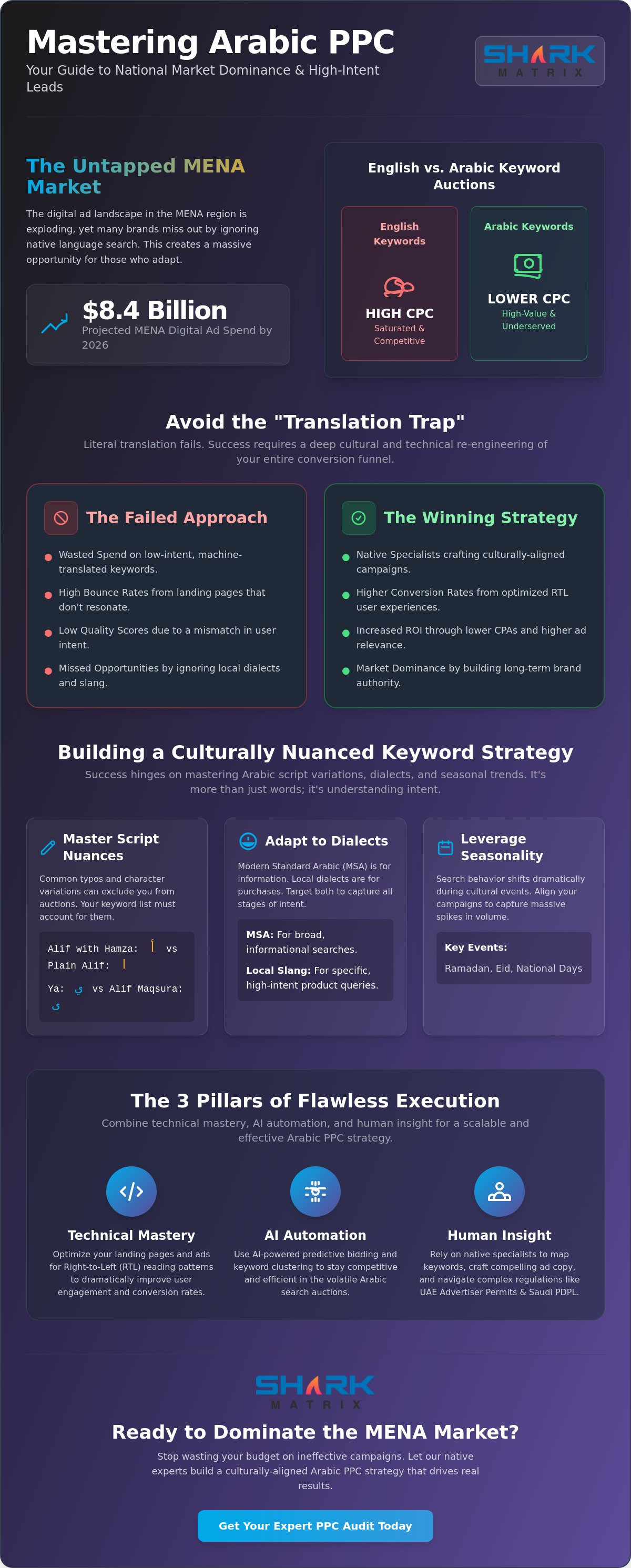
Did you know that digital ad spend in the MENA region is projected to hit $8.4 billion in 2026? Despite this massive growth, many brands still struggle with high CPCs for English keywords and translated landing pages that simply don’t convert. If you’ve found it difficult to source native specialists or scale your reach, it’s likely because your current approach treats the region as a single market. Implementing a truly effective arabic ppc campaign strategy requires moving beyond simple translation to embrace a technical and cultural re-engineering of your conversion funnel.

We recognize the frustration of seeing marketing budgets drain into low-intent traffic. This guide will help you master the nuances of Arabic paid search to reach a wider national audience and drive high-intent leads through culturally-aligned tactics. You’ll learn how to navigate 2026’s regulatory shifts, including the UAE Advertiser Permit and Saudi Arabia’s PDPL, while lowering your cost-per-acquisition. We will explore how to combine AI efficiency with human cultural insight to build scalable campaigns that resonate from Riyadh to Cairo.

Key Takeaways

  • Learn why native language queries are the key to capturing high-intent traffic and how to align your goals with local search behavior.
  • Implement a sophisticated arabic ppc campaign strategy that handles script nuances and common typos to ensure your ads appear for the right search terms.
  • Discover how to optimize your user interface for Right-to-Left (RTL) reading patterns to improve engagement and conversion rates on your landing pages.
  • Use AI-powered predictive bidding and keyword clustering to stay competitive in the fast-moving and often volatile Arabic search auctions.
  • Establish realistic benchmarks for CTR and CPA while focusing your initial efforts on high-intent terms to drive faster ROI.

Why Arabic PPC is Essential for National Market Dominance in 2026

Arabic PPC is a strategic approach to paid search targeting Arabic-speaking demographics. It isn’t just about translating a few keywords from an existing English campaign. It’s a fundamental shift in how you engage with a local audience. By 2026, search behavior has evolved significantly. Local users are increasingly using native language queries for high-intent purchases. They want to see ads that speak their language and reflect their specific values. If your brand only shows up for English searches, you’re missing a massive segment of the national market.

The competitive advantage here is clear. English-language keyword auctions are often saturated, driving CPCs to unsustainable levels. Arabic auctions typically see lower competition. This allows you to capture high-value traffic at a fraction of the cost. Building a robust arabic ppc campaign strategy isn’t just a tactical choice; it’s a requirement for national growth. Reaching the local population in their primary language builds long-term brand authority that translated campaigns simply cannot match.

The Economic Case for Arabic Paid Search

The ROI gap between English and Arabic search campaigns is often substantial. In markets like Saudi Arabia and the UAE, English keywords are fought over by international brands, while local Arabic queries remain underserved. This lack of competition directly translates to better margins for a local adventure business like Desert Detour. Beyond lower costs, Arabic campaigns improve your overall Quality Score. Platforms like Google and Bing reward high relevance. When your ad copy matches the linguistic intent of the user, your click-through rates climb and your costs drop. Arabic PPC acts as a cultural bridge to untapped national market segments.

Overcoming the “Translation Trap”

Literal translations lead to high bounce rates and wasted spend. If a user clicks an ad and finds a landing page that reads like a machine-generated mess, they’ll leave immediately. You have to account for the difference between Modern Standard Arabic (MSA) and national dialects. Searchers use MSA for general information, but they often pivot to local dialects for specific products or services. A native-first strategy ensures you capture these nuances from the planning phase. Staying compliant with Advertising regulations in the Middle East is also easier when your content is crafted by specialists who understand the local legal and cultural landscape. Don’t just translate; adapt your message to the heartbeat of the local market.

Building a Culturally Nuanced Arabic Keyword Strategy

Success in an arabic ppc campaign strategy starts with mastering the script’s unique hurdles. Arabic is a rich, complex language where a single character change can shift a keyword’s entire meaning. Searchers frequently omit diacritics or swap similar-looking characters like the Alif with a Hamza (أ) for a plain Alif (ا). They might also use the “Ya” (ي) and “Alif Maqsura” (ى) interchangeably. If your keyword list doesn’t account for these common variations and typos, you’ll miss a significant portion of the auction. Semantic search also plays a major role here. You must identify the intent behind broad phrases versus long-tail queries, as Arabic speakers often use more descriptive, conversational language when they’re ready to buy.

Negative keyword lists are your best defense against wasted spend. The MENA region is diverse, and a term that works in Egypt might be irrelevant for a campaign in Saudi Arabia. You need to filter out regional slang that doesn’t fit your target national market. Seasonal planning is another critical pillar. Cultural events like Ramadan, Eid, and various National Days dramatically shift search volume and consumer behavior. During these periods, CPCs can spike, and your messaging needs to pivot to reflect the spirit of the season. If you need help refining these lists, our team provides expert PPC management to keep your budget focused on high-converting traffic.

Advanced Arabic Keyword Research Techniques

Don’t rely solely on automated tools. While they provide a baseline, they often miss colloquial search terms that haven’t made it into official databases yet. We recommend a human-in-the-loop approach. This involves native specialists mapping your high-performing English keywords to culturally equivalent Arabic terms rather than literal translations. This process ensures you capture the exact phrasing a local consumer would use. It’s about finding the “soul” of the search query, not just the dictionary definition.

Segmenting Audiences by Linguistic Preference

Targeting the right person requires looking beyond just the search query. You can segment audiences by their browser language settings or their specific location within a city. In countries like the UAE, dual-language households and expatriate demographics create a complex linguistic landscape. Some users might search in English but prefer landing pages in Arabic, or vice versa. To build a cohesive digital presence, it’s helpful to integrate insights from comprehensive search engine optimization seo services. This ensures your paid and organic keywords work together to dominate the search results page. Remember that your keywords are only the first step. Once a user clicks, they expect a seamless experience, which often involves designing for right-to-left languages to maintain engagement and trust.

Arabic PPC Campaign Strategy: The 2026 Guide to National Market Dominance

Technical Mastery: Optimizing Creative and UI for RTL Markets

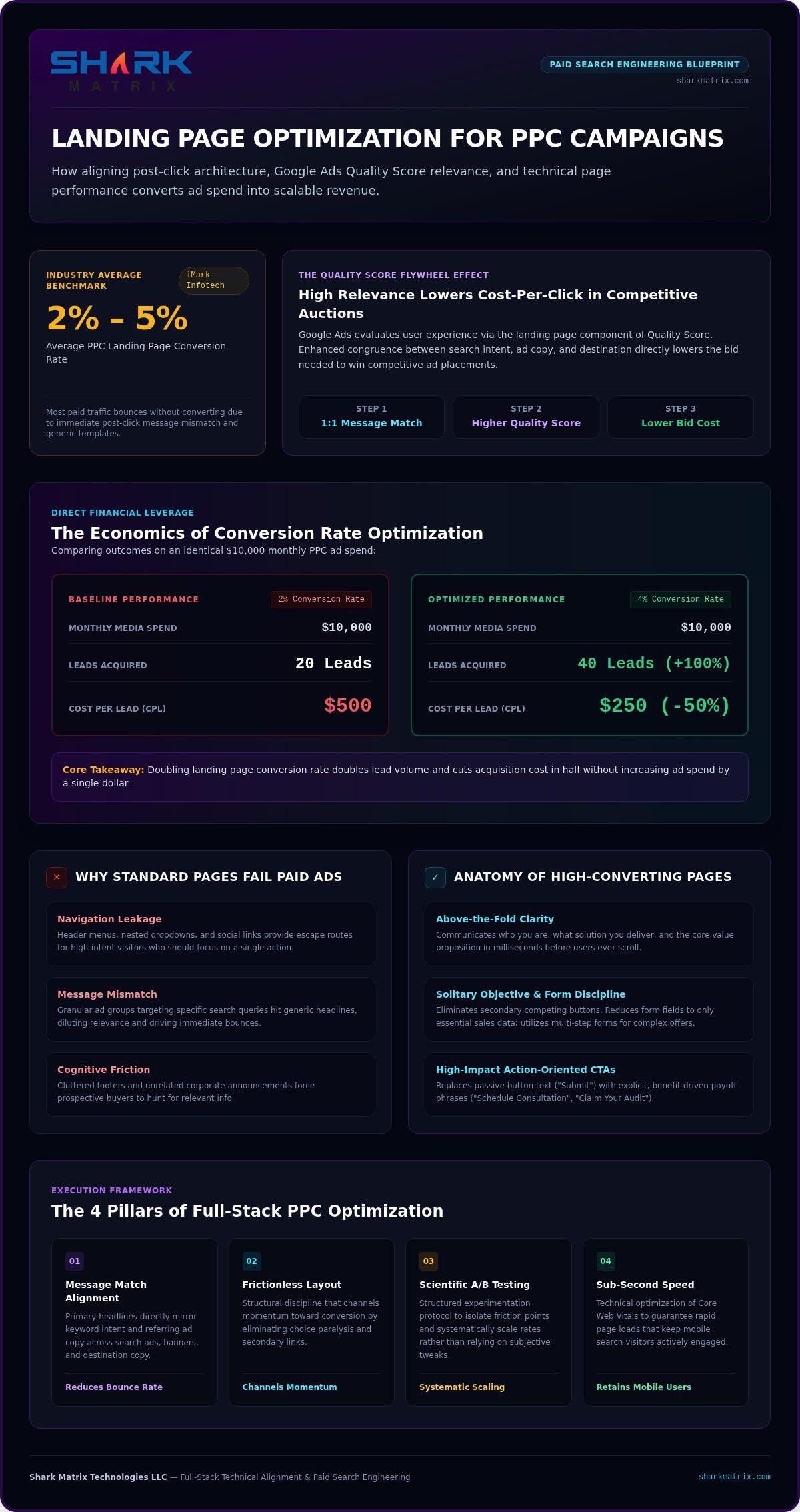
Designing for an Arabic-speaking audience requires a total inversion of your standard UI/UX principles. Arabic is read from right to left, which completely shifts the traditional F-pattern of eye tracking. Instead of starting at the top left, users begin their journey at the top right. If your logo and primary call-to-action remain in their English-standard positions, you risk confusing your visitors and driving up bounce rates. A technical arabic ppc campaign strategy must account for this by ensuring every digital touchpoint feels native to the user’s natural reading habits.

Mirroring your layout is the foundation of RTL optimization. This involves more than just moving text; it means relocating navigation bars, sidebars, and even the direction of progress bars. Integrating these technical adjustments into your arabic ppc campaign strategy ensures that every click leads to a frictionless experience. Consider this technical checklist for your landing pages:

  • Mirroring navigation and sidebars to the right side of the screen.
  • Flipping directional icons like arrows and progress bars.
  • Adjusting text alignment and padding for Arabic script readability.
  • Relocating the primary CTA to align with RTL eye-tracking patterns.

Character counts also present a unique challenge. Arabic script is often wider and more vertically dense than Latin characters. This makes managing character limits in Google and Meta Ads a delicate balancing act. You need to be concise without losing the persuasive power of your message. Visual storytelling should also reflect the national cultural aesthetic. Avoid generic stock photography that feels out of place. Instead, select imagery that resonates with local values, family structures, and architectural styles to build trust. Referencing local media such as Dubai Spaces can provide valuable insights into the current architectural landscape, ensuring your ad visuals feel authentic and modern.

RTL Conversion Rate Optimization (CRO)

A flipped layout is just the bare minimum. True optimization involves refining form fields and buttons to handle Arabic text input seamlessly. Form labels should be right-aligned, and placeholders must reflect the RTL flow. When users see a form that’s easy to navigate, they’re much more likely to complete a conversion. For a deeper dive into these technicalities, you can refer to the 2026 guide to website design and development services, which outlines the essential infrastructure for high-performing RTL sites.

High-Performance Arabic Ad Copywriting

Arabic ad copy thrives on the imperative mood. Using strong, benefit-driven verbs at the start of your headlines can significantly increase engagement. You want to strike a balance between a professional tone and persuasive language that speaks directly to the user’s needs. Proper RTL alignment in ad extensions significantly boosts click-through rates by making your additional information easy to scan. This technical precision ensures your ads look polished and professional, even in the most competitive auctions.

Integrating AI Automation into Your Arabic PPC Strategy

AI isn’t just a buzzword in 2026; it’s the engine behind every successful arabic ppc campaign strategy. While previous sections highlighted the manual nuances of script and culture, machine learning now handles the heavy lifting of data analysis. AI-driven keyword clustering identifies patterns in how users search, grouping thousands of variations like hamza swaps or common typos into tight, relevant ad groups. This automation ensures your ads appear for niche queries without requiring hundreds of hours of manual setup. It allows your team to focus on high-level creative strategy while the algorithm manages the granular complexities of the Arabic script.

Predictive bidding has become essential for navigating the volatility of regional auctions. These algorithms analyze real-time signals to adjust bids during high-traffic windows like national holidays or shopping festivals. Dynamic Search Ads (DSA) also benefit from AI, as they can now crawl professional Arabic content to generate highly relevant headlines on the fly. This tech-forward approach allows your brand to remain competitive in auctions where manual bidding simply can’t keep up with the pace of change. It’s about staying agile in a market where consumer behavior can shift overnight.

Leveraging Shark Matrix Technologies LLC AI Tools for Campaign Success

Our team at Shark Matrix Technologies LLC utilizes custom automation to streamline keyword expansion across the national market. We don’t just set and forget campaigns. We use real-time performance adjustments to ensure your budget flows toward the segments with the highest intent. When you’re choosing the right ppc agency in dubai, it’s vital to find a partner that balances these automated tools with human cultural insight. This hybrid model allows for rapid scaling while maintaining the precision needed to drive high-quality leads that actually convert into sales.

Natural Language Processing (NLP) in PPC

Natural language processing services have changed how we interpret searcher sentiment across various dialects. NLP can distinguish between a user looking for general info and someone ready to make a purchase. By understanding the intent behind the query, we can improve ad relevance scores and lower your overall cost-per-acquisition. AI also acts as a powerful filter, automatically excluding bot traffic and low-quality clicks that don’t match your customer profile. This is especially useful for maintaining compliance with 2026 data privacy laws in the UAE and Saudi Arabia, as AI can help manage consent-based data signals more efficiently than manual tracking. To see how these tools can transform your results, explore our specialized ai automation services today.

Execution and Performance: Launching Your Arabic PPC Campaign

Launching a successful arabic ppc campaign strategy requires a disciplined pilot phase that prioritizes precision over broad reach. While previous sections detailed the importance of AI automation and RTL technicalities, the execution stage is where these elements converge into a live environment. We recommend starting with high-intent, bottom-of-funnel Arabic terms. These are specific queries where the user is already at the decision-making stage. By narrowing your initial focus, you can gather high-quality data without exhausting your budget on broad, low-intent traffic during the learning phase of your campaign.

Setting realistic benchmarks is critical for evaluating performance in the competitive GCC landscape. In 2026, average CPCs in markets like Saudi Arabia and the UAE typically fall between $0.50 and $3.00, though this varies by industry. Your optimization should follow a 30-60-90 day roadmap. The first 30 days are dedicated to establishing baselines and identifying winning ad groups. By the 60-day mark, you’ll use the AI-driven insights discussed earlier to refine bidding and pause underperforming assets. By day 90, your account should have enough historical data to scale across the national market with a predictable cost-per-acquisition.

A unified digital presence also means aligning your paid search efforts with other technical channels. With smartphone penetration in the GCC exceeding 95% in 2026, your ads must lead to mobile-optimized experiences. Integrating your search efforts with strategic mobile app development services ensures that users who prefer app-based interactions have a frictionless path from the search result to a conversion. This multi-channel approach prevents the conversion leaks that often occur when mobile users are forced into desktop-first web environments.

Measuring Success Beyond the Click

Clicks are a starting point, but long-term growth is measured by lead quality and lifetime value (LTV). Attribution modeling in a multi-lingual national market can be complex, as users often switch between Arabic and English search terms throughout their journey. You need to track which specific Arabic queries lead to the highest LTV to justify your spend. Additionally, the human element remains vital. Even the best automated lead generation requires native Arabic-speaking support for follow-up. This ensures that the cultural rapport built through your ad copy continues through the entire sales process.

Partnering for National Growth

Managing the intersection of AI, technical RTL design, and complex linguistic nuances is a task for specialists. Shark Matrix Technologies LLC provides a unified approach that combines technical SEO and PPC management to dominate national search results. We help brands navigate the 2026 regulatory landscape, including the UAE Advertiser Permit and regional data protection laws, while maintaining high performance. If you’re ready to scale your reach and drive high-intent leads, Partner with Shark Matrix Technologies LLC for your Arabic PPC strategy and secure your place as a market leader.

Secure Your Future in the National Market

Capturing a significant share of the MENA region’s digital ad spend in 2026 requires more than a standard search presence. It demands a sophisticated arabic ppc campaign strategy that prioritizes cultural resonance alongside technical precision. Success in this landscape hinges on moving beyond literal translations to embrace the RTL design principles and AI-driven bidding models we’ve explored. By aligning your brand with the linguistic habits and regulatory requirements of the local population, you secure a competitive edge that generic, English-first campaigns simply can’t match.

Shark Matrix Technologies LLC has been a leader in this space since 2010. We combine deep national market expertise with specialized AI automation and native digital marketing experts to deliver high-performance growth. Don’t let your marketing budget drain into low-intent traffic or non-compliant ad structures. It’s time to reach the local consumer base with a partner who understands the nuances of the national market. Elevate your brand with a data-driven Arabic PPC strategy from Shark Matrix Technologies LLC. The potential for regional dominance is within your reach.

Frequently Asked Questions

Is Arabic PPC more expensive than English PPC in the UAE?

No, Arabic PPC is generally less expensive than English PPC in the UAE. English keywords are often highly competitive because international brands prioritize them, which drives up costs. By adopting an arabic ppc campaign strategy, you can find lower cost-per-click rates and less competition for high-intent terms. This allows you to reach a local audience that prefers searching in their native language while making your budget go further.

Can I use Google Translate for my Arabic ad copy?

You should avoid using Google Translate for your ad copy. Automated tools fail to capture cultural context, grammar nuances, and local dialects. This results in ads that look unprofessional and lead to high bounce rates. Instead, work with native speakers who can craft persuasive copy that resonates with the national market. Authentic content builds trust and significantly improves your conversion rates compared to machine-translated text.

Which platforms are best for Arabic lead generation campaigns?

Google Ads and Meta platforms are the top choices for Arabic lead generation. Google Search captures users with immediate intent, while Instagram and TikTok are effective for visual storytelling and brand engagement in the GCC. LinkedIn also provides strong results for B2B campaigns targeting professionals. The best platform depends on your industry and where your national audience spends their time online. A multi-channel approach often yields the best results.

How do I handle landing pages for Arabic PPC if my site is only in English?

It’s essential to build dedicated Arabic landing pages for your campaigns. Sending users from an Arabic ad to an English website creates a disjointed experience that kills conversions. These pages must use Right-to-Left (RTL) layouts to ensure proper readability and user comfort. A native-first approach at the landing page level is a critical part of a successful arabic ppc campaign strategy. It ensures the user journey remains consistent from the first click.

What is the difference between MSA and local dialects in PPC advertising?

Modern Standard Arabic (MSA) is best for formal communication and reaching a broad audience across different countries. Local dialects are more effective for creating an emotional connection and driving high-intent actions within a specific country. For example, using Khaleeji phrasing in Saudi Arabia makes your brand feel more authentic. A balanced strategy often uses MSA for headlines and dialects for persuasive, benefit-driven body copy to maximize engagement.

How long does it take to see results from an Arabic PPC campaign?

You can expect to see initial data and trends within the first 30 days of your campaign. This pilot phase helps identify which keywords and creatives are performing best. However, full optimization and scaling typically take between 60 and 90 days. This timeframe allows for enough search volume to refine bidding strategies. It also provides the data needed to maximize your ROI based on real-world performance and AI-driven insights.

Do I need a separate Google Ads account for Arabic campaigns?

While you don’t strictly need a separate account, it’s often a best practice for better organization. A dedicated account for Arabic campaigns allows you to manage budgets, billing, and language settings more effectively. It also prevents your English and Arabic data from becoming tangled. This makes it easier for your PPC management team to extract clear insights and supports a more scalable long-term growth strategy for your brand.

How does RTL script affect my Quality Score?

Proper RTL implementation directly impacts your Quality Score by improving the landing page experience and ad relevance. When your landing page mirrors the script’s natural flow, users stay longer and engage more. Search engines recognize this positive behavior as a sign of high relevance. This leads to higher click-through rates and better ad placements at a lower cost. You’re rewarded for providing a native-feeling experience that meets user expectations.

Categories
Digital Marketing

Mastering PPC for Lead Generation: A Comprehensive 2026 Guide

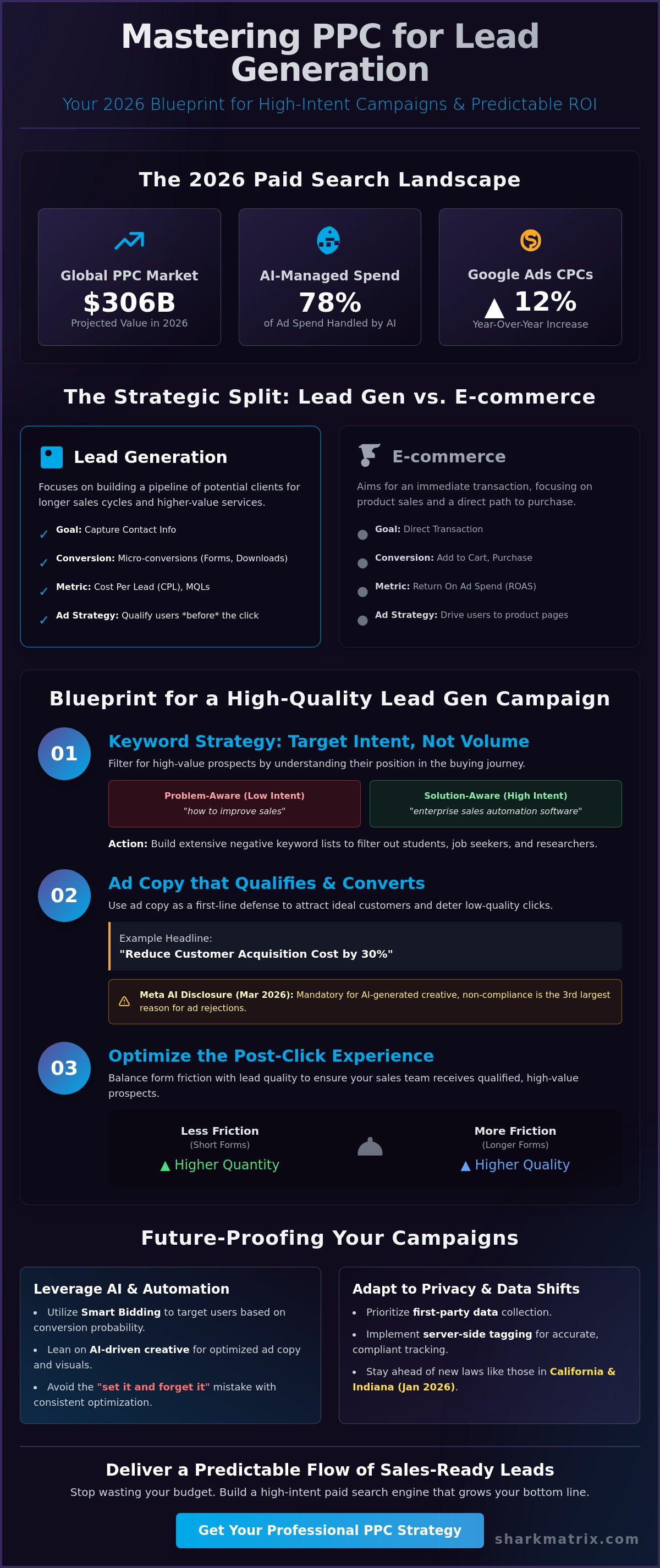
With the global PPC market projected to reach $306 billion in 2026, why are so many businesses still struggling with a high cost-per-lead and zero conversions? It’s frustrating to watch your budget disappear into clicks that never turn into sales. You’ve likely dealt with poor quality leads that frustrate your sales team or felt the sting of the 12% year-over-year increase in Google Ads CPCs. Mastering ppc for lead generation in 2026 requires more than just bidding on keywords. It’s about engineering a journey that prioritizes high-intent users while operating within a landscape where AI handles 78% of all spend and privacy regulations in states like California and Indiana have tightened.

You deserve a marketing strategy that delivers a predictable flow of sales-ready leads and clear visibility into your ROI. This guide will show you how to build, optimize, and scale high-intent paid search campaigns that actually grow your bottom line. We’ll explore how to leverage first-party data, adapt to the phase-out of standalone call ads, and use professional PPC management to lower your customer acquisition costs.

Key Takeaways

  • Understand the fundamental differences between lead acquisition and e-commerce models to ensure your strategy aligns with high-intent business goals.
  • Learn how to structure your account and conduct keyword research that prioritizes commercial intent for more effective ppc for lead generation.
  • Master the post-click experience by balancing form friction and lead quality to ensure your sales team receives only the most qualified prospects.
  • Identify and avoid common pitfalls like the “set it and forget it” mistake by implementing a consistent optimization routine.
  • Future-proof your campaigns by leveraging Smart Bidding and AI-driven creative to reach users based on their probability of conversion.

What is PPC for Lead Generation and Why Does it Matter?

At its core, understanding What is PPC in the context of lead acquisition involves paying for advertising space to capture contact information rather than immediate sales. Unlike e-commerce, where the goal is a direct transaction, ppc for lead generation focuses on building a pipeline of potential clients. It’s the fastest way to achieve national market visibility, allowing your brand to appear at the top of search results the moment a campaign goes live. This speed is essential in 2026, especially as organic search becomes increasingly crowded with AI-generated content.

Success in this field is measured by two primary metrics: Cost Per Lead (CPL) and Marketing Qualified Leads (MQLs). While the average CPL across all industries has reached approximately $198 this year, focusing solely on the lowest cost can be a mistake. High-quality ppc for lead generation prioritizes the value of the lead over the quantity. You want prospects who are ready to engage with your sales team, not just people looking for free information. With Google Ads CPCs rising by 12% in competitive verticals, every click must be strategic.

Lead Generation vs. E-commerce: The Strategic Split

The fundamental difference lies in the conversion goal. E-commerce campaigns look for an immediate “add to cart” action. Lead generation, however, focuses on micro-conversions. These are smaller steps, such as downloading a whitepaper, signing up for a webinar, or completing a contact form. Because lead-based business models often involve longer sales cycles and higher price points, the ad copy must qualify the user before they even click. Effective PPC management ensures that your messaging filters out low-intent users, protecting your budget for high-value prospects.

The 2026 Paid Search Landscape

The current environment is defined by a shift toward privacy and intent. New state-level data privacy laws in California and Indiana, effective as of January 2026, have changed how we track and attribute conversions. We’ve moved away from simple keyword matching toward sophisticated intent-based signals. Advertisers now rely on first-party data and AI-driven audience insights to find the right users. Staying ahead of these uae digital marketing trends is vital for any business looking to scale. In 2026, the focus isn’t just on where people are searching, but why they are searching and what they intend to do next.

Step-by-Step: How to Build a High-Quality Lead Gen Campaign

Building a successful campaign requires a precise architectural blueprint. You can’t simply select a few keywords and hope for the best. In a landscape where 78% of Google Ads spend is now managed through Smart Bidding, the quality of the data you feed the algorithm determines your success. High-quality ppc for lead generation starts with a structure that prioritizes relevance and data integrity. This means moving beyond basic tracking to implement server-side tagging. This approach ensures you remain compliant with the 2026 data privacy laws in California and Indiana while maintaining clear visibility into your marketing ROI.

Keyword Strategy: Beyond High-Volume Terms

Effective keyword research in 2026 focuses on intent rather than just volume. You must distinguish between “problem-aware” searchers who are just starting their journey and “solution-aware” prospects ready to buy. For example, someone searching for “how to improve sales” is in a different stage than someone searching for “enterprise sales automation software.” To protect your budget, you should also build an extensive negative keyword list. This filters out students, job seekers, and researchers who drive up your CPL without any intention of becoming a lead. Using long-tail phrases allows you to capture high-intent national traffic at a lower cost than broad, competitive terms.

Ad Copy that Qualifies and Converts

Your ad copy acts as your first line of defense. It needs to attract the right people and discourage the wrong ones. Headlines should speak directly to the searcher’s end goal, such as “Reduce Customer Acquisition Cost by 30%.” Since March 2026, Meta has required a mandatory AI disclosure for any ad creative generated or modified by AI. Non-compliance is now the third-largest reason for ad rejections, so transparency is essential. Use ad assets to provide immediate value, such as site links to case studies or lead forms that integrate directly with your CRM. For brands looking to scale quickly, professional PPC Management can help navigate these policy shifts while maintaining a high Quality Score.

Once your campaign is live, adopt a “test and learn” mindset. With Google now retaining granular performance data for 37 months, you have more historical insight than ever before. Use this data to refine your bidding strategies and creative assets. Don’t just chase the lowest CPL; instead, track which keywords and ads result in MQLs that actually close. This holistic approach ensures your spend is always directed toward the most profitable segments of your market. For businesses operating in the region, understanding the nuances of google ads management uae is essential to navigating higher advertising costs and local compliance requirements effectively.

Mastering PPC for Lead Generation: A Comprehensive 2026 Guide

Optimising the Post-Click Experience for Maximum ROI

The moment a user clicks your ad, the clock starts ticking. If your page takes more than a few seconds to load or doesn’t immediately answer their query, you’ve wasted your budget. High-intent ppc for lead generation depends on a seamless transition from the search result to the conversion point. In a market where Google Ads CPCs have seen a 12% year-over-year increase, every bounce is a costly mistake. You aren’t just paying for a click; you’re paying for the opportunity to start a conversation.

While some competitors suggest keeping forms as short as possible to lower CPL, this often results in a flood of low-quality spam. Instead, find a balance between friction and quality. Ask one or two qualifying questions that filter out casual browsers who aren’t ready to buy. This ensures your sales team spends their time on prospects with genuine intent. Trust signals, such as client reviews and industry certifications, must be placed above the fold to build immediate credibility for national users who might be unfamiliar with your brand.

Landing Page Essentials for Lead Capture

Message match is non-negotiable for maintaining a high Quality Score. If your ad promised a “Detailed Industry Report,” the landing page shouldn’t pivot to a “Book a Demo” button immediately. Stick to the “One Goal” rule by removing all external navigation links that might lead a user away from the form. The Hero Section is the area of the page visible without scrolling that must communicate your value proposition and primary call-to-action within seconds. By narrowing the user’s focus, you significantly reduce lead leakage and improve your conversion rate.

Advanced Lead Form Strategy

For complex services, multi-step forms often outperform long, single-page versions. They reduce the perceived effort by breaking questions into logical chunks, which keeps the user engaged without feeling overwhelmed. Implement real-time validation to catch typos in phone numbers and emails before the user hits submit. This improves your data hygiene and ensures your sales team isn’t chasing dead ends. Finally, use your “Thank You” page to keep the momentum going. Instead of a generic message, offer an immediate consultation or a link to a high-value resource from your content marketing efforts.

Since video ads now account for 42% of total digital ad spend, ensure your landing pages can handle rich media without slowing down on mobile devices. A mobile-first design is essential for national campaigns where users often switch between devices. Professional Web Design and Development ensures your site is optimized for speed and conversion, providing a stable foundation for your paid search investments.

Common Pitfalls: Why Most PPC Lead Gen Campaigns Fail

Many businesses treat their campaigns like a slow cooker. They set them up and walk away. But in 2026, the auction environment changes hourly. With CPCs rising 12% in competitive sectors, a single week of neglect can drain thousands from your budget. Successful ppc for lead generation requires active management. If you aren’t reviewing search terms and adjusting bid strategies daily, you’re likely subsidizing your competitors’ growth. You need to leverage the fact that Google Ads now retains granular performance data for 37 months to make informed, data-driven adjustments.

Chasing the lowest possible CPL is a race to the bottom. While the average CPL across all industries is $198, a $50 lead that never answers the phone is more expensive than a $300 lead that closes a deal. Marketing can’t fix a slow sales response, but it can ensure the leads arriving are worth the effort. Identifying these budget leaks is difficult without an outside perspective. Using ppc audit services can uncover where your money is being wasted on low-intent traffic before it ruins your ROI.

The Lead Quality Trap

Broad match keywords often cause the “lead quality trap.” They cast a wide net that fills your CRM with junk data. Instead, focus on Value-Based Bidding. This guides the AI to find prospects who mirror your highest-paying clients rather than just anyone who clicks. You must differentiate between a “contact,” which is just a name in a database, and a “qualified prospect,” which represents a future revenue stream. By feeding conversion values back into the system, you train the algorithm to prioritize quality over volume.

Tracking and Attribution Gaps

Relying on “Last-Click” attribution is a dangerous gamble. Most B2B journeys involve multiple touchpoints across search, social, and video. Since Meta updated its attribution model in March 2026 to exclude non-link interactions like video views from click-through counts, your data might be missing the full picture. You must also account for the phase-out of standalone call ads that began in February 2026. By using call assets within responsive search ads and connecting your CRM to Google Ads via API, you gain visibility into offline conversions. This data is what fuels the Smart Bidding algorithms that now manage 78% of all spend.

If you’re tired of seeing your budget disappear into low-quality clicks, it’s time to refine your strategy. Our team provides professional PPC Management to help you navigate these technical gaps and ensure every dollar works toward a qualified sale.

Future-Proofing Lead Gen with AI and Automation

By 2026, the AI-powered search advertising market has surged to over $500 million. This shift means that successful ppc for lead generation is no longer just about manual adjustments; it’s about guiding machine learning models with high-quality data. Smart Bidding now uses thousands of signals to predict the probability of a conversion in real time. Instead of bidding on a broad keyword, the system evaluates the user’s past behavior, device, and time of day to decide if they are likely to become a high-value lead. This predictive approach allows you to scale your growth without manually managing every single bid.

The rise of generative search has also introduced Answer Engine Optimization (AEO) and Generative Engine Optimization (GEO) into the paid landscape. Users are moving toward conversational queries, asking complex questions rather than typing short phrases. To stay visible, your ad creative must adapt. AI-driven dynamic ads now use Large Language Models (LLMs) to test hundreds of variations of headlines and descriptions. This ensures the message matches the searcher’s specific intent perfectly. Combining these paid efforts with search engine optimization seo services creates a total market approach that captures intent across both organic and paid channels.

Harnessing AI-Driven Automation

Performance Max (PMax) for lead generation has evolved significantly from its early iterations. Unlike traditional search-only campaigns, PMax uses your first-party data to find prospects across YouTube, Gmail, and Display. To make this work, you must automate your lead scoring. By tagging leads in your CRM based on their quality and feeding that data back into Google Ads, you train the AI to ignore “tire-kickers” and focus on buyers. This automation frees up your team to focus on high-level strategy rather than administrative tasks.

The Shark Matrix Edge

We provide more than just standard campaign management. Our team specializes in ai automation services and industry specific ai solutions designed to give national enterprises a competitive advantage. We build custom machine learning development services that integrate directly with your sales pipeline to predict lead value before a human even reviews the contact form. In the competitive UAE market, this data-driven precision is the difference between a stagnant campaign and explosive growth.

Whether you need natural language processing services to analyze customer sentiment or generative ai development services to scale your content marketing, we align every tool with your commercial goals. Our approach to ppc for lead generation ensures your business isn’t just reacting to the market but leading it. By combining ai chatbot-development services with advanced ppc management, we create a high-friction-for-quality journey that delivers the sales-ready leads your business needs to thrive in 2026.

Scaling Your Lead Pipeline in 2026

Success in the current landscape requires moving beyond simple keyword matching to understand deep user intent. By prioritizing the post-click experience and leveraging first-party data, you can turn expensive clicks into a predictable flow of sales-ready prospects. Mastering ppc for lead generation is no longer just a technical task; it’s a strategic necessity for national growth. The shift toward privacy-first tracking and automated bidding means your strategy must be as dynamic as the platforms themselves to stay ahead of rising costs.

As a Premier Google Partner with over 15 years of national marketing expertise, Shark Matrix specializes in high-impact performance marketing and AI-driven lead automation. We help you navigate complex policy changes and technical attribution gaps so your marketing spend delivers measurable growth. Start generating high-quality leads with Shark Matrix today and take control of your customer acquisition costs. Your next phase of growth is just one well-optimized campaign away. With the right data and a proactive approach, you can build a sustainable lead engine that thrives in any market condition.

Frequently Asked Questions

How much does PPC lead generation cost in 2026?

Costs vary significantly by sector, but the average cost per lead (CPL) across all industries is approximately $198. For example, B2B SaaS ranges from $63 to $237, while legal services can reach $132 on Google. These figures depend on competition and your chosen platform’s bidding environment. You should monitor your specific industry benchmarks to ensure your spend remains efficient.

How long does it take to see results from a new PPC campaign?

You can see initial traffic immediately, but a campaign usually requires 30 to 90 days to stabilize and provide meaningful lead data. This period allows the AI to move past its initial learning phase. Since 78% of spend is managed via Smart Bidding, the system needs consistent conversion data to optimize performance effectively and lower your CPL over time.

Which is better for lead generation: Google Ads or Meta Ads?

The better platform depends on your audience’s intent and your specific industry. Google Ads excels at capturing high-intent searchers, while Meta Ads often provides a lower CPL for visual or interest-based services. For instance, e-commerce leads cost about $27 on Meta compared to $48 on Google. Many businesses find that an omnichannel approach delivers the best results. Businesses operating in the region should also review the specific considerations outlined in our guide to google ads management uae to account for local compliance requirements and higher advertising costs.

What is a good conversion rate for a lead generation landing page?

A healthy conversion rate for lead generation typically falls between 5% and 15% depending on the offer’s complexity. High-performing hero sections and multi-step forms can push these numbers higher. It’s best to benchmark against your specific industry averages rather than general digital marketing stats to get an accurate picture of your performance.

How do I improve the quality of the leads I get from PPC?

Improving lead quality involves tightening your keyword intent and adding qualifying questions to your forms. Use negative keywords to filter out non-commercial searches and leverage first-party CRM data to guide your ppc for lead generation strategy. This ensures the AI targets prospects who mirror your existing high-value customers rather than just chasing the lowest cost.

Can I do PPC for lead generation without a website?

Yes, you can use native lead forms on platforms like Meta or LinkedIn to capture information without a traditional website. However, a dedicated landing page usually offers better long-term ROI and more control over the user experience. For national campaigns, professional Web Design and Development helps build the trust necessary for high-ticket conversions.

What are the best keywords to target for B2B lead generation?

The best keywords are those that indicate high commercial intent, such as “enterprise software solutions” or “professional consultation.” Avoid broad, educational terms that attract researchers rather than buyers. Focus on long-tail phrases that describe the specific problem your business solves to keep your CPL manageable and attract qualified prospects.

How do I track phone calls from my PPC ads?

You should use call assets within your responsive search ads since standalone call ads were phased out in February 2026. Implementing dynamic number insertion (DNI) on your landing pages also allows you to attribute calls back to specific keywords. This setup provides a clear view of how ppc for lead generation contributes to your offline sales and overall ROI.